
7 Powerful Facts About Targeted Therapy for Lung Cancer Care
Lung cancer treatment has changed significantly with advances in precision medicine. Targeted therapy for lung cancer is one of these important developments, using medicines designed to act on specific changes that help cancer cells grow and survive. For patients exploring Targeted Therapy for Lung Cancer in Thrissur, understanding biomarker testing, treatment choices, benefits, and possible side effects can make discussions with an oncology team easier.
Unlike traditional chemotherapy, which generally affects many rapidly dividing cells, targeted medicines are designed around particular molecular features of a cancer. This means they are not suitable for every patient. Testing the tumor for actionable genetic or molecular changes is an important part of deciding whether a targeted treatment may be appropriate.
What Is Targeted Therapy for Lung Cancer?
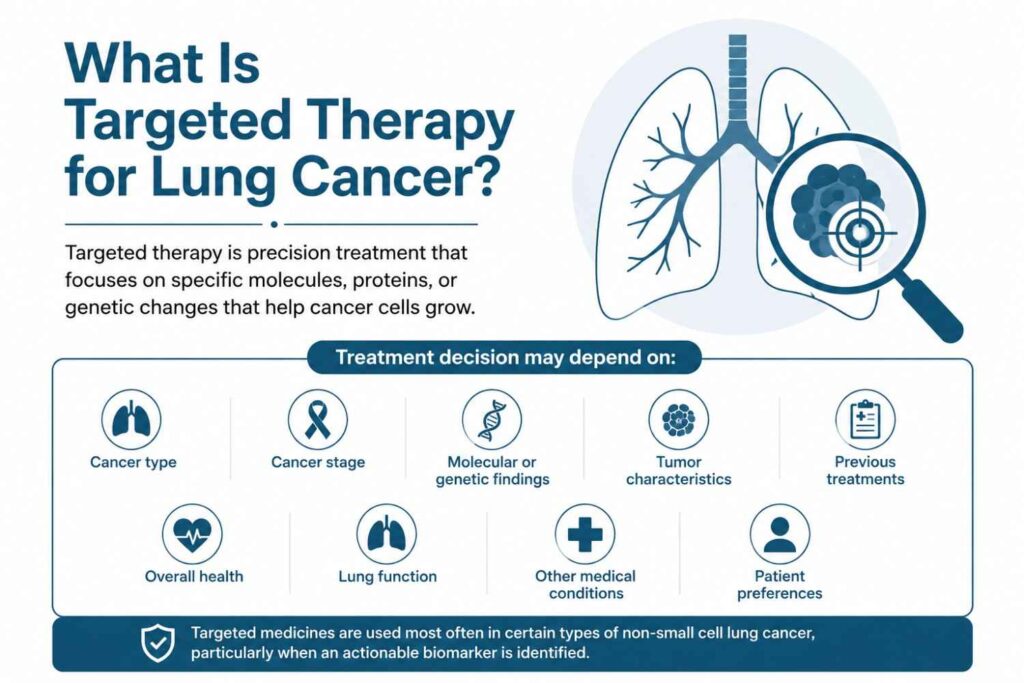
Targeted therapy for lung cancer is a form of precision cancer treatment that focuses on specific molecules, proteins, or genetic changes that help cancer cells grow.
Cancer cells can develop changes in genes that control cell growth, division, and survival. Some of these changes create treatment targets. When a patient’s tumor has a targetable alteration, a medicine may be selected to interfere with that particular pathway.
This approach is different from treating every lung cancer in the same way. The treatment decision may depend on:
- Cancer type
- Cancer stage
- Molecular or genetic findings
- Tumor characteristics
- Previous treatments
- Overall health
- Lung function
- Other medical conditions
- Patient preferences
Targeted medicines are used most often in certain types of non-small cell lung cancer, particularly when an actionable biomarker is identified
How Does Targeted Therapy for Lung Cancer Work?
Targeted therapy for lung cancer works by interfering with specific biological signals that cancer cells depend on.
Some medicines block proteins that send growth signals. Others interfere with abnormal enzymes or pathways involved in cancer-cell survival. Certain antibody-drug conjugates can recognize proteins on cancer cells and deliver a cancer-fighting drug to cells carrying that target.
The exact mechanism depends on the biomarker and medicine being used.
Types of Lung Cancer
Understanding the type of lung cancer is essential before discussing treatment.
The two major categories are non-small cell lung cancer (NSCLC) and small cell lung cancer (SCLC).
- Non-Small Cell Lung Cancer
NSCLC accounts for approximately 80% to 85% of lung cancers. It includes several subtypes, including:
- Adenocarcinoma
- Squamous cell carcinoma
- Large cell carcinoma
Adenocarcinoma is particularly important in precision oncology because certain tumors can contain genetic changes that can be treated with targeted medicines.
- Small Cell Lung Cancer
Small cell lung cancer generally grows and spreads more quickly than NSCLC. Its treatment approach differs from that used for many NSCLCs.
Targeted therapy is therefore not automatically appropriate simply because someone has lung cancer. The pathology, stage, molecular findings, and overall clinical picture all need to be considered.
Causes and Risk Factors of Lung Cancer
Lung cancer can develop because of several factors. Smoking is the leading preventable risk factor, but it is not the only one.
Potential risk factors include:
- Cigarette smoking
- Secondhand smoke exposure
- Radon exposure
- Air pollution
- Asbestos exposure
- Certain workplace chemicals
- Previous radiation exposure
- Family history
- Increasing age
- Some chronic lung conditions
Importantly, lung cancer can also occur in people who have never smoked.
Risk factors can increase the likelihood of developing lung cancer, but they do not determine which treatment will work. Treatment selection is based on the diagnosed cancer and its biological characteristics.
Symptoms of Lung Cancer
Lung cancer may cause different symptoms depending on its location and stage.
Common symptoms can include:
- Persistent or worsening cough
- Shortness of breath
- Chest discomfort
- Wheezing
- Hoarseness
- Repeated respiratory infections
- Coughing up blood
- Unexplained weight loss
- Reduced appetite
- Persistent tiredness
Some people may have few symptoms during the early stages.
Persistent or unexplained symptoms should be assessed by a qualified healthcare professional rather than assumed to be caused by a routine respiratory infection.
What Are the Benefits of Targeted Therapy for Lung Cancer?
One of the main advantages of targeted therapy for lung cancer is that treatment can be selected according to a specific characteristic of the tumor.
Potential benefits may include:
- More personalized treatment selection
- Treatment directed at a specific cancer-driving alteration
- Oral treatment options for some medicines
- Different side-effect patterns from conventional chemotherapy
- Potentially effective treatment for cancers with certain actionable alterations
- Treatment options when specific molecular targets are present
However, targeted therapy is not automatically better than every other treatment. Its usefulness depends on whether the cancer contains an appropriate target and whether the particular medicine is suitable.
Some targeted medicines can produce significant responses in biomarker-selected cancers, but resistance can develop over time.
Important Targeted Therapy Options
Several molecular pathways can be targeted in NSCLC.
EGFR-Targeted Therapy
EGFR is a protein involved in signals that regulate cell growth. Certain EGFR mutations can cause abnormal growth signaling.
EGFR inhibitors may be used when an appropriate EGFR alteration is identified. Osimertinib and other EGFR-directed medicines are examples of treatments used in selected clinical situations.
ALK-Targeted Therapy
Some NSCLC tumors have an ALK gene rearrangement.
ALK inhibitors block abnormal ALK signaling. Medicines such as alectinib, brigatinib, lorlatinib, and other ALK-directed therapies may be considered depending on the clinical setting.
ROS1-Targeted Therapy
ROS1 rearrangements occur in a smaller proportion of NSCLCs.
When a ROS1 alteration is identified, ROS1-directed medicines may provide an important treatment option for eligible patients.
BRAF-Targeted Therapy
Some lung cancers have BRAF alterations, including BRAF V600E.
BRAF and MEK-directed treatment combinations may be considered for appropriately selected patients.
MET-Targeted Therapy
MET alterations, including MET exon 14 skipping mutations, can occur in some NSCLCs.
Specific MET inhibitors may be used when the appropriate molecular alteration is confirmed.
RET-Targeted Therapy
RET gene rearrangements can act as drivers of tumor growth in some NSCLCs.
RET inhibitors are designed to interfere with this abnormal signaling pathway.
KRAS-Targeted Therapy
KRAS is another important molecular pathway in lung cancer. A specific alteration known as KRAS G12C can be treated with certain targeted medicines in appropriate clinical circumstances.
Targeted Therapy vs Chemotherapy
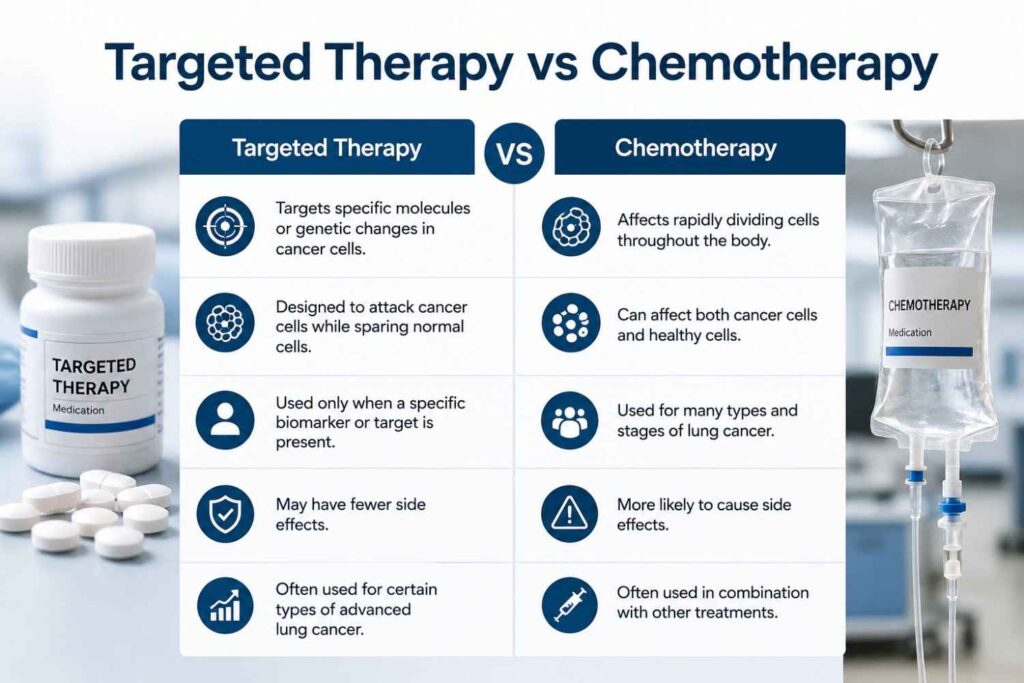
Targeted therapy for lung cancer and chemotherapy work differently.
Chemotherapy generally affects rapidly dividing cells throughout the body. Targeted medicines are designed to act on specific molecular features of cancer cells.
This difference can influence:
- How the treatment works
- How it is administered
- Which patients are eligible
- Which side effects may occur
- How the cancer responds
- What other treatments may be combined with it
Targeted therapy does not necessarily replace chemotherapy. In some situations, targeted medicines are used alone, while in others, treatment plans may involve chemotherapy or other therapies at different stages.
Targeted Therapy and Immunotherapy
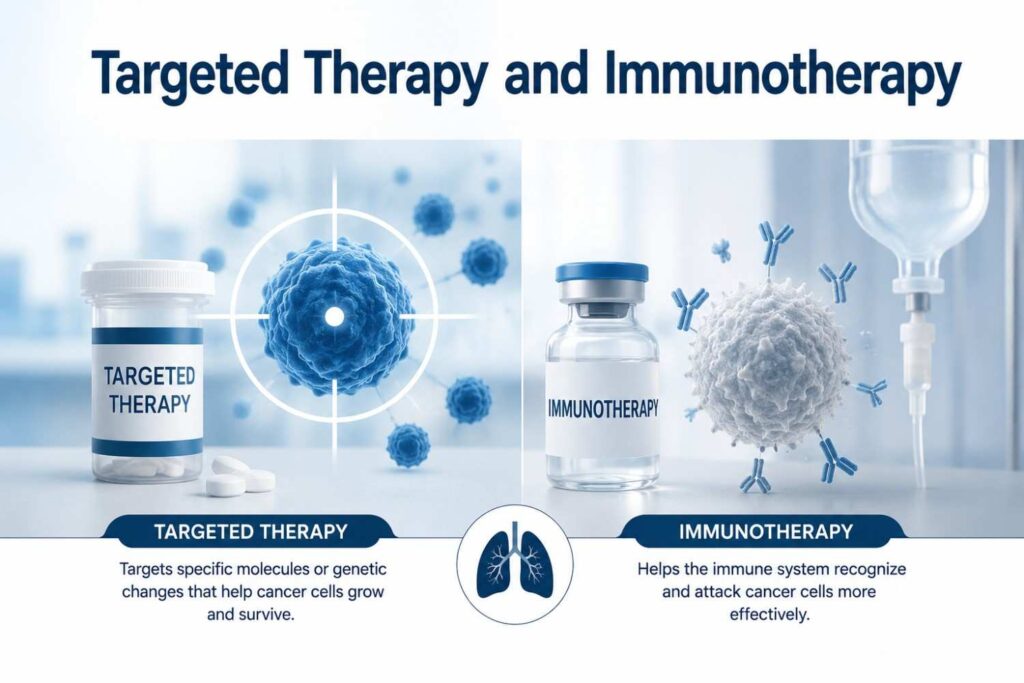
Immunotherapy and targeted therapy are also different.
Immunotherapy helps the immune system recognize or attack cancer more effectively. Targeted therapy directly interferes with a specific molecular feature or pathway associated with cancer growth.
The choice between these approaches depends on factors such as:
- Biomarker results
- Cancer stage
- Tumor characteristics
- Previous treatment
- Overall health
- Treatment goals
A cancer specialist may recommend one treatment or a combination strategy depending on the patient’s individual circumstances.
What Happens If Targeted Therapy Stops Working?
Cancer cells can sometimes develop resistance to a targeted medicine.
This may happen because cancer cells acquire new genetic changes or use alternative pathways to continue growing.
If treatment becomes less effective, doctors may recommend:
- Repeat imaging
- Additional molecular testing
- Liquid biopsy in selected situations
- Repeat tissue biopsy when appropriate
- A different targeted medicine
- Chemotherapy
- Immunotherapy
- Radiation therapy
- Clinical trial participation
The next treatment depends on the reason for progression and the patient’s overall condition.
How Long Does Targeted Therapy Last?
There is no single treatment duration for everyone.
Some targeted medicines are taken daily for extended periods while they continue to control the cancer and remain tolerable. Other treatment plans may follow different schedules.
Treatment duration depends on:
- Type of target
- Stage of cancer
- Treatment response
- Side effects
- Disease progression
- Previous treatments
- Overall health
Regular appointments and imaging help the oncology team determine whether treatment should continue or change.
Conclusion
Targeted therapy for lung cancer represents an important advance in precision oncology. By identifying specific molecular changes within a tumor, doctors can determine whether a patient may benefit from a medicine designed to act on that particular cancer pathway. EGFR, ALK, ROS1, BRAF, KRAS, MET, RET, HER2, and other biomarkers can influence treatment decisions in selected cases.
However, targeted therapy for lung cancer is not a universal treatment. The right approach depends on accurate diagnosis, staging, molecular testing, overall health, previous treatment, and individual treatment goals. If you are considering Targeted Therapy for Lung Cancer in Thrissur, discussing your pathology and biomarker results with a qualified medical oncologist can help you understand which treatment options may be appropriate for your situation.For additional information, refer to the American Lung Association’s Lung Cancer Treatment Guidelines to learn more about evidence-based treatment recommendations and patient care.