
12 Important Early Signs of Lung Cancer You Should Recognize
The early signs of lung cancer can be difficult to identify because they may resemble common respiratory conditions, allergies, infections, or general tiredness. Some people experience mild symptoms, while others notice no clear changes during the earliest stage. For individuals seeking reliable cancer information or medical evaluation in Thrissur, understanding these possible warning signs may encourage timely consultation and appropriate testing.
Having one symptom does not automatically mean that a person has lung cancer. However, a persistent or unexplained change should not be ignored, especially when it lasts several weeks, becomes more severe, or occurs alongside known risk factors.
What Is Lung Cancer?
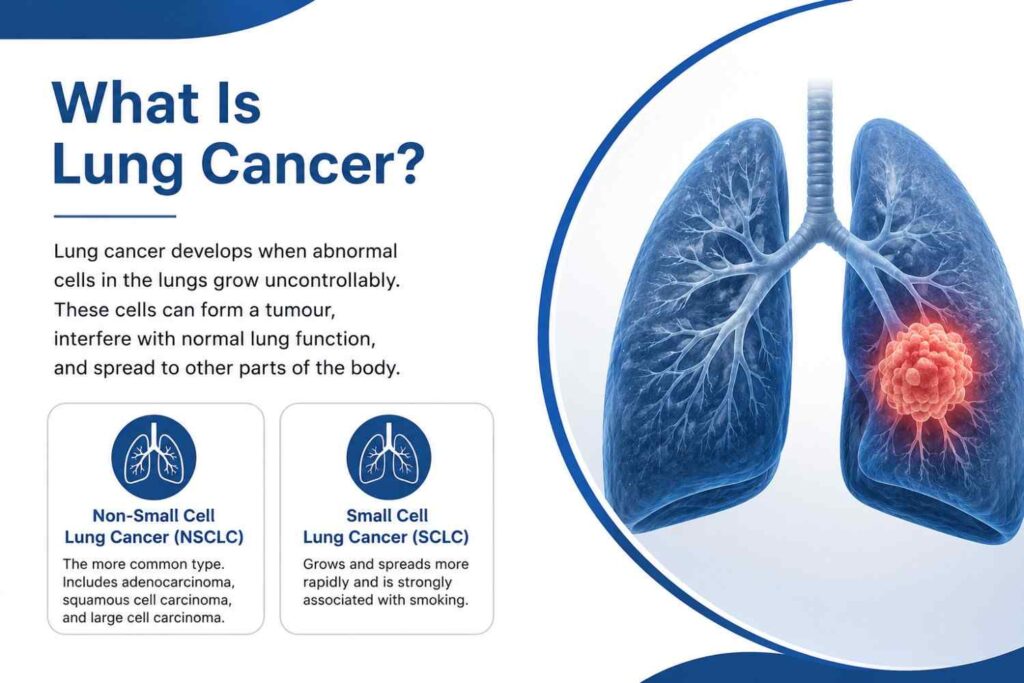
Lung cancer develops when abnormal cells in the lungs begin to grow and multiply uncontrollably. These cells can form a tumour, interfere with normal lung function, and potentially spread to nearby lymph nodes or other organs.
The two main types are:
Non-Small Cell Lung Cancer
Non-small cell lung cancer, or NSCLC, is the more common type. Its major subtypes include:
- Adenocarcinoma
- Squamous cell carcinoma
- Large cell carcinoma
The symptoms, rate of growth, molecular features, and treatment plan may differ between these subtypes.
Small Cell Lung Cancer
Small cell lung cancer, or SCLC, usually grows and spreads more rapidly. It is strongly associated with smoking, although every patient requires an individual medical assessment.
Both types may produce similar warning signs, but symptoms alone cannot confirm the type or stage. Imaging, biopsy, pathology testing, and other investigations are required for an accurate diagnosis.
Why Early Signs of Lung Cancer May Be Missed
The lungs have few pain-sensing nerve endings within their tissue. A small tumour may therefore grow without immediately causing pain or obvious breathing difficulty.
Many early signs of lung cancer are also nonspecific. A cough, tiredness, reduced appetite, or mild chest discomfort may be linked to several non-cancerous conditions. People may wait for the symptoms to disappear or repeatedly use routine medicines without investigating the underlying cause.
The CDC notes that many people do not develop noticeable symptoms until lung cancer has become more advanced. It also advises people with persistent respiratory or unexplained general symptoms to seek medical advice because the same changes can occur in several conditions.
Awareness does not mean assuming the worst. It means recognising persistent changes and discussing them with a qualified doctor.
12 Early Signs of Lung Cancer
1. A Persistent Cough
A cough that does not settle is one of the most widely recognised early signs of lung cancer.
Most coughs are linked to infections, allergies, asthma, acid reflux, smoking, or environmental irritation. However, medical evaluation may be appropriate when a cough:
- Continues for more than a few weeks
- Becomes gradually worse
- Disturbs sleep regularly
- Does not respond to routine treatment
- Occurs without a clear infection
- Is accompanied by breathing difficulty or chest pain
A doctor may ask when the cough started, whether it is dry or produces mucus, and whether other symptoms are present.
2. A Noticeable Change in a Long-Term Cough
People who smoke or have chronic respiratory conditions may already experience a regular cough. A change in its nature may require attention.
Possible changes include:
- Coughing more frequently
- Developing a deeper or harsher cough
- Producing more mucus than usual
- Noticing a different sound
- Experiencing pain while coughing
- Developing a cough at a new time of day
A changing cough is not proof of cancer, but it should not be dismissed simply because coughing was already present.
3. Coughing Up Blood
Coughing up blood or blood-stained mucus is a symptom that requires prompt medical assessment.
The amount may be small and may appear as:
- Red streaks in mucus
- Pink or rust-coloured sputum
- Small spots of blood
- Larger amounts of fresh blood
Respiratory infections, inflammation, tuberculosis, airway injury, blood-clotting conditions, and other illnesses may also cause this symptom. A doctor must determine the actual cause.
Coughing up a significant amount of blood or experiencing it with severe breathlessness, faintness, or chest pain may require urgent medical attention.
4. Unexplained Shortness of Breath
Shortness of breath may develop when a tumour narrows an airway, fluid collects around a lung, or normal lung expansion becomes restricted. It can also result from many non-cancerous heart and lung conditions.
Possible changes include:
- Becoming breathless during routine activities
- Finding stairs more difficult than before
- Needing frequent breaks while walking
- Feeling unable to take a deep breath
- Experiencing breathlessness while resting
- Recovering more slowly after physical activity
A gradual reduction in exercise tolerance can be easy to overlook. Comparing current ability with normal daily activity may help identify a meaningful change.
5. Chest Pain or Discomfort
Chest pain can have many possible causes, including muscle strain, acid reflux, infection, anxiety, heart disease, inflammation, and lung conditions.
Chest discomfort linked to a lung problem may:
- Become worse during deep breathing
- Increase while coughing
- Occur during laughing or physical activity
- Feel sharp, dull, aching, or heavy
- Remain in one area
- Spread towards the shoulder or back
New, recurring, or unexplained chest pain should be medically assessed. Sudden or severe chest pain, particularly with sweating, faintness, or breathing difficulty, requires urgent evaluation.
6. Wheezing or Noisy Breathing
Wheezing is a whistling sound that occurs when air moves through a narrowed airway. It commonly occurs with asthma, allergies, infections, or chronic obstructive pulmonary disease.
It may also be among the possible early signs of lung cancer when an airway becomes partially blocked or compressed.
A medical review may be useful when wheezing:
- Begins unexpectedly
- Affects only one side
- Continues despite treatment
- Occurs with persistent coughing
- Appears alongside chest pain
- Is associated with increasing breathlessness
The doctor may listen to the lungs and recommend imaging or pulmonary tests based on the clinical findings.
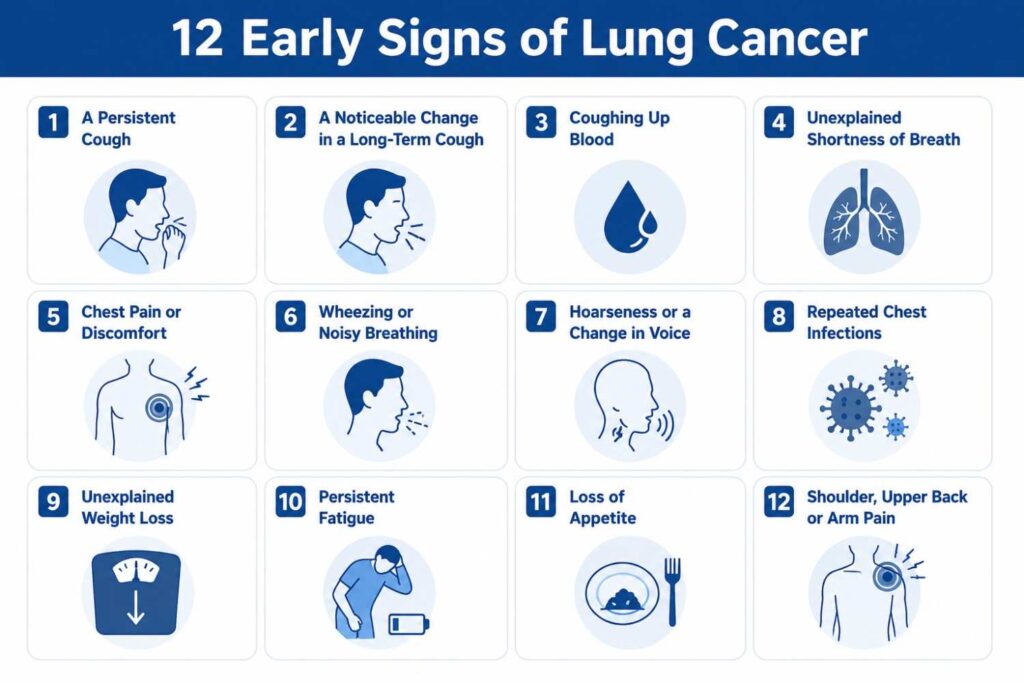
7. Hoarseness or a Change in Voice
A temporary hoarse voice is commonly caused by a cold, throat infection, reflux, allergy, or excessive voice use.
Persistent hoarseness may occasionally occur when a growth affects or presses against a nerve involved in vocal-cord movement.
Changes may include:
- A rough or raspy voice
- Reduced voice strength
- Difficulty speaking loudly
- Voice fatigue
- A lower or breathier voice
- Hoarseness lasting several weeks
An ear, nose, and throat evaluation may sometimes be needed to inspect the vocal cords and identify the cause.
8. Repeated Chest Infections
Repeated episodes of bronchitis or pneumonia can occasionally occur when part of an airway becomes narrowed or blocked.
Warning patterns may include:
- An infection returning soon after treatment
- Pneumonia repeatedly affecting the same lung area
- Fever and coughing that improve only temporarily
- Ongoing mucus production
- Persistent abnormalities on chest imaging
- Increasing frequency of respiratory infections
Repeated infections are not always among the early signs of lung cancer, but the pattern may lead a doctor to recommend further investigation.
9. Unexplained Weight Loss
Unintentional weight loss means losing weight without changing diet, physical activity, or lifestyle.
Cancer cells may alter the way the body uses energy. Reduced appetite, inflammation, swallowing difficulty, nausea, emotional stress, or other underlying conditions may also contribute.
Medical advice is appropriate when weight loss:
- Happens without trying
- Continues over several weeks
- Is accompanied by weakness
- Occurs with reduced appetite
- Is associated with persistent coughing
- Has no obvious explanation
Thyroid conditions, digestive diseases, diabetes, infections, and several other illnesses can also cause unexplained weight loss.
10. Persistent Fatigue
Fatigue related to an underlying illness is different from ordinary tiredness after a busy day.
It may feel like:
- Ongoing physical weakness
- Lack of energy despite adequate sleep
- Difficulty completing routine tasks
- Reduced concentration
- Needing more rest than usual
- Feeling exhausted after minimal activity
Fatigue is common and has many possible causes, including anaemia, poor sleep, stress, nutritional deficiencies, infection, hormonal conditions, and medication effects.
When fatigue occurs with respiratory symptoms, unexplained weight loss, or reduced appetite, a medical evaluation can help identify the cause.
11. Loss of Appetite
A reduced desire to eat can develop because of infection, emotional stress, digestive problems, medication, pain, or many other health conditions.
Possible changes include:
- Feeling full after eating a small amount
- Skipping meals unintentionally
- Losing interest in favourite foods
- Eating less for several weeks
- Experiencing weight loss alongside appetite changes
Loss of appetite alone is unlikely to identify lung cancer. However, it may become relevant when combined with other early signs of lung cancer.
12. Shoulder, Upper Back or Arm Pain
A tumour located near the upper part of a lung may occasionally affect nearby structures and cause pain around the shoulder, upper back, chest, or arm.
The pain may:
- Remain on one side
- Continue despite rest
- Feel deep rather than muscular
- Extend down the arm
- Occur with hand weakness or tingling
- Become more noticeable at night
Most shoulder and back pain is related to muscles, joints, posture, or spinal problems. Persistent unexplained pain requires medical assessment to establish the correct cause.
Additional Changes That May Require Evaluation
Some people may experience less specific changes alongside the recognised early signs of lung cancer, including:
- Swelling around the face or neck
- Enlarged lymph nodes
- Reduced physical endurance
- Difficulty swallowing
- Persistent headaches
- Dizziness or balance changes
- Recurrent fever
- General weakness
These symptoms have many possible explanations and may not be connected to the lungs. Their importance depends on duration, severity, medical history, risk factors, and associated findings.
Causes and Risk Factors for Lung Cancer
Smoking is the most important preventable risk factor, but people who have never smoked can also develop lung cancer. The National Cancer Institute recognises two principal categories—non-small cell and small cell lung cancer—and confirms that lung cancer can occur in both smokers and nonsmokers.
Risk factors may include:
- Current or previous tobacco smoking
- Regular exposure to second-hand smoke
- Radon exposure
- Workplace exposure to asbestos or certain chemicals
- Long-term exposure to air pollution
- Previous radiation treatment to the chest
- Family history of lung cancer
- Increasing age
- Chronic lung disease
- A personal history of cancer
Having a risk factor does not mean that cancer will definitely develop. Similarly, having no known risk factors does not completely remove the possibility.
When Should You Consult a Doctor?
Consider arranging a medical consultation when symptoms:
- Continue for several weeks
- Become progressively worse
- Return after treatment
- Interfere with breathing or daily activities
- Occur alongside unexplained weight loss
- Include blood in the mucus
- Appear in someone with a significant smoking history
- Cannot be explained by a known condition
Seek urgent help for severe breathing difficulty, a large amount of coughed-up blood, fainting, confusion, bluish lips, or sudden intense chest pain.
Screening Before Symptoms Develop
Screening is different from testing a person who already has symptoms. Screening is intended for people who feel well but have a higher risk of lung cancer.
Low-dose CT is the recommended screening method for eligible high-risk adults. Screening is not suitable for everyone because it can produce false-positive findings, lead to additional procedures, or detect abnormalities that may never cause harm. Eligibility should therefore be discussed with a qualified doctor.
People experiencing early signs of lung cancer need diagnostic evaluation rather than relying only on a screening programme.
Benefits of Recognising Early Signs of Lung Cancer
Recognising persistent warning signs can support:
- Earlier medical consultation
- Faster investigation of unexplained symptoms
- Identification of non-cancerous conditions that need treatment
- Diagnosis before extensive disease spread in some patients
- Access to a wider range of treatment options
- Better planning of supportive care
- Improved symptom management
- More informed healthcare decisions
Early recognition does not guarantee an early-stage diagnosis, but delaying an evaluation can postpone necessary care.
Conclusion
The early signs of lung cancer may include a persistent or changing cough, coughing up blood, breathlessness, chest pain, wheezing, hoarseness, repeated infections, unexplained weight loss, fatigue, appetite changes, or persistent shoulder pain. These symptoms are not specific to cancer, but they should be investigated when they continue, worsen, or occur together.
Anyone concerned about possible early signs of lung cancer should seek qualified medical evaluation rather than attempting to diagnose the condition at home. Timely imaging, biopsy, staging, and molecular testing can guide personalised treatment. Patients in Thrissur can discuss persistent symptoms and individual risk factors with an experienced cancer care specialist.
For additional information, refer to the American Lung Association’s Lung Cancer Treatment Guidelines to learn more about evidence-based treatment recommendations and patient care.
Frequently Asked Questions
What is usually the first sign of lung cancer?
There is no single first symptom for everyone. A persistent or changing cough is commonly reported, but some people notice breathlessness, chest discomfort, fatigue, weight loss, or no symptoms during the early stage.
How long should a cough last before I see a doctor?
A cough lasting more than a few weeks, becoming worse, or occurring with blood, weight loss, chest pain, or breathing difficulty should be medically evaluated.
Can a non-smoker develop lung cancer?
Yes. Although smoking is the leading risk factor, lung cancer can occur in people who have never smoked due to environmental, occupational, genetic, or unidentified factors.
Are early signs of lung cancer always obvious?
No. The changes may be mild, nonspecific, or completely absent. This is why high-risk individuals may be advised to discuss screening even when they feel well.
Does coughing up blood always mean lung cancer?
No. Infections, tuberculosis, airway inflammation, injuries, and other conditions can cause blood in mucus. However, this symptom requires prompt medical assessment.
Can back or shoulder pain be related to lung cancer?
It can occasionally be related, especially when a tumour affects nearby structures. Most back and shoulder pain has non-cancerous causes, but persistent unexplained pain should be evaluated.
Can a chest X-ray detect early lung cancer?
A chest X-ray may identify some abnormalities, but small tumours can be missed. A doctor may recommend CT imaging depending on the symptoms and individual risk level.
Is breathlessness always a late symptom?
Not necessarily. Some people experience breathing changes earlier, while others develop them later. Breathlessness can also arise from many heart, lung, blood, and fitness-related conditions.
What is the difference between screening and diagnosis?
Screening looks for lung cancer in eligible high-risk people who do not have symptoms. Diagnostic testing investigates existing symptoms or an abnormal medical finding.
Can lung cancer be treated successfully when found early?
Some early-stage lung cancers may be treated with surgery, radiation, systemic therapy, or a combination. Outcomes vary according to the cancer type, stage, biology, and overall health.
Do repeated chest infections indicate lung cancer?
Usually not. However, repeated pneumonia or bronchitis affecting the same area may lead a doctor to investigate whether an airway is narrowed or blocked.
Which specialist should evaluate possible lung cancer symptoms?
A general doctor may begin the assessment and refer the patient to a pulmonologist, radiologist, thoracic surgeon, or medical oncologist depending on the findings.

Dr. Bibin Francis
Dr. Bibin Francis is a dedicated medical oncologist with expertise in chemotherapy, immunotherapy, targeted therapy, and personalized cancer treatment planning for a wide range of malignancies.
Jubilee Mission Medical College & Research Institute, Thrissur, Kerala