
10 Powerful Tips: What Are the Early Warning Signs of Cancer
What are the early warning signs of cancer? Recognising possible warning signs can help people seek appropriate medical evaluation without unnecessary delay. In Thrissur, as elsewhere, people may notice changes such as unexplained weight loss, unusual bleeding, persistent pain, a new lump, or ongoing changes in normal body functions.
It is important to understand that these symptoms do not automatically mean cancer. Many can occur because of infections, hormonal changes, inflammation, nutritional problems, or other non-cancerous conditions. However, symptoms that are persistent, unusual, worsening, or unexplained deserve medical attention.
Cancer can develop in many parts of the body, and symptoms vary depending on the type and location. Some cancers may cause noticeable symptoms early, while others may remain difficult to detect until they have progressed.
Understanding what are the early warning signs of cancer can help individuals recognise potentially important changes and discuss them with a qualified healthcare professional.
What Are the Early Warning Signs of Cancer
The early warning signs of cancer are changes in the body that may require further medical assessment. Common warning signs can include:
- Unexplained weight loss
- Persistent tiredness or weakness
- A new lump or swelling
- Unusual bleeding or discharge
- Persistent or unexplained pain
- Changes in bowel habits
- Changes in bladder habits
- A persistent cough or hoarseness
- Difficulty swallowing
- Changes in a mole or skin lesion
- Recurrent fever or night sweats
- Persistent indigestion or abdominal discomfort
- Sores that do not heal
Having one of these symptoms does not establish a cancer diagnosis. The significance depends on its duration, severity, associated symptoms, personal risk factors, and clinical findings.
Unexplained Weight Loss
Unexpected weight loss is one possible warning sign that should not be ignored, particularly when it occurs without changes in diet or physical activity.
Losing a significant amount of weight without trying may have many causes, including digestive disorders, thyroid problems, chronic infections, emotional stress, or other medical conditions. Some cancers can also affect metabolism, appetite, or the body’s ability to use nutrients effectively.
Unexplained weight loss becomes more concerning when it occurs alongside other persistent symptoms such as fatigue, pain, changes in bowel habits, difficulty swallowing, or loss of appetite.
A healthcare professional can determine whether further investigations are appropriate.
Persistent Fatigue and Weakness
Persistent fatigue is another symptom that can occur with many health conditions. Cancer may sometimes cause tiredness because of changes in metabolism, inflammation, reduced appetite, blood loss, or other effects on the body.
Normal tiredness usually improves with adequate rest. Fatigue that continues for weeks, interferes with daily activities, or occurs alongside other unexplained symptoms may require evaluation.
Fatigue alone is rarely enough to indicate cancer. Conditions such as anaemia, sleep problems, nutritional deficiencies, thyroid disorders, and infections can also cause significant tiredness.
New Lumps or Unusual Swelling
A newly developed lump, thickening, or swelling should be assessed, particularly if it persists or changes over time.
Lumps can occur for many reasons. Cysts, enlarged lymph nodes, infections, benign growths, and inflammation are common possibilities. Some cancers, however, can present as a new mass.
A lump deserves particular attention when it:
- Continues to increase in size
- Feels unusually firm
- Does not disappear
- Is associated with unexplained weight loss
- Is accompanied by persistent pain or other changes
- Causes changes in nearby body functions
Self-examination can help people notice changes, but it cannot determine whether a lump is cancerous.
Unusual Bleeding or Discharge
Unexpected bleeding can be an important symptom depending on where it occurs.
Examples may include blood in the stool, urine, or sputum, unexplained vaginal bleeding, or bleeding between expected menstrual periods. Bleeding after menopause also warrants medical assessment.
There are many non-cancerous causes of abnormal bleeding, including infections, haemorrhoids, hormonal changes, medications, and other conditions. However, persistent or unexplained bleeding should not be assumed to be harmless.
Medical assessment can help identify the underlying cause and determine whether additional testing is required.
Persistent Pain Without a Clear Cause
Pain is common and usually has an identifiable explanation. However, persistent or unexplained pain can sometimes be associated with underlying disease.
The location and characteristics of pain vary considerably depending on the affected body system. For example, persistent abdominal, pelvic, chest, bone, or back pain may have many possible causes.
Pain that continues despite appropriate basic measures, progressively worsens, repeatedly returns, or occurs with other unexplained symptoms should be discussed with a healthcare professional.
Changes in Bowel or Bladder Habits
Changes in normal bowel or bladder function can have several causes, including diet, infections, medications, digestive disorders, urinary conditions, and lifestyle factors.
Potential changes that deserve attention include:
- Persistent constipation or diarrhoea
- A prolonged change in stool appearance
- Blood in the stool
- Persistent abdominal discomfort
- Increased urinary frequency
- Difficulty urinating
- Blood in the urine
- Persistent changes in bladder control
The duration of these symptoms is important. A temporary change may not be concerning, while a persistent or unexplained change may need investigation.
Persistent Cough, Hoarseness, or Breathing Changes
A cough is frequently caused by respiratory infections, allergies, asthma, reflux, or environmental irritation. Most short-term coughs improve as the underlying condition resolves.
A cough that persists for an extended period, repeatedly returns, or is accompanied by blood in the sputum, unexplained weight loss, chest discomfort, or breathing difficulties should receive medical attention.
Persistent hoarseness or an ongoing change in voice may also require assessment, particularly when it does not improve.
Smoking and exposure to certain environmental substances can increase the risk of several diseases, making persistent respiratory symptoms especially important to discuss with a healthcare professional.
Changes in Skin or a Mole
Changes in the skin can sometimes provide visible clues that require evaluation.
A mole or skin lesion may deserve attention if it develops changes in:
- Size
- Shape
- Colour
- Border
- Surface
- Bleeding
- Crusting
A sore or skin lesion that does not heal may also require assessment.
A useful approach is to pay attention to new or changing skin lesions rather than trying to diagnose them at home. Dermatological evaluation can help determine whether a lesion is benign or needs further testing.
Difficulty Swallowing or Persistent Indigestion
Difficulty swallowing can occur because of reflux, inflammation, infections, structural problems, or other digestive conditions. Persistent swallowing difficulty should not be ignored.
Ongoing indigestion, abdominal discomfort, bloating, early fullness, or appetite changes can also have numerous causes.
The presence of one digestive symptom does not necessarily indicate cancer. However, persistent symptoms, particularly when associated with weight loss, vomiting, bleeding, or difficulty swallowing, may require more detailed evaluation.
Recurrent Fever or Night Sweats
Fever is commonly associated with infections and inflammation. Night sweats can also occur because of environmental temperature, hormonal changes, medications, infections, and other conditions.
When unexplained fever or significant night sweating repeatedly occurs without an obvious cause, medical evaluation may be appropriate.
These symptoms are more meaningful when considered alongside other findings such as unexplained weight loss, persistent fatigue, enlarged lymph nodes, or recurrent infections.
What Causes Cancer

Cancer develops when cells acquire abnormal changes that allow them to grow and divide uncontrollably. These changes can develop because of genetic factors, environmental exposures, lifestyle-related factors, or a combination of several influences.
Important cancer risk factors can include:
- Tobacco use
- Excessive alcohol consumption
- Certain infections
- Excessive ultraviolet exposure
- Some occupational or environmental exposures
- Family history of certain cancers
- Increasing age
- Certain inherited genetic changes
- Excess body weight and related metabolic factors
- Limited physical activity
Having a risk factor does not mean a person will develop cancer. Likewise, cancer can occur in people without obvious risk factors.
What Are the Different Types of Cancer
Cancer is not a single disease. It includes many different diseases that can affect different tissues and organs.
Major categories include:
- Breast cancer
- Lung cancer
- Colorectal cancer
- Prostate cancer
- Cervical cancer
- Skin cancer
- Liver cancer
- Stomach cancer
- Kidney cancer
- Blood cancers
- Brain and nervous system cancers
- Head and neck cancers
Each type can have different symptoms, risk factors, diagnostic methods, and treatment approaches. This is why a symptom alone cannot determine the type or presence of cancer.
How Is Cancer Diagnosed
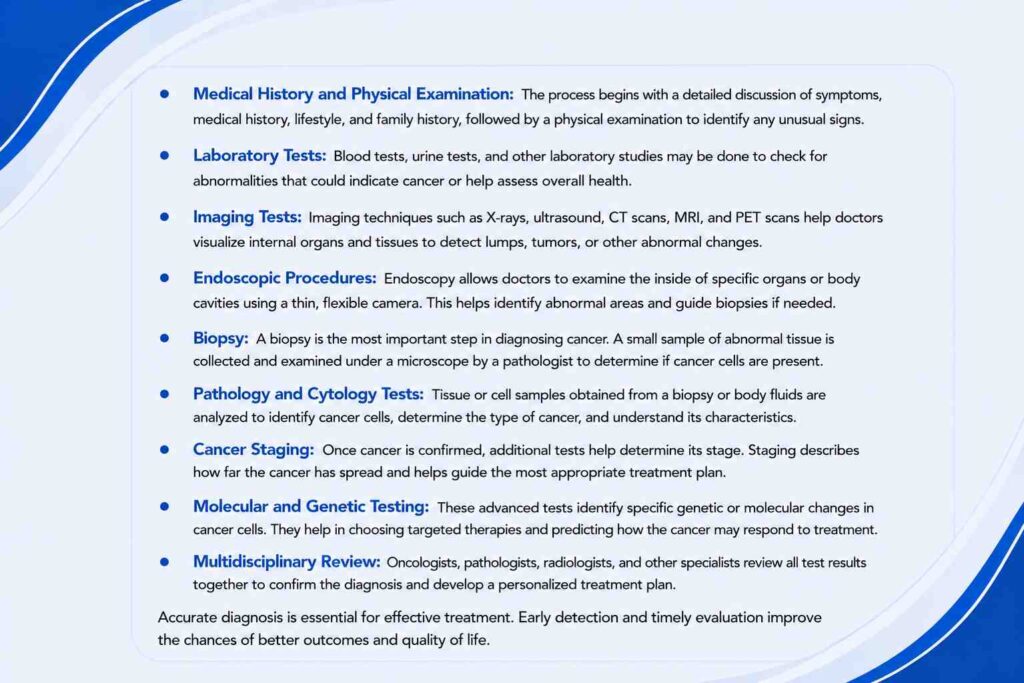
When symptoms raise concern, a healthcare professional may begin with a detailed medical history and physical examination.
Depending on the symptoms, evaluation may involve:
- Blood tests
- Urine tests
- Imaging studies
- Ultrasound
- X-rays
- CT or MRI scans
- Endoscopic examinations
- Tissue biopsy
- Other specialised diagnostic tests
A biopsy is often important when doctors need to examine abnormal tissue directly. The exact diagnostic pathway depends on the suspected condition and affected body area.
The purpose of testing is not simply to look for cancer. It is also to identify other possible causes of the symptoms.
Why Early Evaluation Matters
Understanding what are the early warning signs of cancer can encourage people to seek appropriate evaluation when symptoms persist.
Early assessment can have several advantages:
- It can identify the cause of unexplained symptoms.
- It can distinguish serious conditions from common benign problems.
- It may allow certain cancers to be detected at an earlier stage.
- It can help establish an appropriate treatment plan.
- It may reduce uncertainty and anxiety.
- It provides an opportunity to discuss preventive care and screening.
However, not every cancer produces early symptoms, and not every cancer can be prevented through symptom awareness alone. Recommended screening is also important for cancers for which effective screening tests are available.
What Should You Do If You Notice Warning Signs
If you notice a persistent or unusual change, avoid immediately assuming that it is cancer. Instead, pay attention to the symptom and consider seeking professional medical advice.
Keep track of:
- When the symptom started
- Whether it is getting better or worse
- How frequently it occurs
- Other symptoms occurring at the same time
- Any recent changes in medication, diet, or lifestyle
- Relevant personal or family medical history
Do not delay urgent medical care for severe symptoms such as significant bleeding, severe breathing difficulty, sudden neurological changes, or severe unexplained pain.
Can Cancer Be Prevented
Not every cancer can be prevented, but several healthy habits can reduce the risk of certain cancers.
Helpful measures include:
- Avoiding tobacco products
- Limiting alcohol consumption
- Maintaining a healthy body weight
- Staying physically active
- Eating a balanced diet
- Protecting skin from excessive ultraviolet exposure
- Following recommended vaccination schedules
- Participating in appropriate cancer screening
- Discussing significant family cancer history with a healthcare professional
Prevention strategies should be personalised according to age, health status, family history, and individual risk factors.
Conclusion
Understanding what are the early warning signs of cancer can help people recognise unusual changes in their health and seek appropriate medical evaluation at the right time. Symptoms such as unexplained weight loss, persistent fatigue, unusual bleeding, new lumps, ongoing pain, changes in bowel or bladder habits, persistent cough, and non-healing sores should not be ignored when they persist or worsen.
These signs do not necessarily mean cancer, as many can result from other medical conditions. However, early professional assessment can help identify the underlying cause and determine whether further testing is needed. Regular screening, healthy lifestyle choices, and awareness of personal risk factors can also support better cancer prevention and early detection. For reliable information on cancer symptoms and early detection, you can also refer to the National Cancer Institute’s overview of cancer symptoms.
Frequently Asked Questions

Dr. Bibin Francis
Dr. Bibin Francis is a dedicated medical oncologist with expertise in chemotherapy, immunotherapy, targeted therapy, and personalized cancer treatment planning for a wide range of malignancies.
Jubilee Mission Medical College & Research Institute, Thrissur, Kerala