
Understanding Breast Cancer Treatment Options

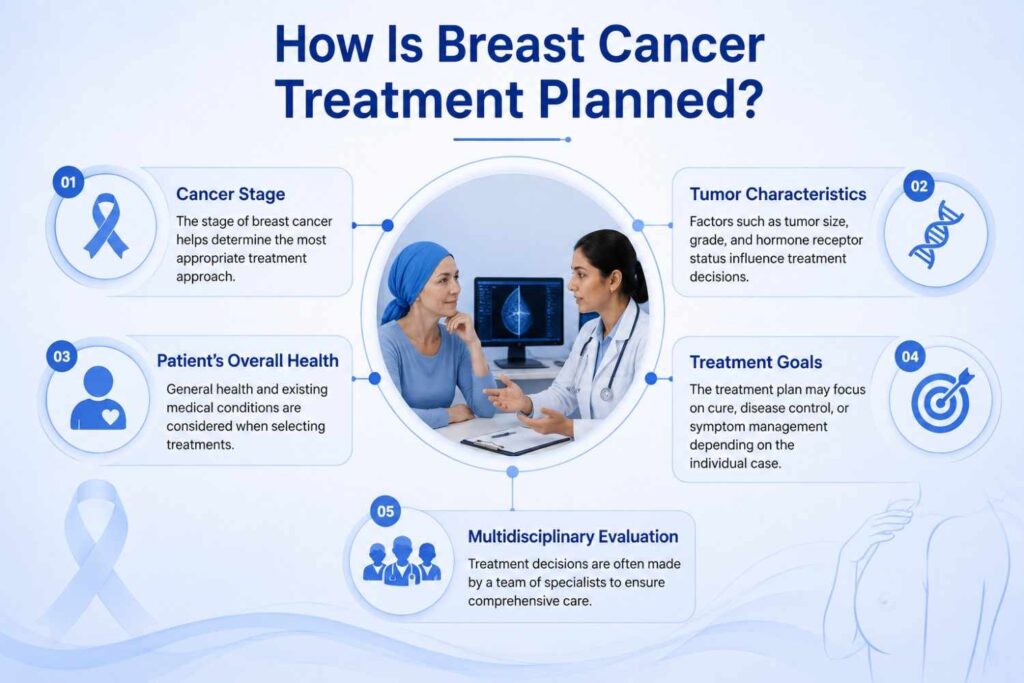
Breast cancer treatment is personalized based on the type and stage of cancer, the patient’s overall health, and individual treatment goals. Advances in cancer care have made it possible to combine multiple treatment approaches to improve outcomes and enhance quality of life.
Understanding the available treatment options for breast cancer can help patients make informed decisions and actively participate in their treatment planning.
Table of Contents
- How Is Breast Cancer Treatment Planned?
- Surgical Treatment Options
- Chemotherapy
- Radiation Therapy
- Hormone Therapy
- Targeted Therapy
- Immunotherapy
- Choosing the Right Treatment Plan
- Conclusion
- Frequently Asked Questions
Surgical Treatment Options
Surgery may be recommended as part of a comprehensive breast cancer treatment plan depending on the stage, location, and extent of the disease.
Breast Tumor Removal Surgery
Surgical removal of the cancerous tumor helps control disease progression and is often one of the primary treatment approaches.
Breast-Conserving Procedures
In selected patients, surgery may focus on removing the tumor while preserving as much healthy breast tissue as possible.
Lymph Node Evaluation
Nearby lymph nodes may be assessed during surgery to determine whether the cancer has spread beyond the breast.
Reconstructive Surgery
Breast reconstruction procedures may be considered to restore breast appearance following cancer surgery.
Chemotherapy
Chemotherapy is one of the most common treatment options for breast cancer and may be used before or after surgery.
Neoadjuvant Chemotherapy
Given before surgery to shrink the tumor and make it easier to remove.
Adjuvant Chemotherapy
Administered after surgery to reduce the risk of cancer recurrence.
Advanced Breast Cancer Treatment
Chemotherapy may help control cancer growth and manage symptoms in advanced stages.
Hormone Therapy
Hormone therapy is commonly used for hormone receptor-positive breast cancers.
- Tamoxifen therapy
- Aromatase inhibitors
- Ovarian suppression
- Long-term recurrence reduction
- Adjuvant hormone treatment
Targeted Therapy
Targeted therapy focuses on specific proteins that help cancer cells grow and spread.
HER2-Targeted Therapy
Used for HER2-positive breast cancers to block cancer-promoting signals.
Precision Medicine
Treatment is tailored based on the biological characteristics of the tumor.
Combination Therapy
Targeted medications may be combined with chemotherapy or hormone therapy for improved results.
Immunotherapy
Immunotherapy helps the immune system recognize and attack cancer cells more effectively.
Immune Checkpoint Inhibitors
These drugs help immune cells identify and destroy cancer cells.
Triple-Negative Breast Cancer
Immunotherapy may be recommended for selected patients with triple-negative breast cancer.
Advanced Disease Management
It can help improve treatment outcomes in certain advanced or metastatic cases.
Choosing the Right Treatment Plan
Selecting the best treatment options for breast cancer requires careful evaluation of several factors.
- Cancer stage
- Tumor biology
- Treatment benefits
- Potential side effects
- Patient preferences
- Long-term outcomes
Conclusion
Multiple treatment options for breast cancer are available today, ranging from surgery and radiation therapy to chemotherapy, hormone therapy, targeted therapy, and immunotherapy. A personalized treatment plan developed by experienced specialists can help achieve the best possible outcomes while supporting long-term health and recovery.
For additional information about breast cancer diagnosis and treatment, please visit the World Health Organization (WHO) Breast Cancer Information Page.
Frequently Asked Questions
What are the main treatment options for breast cancer?
Common treatment options include surgery, chemotherapy, radiation therapy, hormone therapy, targeted therapy, and immunotherapy.
Is surgery always required for breast cancer?
Not always. The need for surgery depends on the type, stage, and characteristics of the cancer.
What is the difference between lumpectomy and mastectomy?
A lumpectomy removes the tumor, while a mastectomy removes the entire breast.
Can breast cancer be treated without chemotherapy?
Some patients may not require chemotherapy depending on their cancer type and treatment plan.
What is hormone therapy used for?
Hormone therapy helps treat hormone receptor-positive breast cancers and reduce recurrence risk.
Who is eligible for targeted therapy?
Targeted therapy is commonly used when specific cancer markers, such as HER2, are present.
Is radiation therapy painful?
Radiation therapy itself is painless, although some side effects may occur during treatment.
What is immunotherapy for breast cancer?
Immunotherapy helps the immune system identify and attack cancer cells.
Can multiple treatments be combined?
Yes. Many patients receive a combination of treatments as part of a personalized treatment plan.
How is the best treatment option chosen?
The treatment plan is determined based on cancer stage, tumor characteristics, overall health, and specialist recommendations.

Dr. Bibin Francis
Dr. Bibin Francis is a dedicated medical oncologist with expertise in chemotherapy, immunotherapy, targeted therapy, and personalized cancer treatment planning for a wide range of malignancies.
Jubilee Mission Medical College & Research Institute, Thrissur, Kerala