
Who Should Consult a Cancer Doctor? 7 Warning Signs You Need
Knowing who should consult a cancer doctor can help people recognize when persistent or unusual health changes need professional evaluation. In Thrissur, people may seek specialist cancer care when symptoms continue without a clear explanation, when screening results are abnormal, or when a healthcare professional recommends further investigation. Consulting a cancer doctor does not automatically mean that a person has cancer. In many cases, the purpose of an appointment is to understand symptoms, review test results, identify possible causes, and determine whether additional testing is necessary.
A cancer doctor, also known as an oncologist, evaluates suspected or confirmed cancers and helps coordinate appropriate treatment. Understanding who should consult a cancer doctor can therefore reduce unnecessary delays and encourage people to take concerning symptoms seriously.
Who Should Consult a Cancer Doctor
People with certain symptoms, abnormal test results, significant cancer risk factors, or a confirmed cancer diagnosis may benefit from consultation with a cancer doctor. The decision usually depends on the person’s symptoms, medical history, examination findings, and investigations.
Some common situations in which who should consult a cancer doctor becomes an important question include:
- Persistent symptoms without an obvious cause
- An unexplained lump or swelling
- Unusual bleeding
- Unexplained weight loss
- Persistent changes in bowel or bladder habits
- Long-lasting cough or voice changes
- Abnormal imaging or laboratory findings
- A biopsy showing abnormal or cancerous cells
- A strong family history of certain cancers
- A previous history of cancer
- A healthcare professional’s recommendation for specialist evaluation
Not every symptom listed above indicates cancer. Many can result from infections, hormonal changes, benign growths, inflammation, or other medical conditions. However, persistent or unexplained changes should be assessed rather than ignored.
Who Should Consult a Cancer Doctor for Persistent Symptoms
Persistent symptoms are one of the main reasons people ask who should consult a cancer doctor. A symptom that lasts longer than expected, repeatedly returns, or progressively becomes worse deserves medical attention.
Cancer can sometimes develop without obvious symptoms during its early stages. When symptoms do occur, they may resemble those of common illnesses. This is why duration, progression, and associated symptoms are important.
Unexplained weight loss
Losing a significant amount of weight without intentionally changing diet or physical activity should be evaluated. Weight loss can have many causes, including digestive disorders, thyroid problems, infections, stress, and chronic diseases. In some cases, it can also be associated with cancer.
Persistent fatigue
Ongoing fatigue that does not improve with adequate sleep and rest may require evaluation. Fatigue can occur because of anemia, nutritional deficiencies, infections, hormonal problems, chronic conditions, or cancer.
Persistent pain
Pain that has no clear explanation, continues despite appropriate treatment, or gradually becomes worse should not be dismissed. The location and characteristics of pain can help healthcare professionals determine whether further investigation is required.
Who Should Consult a Cancer Doctor About an Unusual Lump
An unexplained lump or swelling is another important reason to understand who should consult a cancer doctor. A lump can develop for numerous reasons, and most lumps are not necessarily cancerous.
Possible causes include:
- Cysts
- Enlarged lymph nodes
- Benign tumors
- Infections
- Inflammation
- Fatty tissue growths
- Other non-cancerous conditions
However, a lump deserves medical assessment when it is new, persistent, enlarging, firm, unusually shaped, or associated with other concerning symptoms.
For example, a persistent breast lump, neck swelling, abdominal mass, or enlarged lymph node may require clinical examination and imaging. Depending on the findings, a healthcare professional may recommend additional investigations such as ultrasound, mammography, CT, MRI, or biopsy.
It is important not to attempt to diagnose a lump based only on how it feels. Professional evaluation is the appropriate way to determine its cause.
Who Should Consult a Cancer Doctor After Abnormal Test Results
People who receive abnormal screening, imaging, or laboratory results may wonder who should consult a cancer doctor. An abnormal result does not necessarily mean cancer is present.
Screening tests are designed to identify changes that may require further assessment. Sometimes results are abnormal because of benign conditions, infections, inflammation, technical factors, or normal variations.
A cancer doctor may review:
- Imaging reports
- Pathology or biopsy reports
- Blood test results
- Screening test results
- Previous medical records
- Family medical history
- Symptoms and physical examination findings
The specialist can determine whether additional tests are appropriate and help explain what the findings may mean.
If a report recommends specialist consultation, it is generally advisable to follow that recommendation rather than assuming that an abnormal result is harmless.
Who Should Consult a Cancer Doctor Based on Cancer Risk Factors
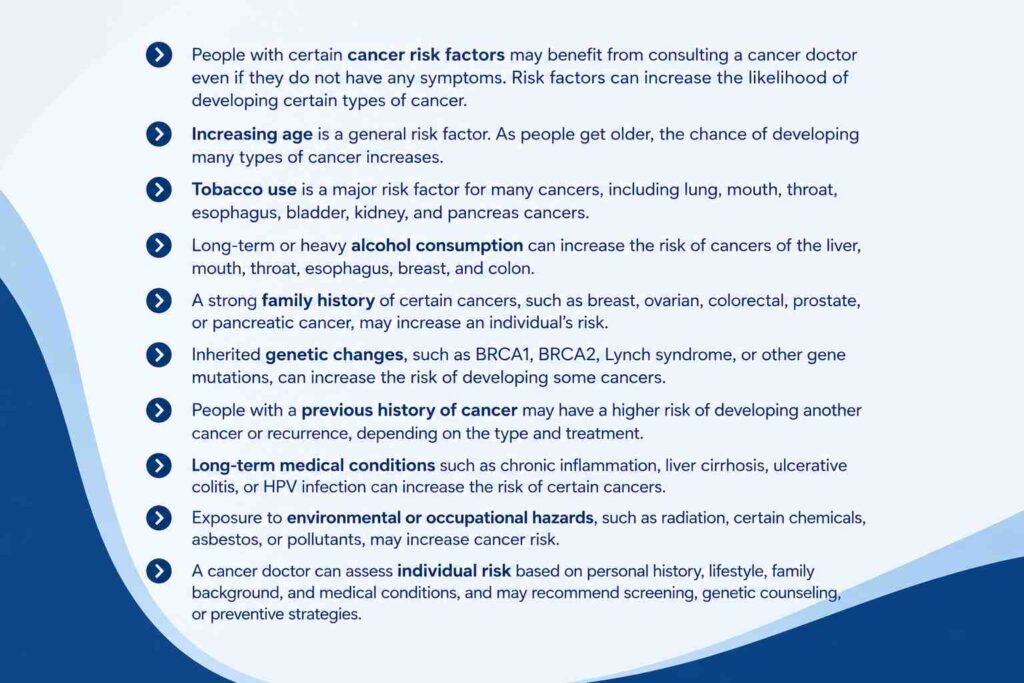
Risk factors can also help determine who should consult a cancer doctor. Having a risk factor does not mean that someone will develop cancer. It simply means that the person’s likelihood may be higher for certain cancers.
Important risk factors may include:
- Increasing age
- Tobacco exposure
- Heavy or long-term alcohol use
- Certain inherited genetic changes
- Strong family history of specific cancers
- Previous cancer treatment
- Certain long-term medical conditions
- Exposure to particular environmental or occupational hazards
- Some infections associated with cancer risk
- Certain lifestyle factors
People with significant hereditary cancer risk may benefit from genetic counseling or individualized screening recommendations.
A cancer doctor may also help determine whether someone needs closer surveillance based on personal and family history.
Who Should Consult a Cancer Doctor for Possible Cancer Symptoms
Understanding who should consult a cancer doctor also involves recognizing symptoms that may need timely evaluation. Some warning signs can vary according to the body system involved.
Changes in the breast
Possible warning signs include:
- A new breast lump
- Persistent breast swelling
- Changes in breast shape
- Nipple changes
- Unusual nipple discharge
- Skin changes over the breast
These symptoms can have non-cancerous causes, but persistent changes should be assessed.
Digestive changes
Persistent changes such as unexplained abdominal discomfort, difficulty swallowing, blood in stool, prolonged changes in bowel habits, or unexplained weight loss may require medical evaluation.
Urinary changes
Blood in the urine, persistent urinary changes, or unexplained pelvic discomfort should be discussed with a healthcare professional.
Respiratory symptoms
A persistent cough, coughing up blood, unexplained breathlessness, or continuing chest discomfort warrants appropriate medical assessment, particularly in people with relevant risk factors.
Skin changes
A changing mole, a new unusual skin growth, a sore that does not heal, or persistent changes in a skin lesion should be evaluated by an appropriate healthcare professional.
Who Should Consult a Cancer Doctor After a Cancer Diagnosis
People who have already been diagnosed with cancer are among those who clearly need specialist cancer care. Who should consult a cancer doctor is no longer simply a question of whether cancer might be present; the focus becomes determining the cancer type, stage, characteristics, and appropriate treatment approach.
A cancer doctor may evaluate:
- The location of the cancer
- Cancer type
- Tumor characteristics
- Cancer stage
- Pathology findings
- Imaging results
- Overall health
- Previous treatments
- Potential treatment options
Depending on the diagnosis, treatment may involve surgery, chemotherapy, radiation therapy, targeted therapy, immunotherapy, hormone therapy, or a combination of approaches.
The treatment plan is individualized because cancers differ significantly in their biology and behavior.
Types of Cancer Doctors
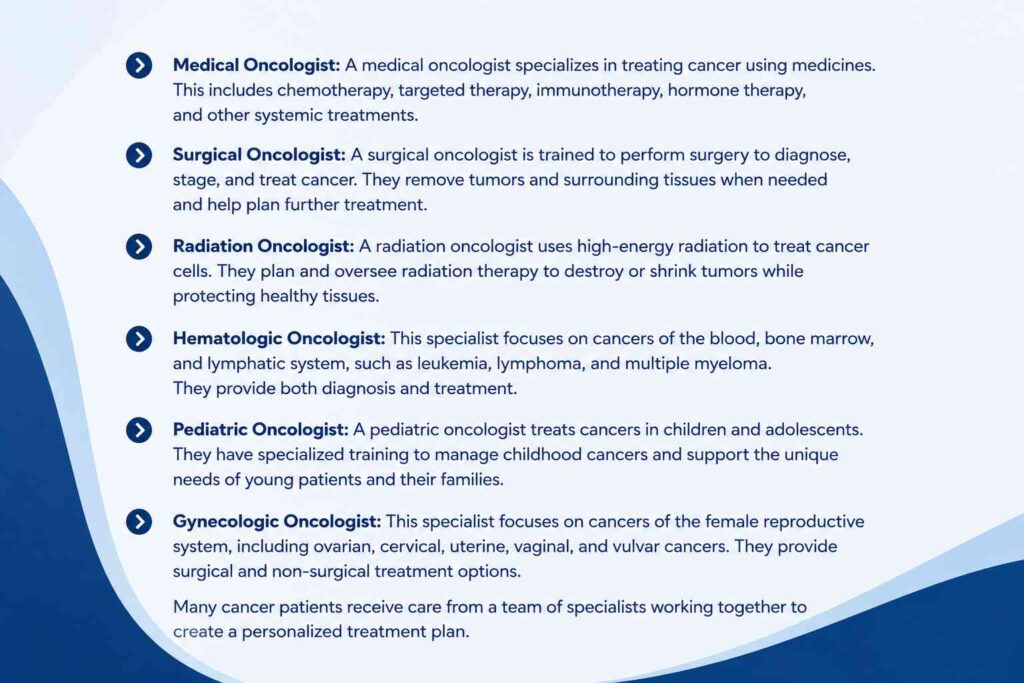
The term cancer doctor can refer to different specialists involved in cancer treatment. Understanding these specialties can make it easier to know who should consult a cancer doctor and which specialist may be involved.
Medical oncologist
A medical oncologist primarily manages cancer using medicines such as chemotherapy, immunotherapy, targeted therapy, and hormone therapy when appropriate.
Surgical oncologist
A surgical oncologist specializes in operations used to diagnose, remove, or manage certain cancers.
Radiation oncologist
A radiation oncologist specializes in radiation therapy, which uses carefully planned radiation to treat cancer cells.
Hematologic oncologist
This specialist manages cancers involving blood, bone marrow, and lymphatic tissues, including conditions such as leukemia, lymphoma, and multiple myeloma.
Cancer care is often multidisciplinary. Several specialists may work together to develop and coordinate an individual’s treatment plan.
What Happens During a Cancer Doctor Consultation
Knowing what to expect can make the question of who should consult a cancer doctor less stressful. The first consultation generally begins with a detailed discussion about symptoms and medical history.
The doctor may ask about:
- When symptoms began
- Whether symptoms are changing
- Previous medical conditions
- Previous surgeries
- Current medications
- Family history
- Lifestyle and risk factors
- Previous cancer or cancer treatment
- Existing test results
A physical examination may also be performed.
Depending on the situation, additional investigations may include imaging, blood tests, endoscopy, molecular testing, or tissue biopsy.
A biopsy is particularly important when tissue examination is required to determine whether abnormal cells are cancerous and, in some situations, to identify the specific type and characteristics of cancer.
Benefits of Consulting a Cancer Doctor Early
One of the main reasons who should consult a cancer doctor matters is that appropriate evaluation can help reduce delays in diagnosis and treatment.
Potential benefits include:
- Professional assessment of concerning symptoms
- Interpretation of abnormal test results
- Identification of appropriate diagnostic investigations
- Evaluation of cancer risk
- Earlier recognition of some cancers
- Access to specialist treatment planning
- Coordination between relevant specialists
- Better understanding of available treatment options
- Guidance about follow-up and monitoring
Early consultation does not guarantee that cancer will be detected early or that treatment will be successful. However, avoiding unnecessary delays in evaluating concerning symptoms can be an important part of responsible healthcare.
When Should You Not Delay a Cancer Consultation
Some symptoms should receive prompt medical attention, particularly when they are severe, rapidly worsening, or associated with other concerning changes.
Examples include:
- Unexplained bleeding
- Coughing up blood
- A rapidly growing lump
- Significant unexplained weight loss
- Persistent difficulty swallowing
- Severe or worsening unexplained pain
- New neurological changes
- Persistent symptoms accompanied by significant weakness
- An abnormal biopsy result
- A healthcare professional advising urgent specialist review
Urgency depends on the individual circumstances. People experiencing severe or rapidly worsening symptoms should seek appropriate medical care rather than waiting for a routine appointment.
How to Prepare for a Cancer Doctor Appointment
Once you understand who should consult a cancer doctor, preparing for the appointment can make the consultation more productive.
Bring relevant medical information, including:
- Previous scan reports
- Blood test results
- Biopsy or pathology reports
- Current medication list
- Previous treatment records
- Information about allergies
- Relevant family medical history
It can also help to write down when symptoms began and whether they have changed.
Consider preparing questions such as:
- What could be causing my symptoms?
- Do I need additional tests?
- What does my report mean?
- Is a biopsy necessary?
- What treatment options may be appropriate?
- Should another specialist be involved?
- What follow-up will be required?
Taking notes during the appointment can also help you remember important information later.
Common Misconceptions About Cancer Consultation
There are several misconceptions about who should consult a cancer doctor.
“Seeing an oncologist means I have cancer.”
Not necessarily. A person may be referred because of an abnormal test, suspicious imaging finding, persistent symptoms, or increased risk. Specialist evaluation helps determine what is actually happening.
“A painless lump is always harmless.”
Not necessarily. Some benign lumps are painless, but some cancers can also be painless. A persistent or changing lump should be evaluated.
“I should wait until symptoms become severe.”
Waiting can unnecessarily delay assessment. Persistent or unexplained symptoms should be discussed with a healthcare professional.
“Cancer symptoms are always obvious.”
Some cancers may cause few or no noticeable symptoms during their early stages. This is one reason recommended screening can be important for eligible individuals.
“Family history means cancer is inevitable.”
A family history can increase risk for certain cancers, but it does not mean that cancer will definitely develop.
Screening and Regular Health Checks
Screening can be an important component of cancer prevention and early detection. Screening recommendations vary according to age, sex, personal risk, family history, and the type of cancer being considered.
Examples of cancer screening may include assessments for:
- Breast cancer
- Cervical cancer
- Colorectal cancer
- Lung cancer in selected high-risk individuals
- Prostate-related concerns in appropriate circumstances
Screening should follow evidence-based recommendations and individual risk assessment. Not every screening test is appropriate for every person.
People with a strong family history or inherited cancer risk may require a different surveillance strategy from the general population.
Tips for People Concerned About Cancer
If you are worried about symptoms or cancer risk, consider these practical steps:
- Do not ignore persistent or unusual symptoms.
- Keep copies of important medical reports.
- Record changes in symptoms.
- Follow recommended screening schedules.
- Share relevant family medical history.
- Avoid tobacco exposure.
- Maintain a healthy lifestyle.
- Follow prescribed treatment and follow-up plans.
- Ask questions when medical information is unclear.
- Avoid relying on unverified online diagnoses.
Most importantly, do not assume that a symptom is cancer based on internet searches alone. The same symptom can have many different causes.
How Is Cancer Diagnosed and Treated
The diagnostic process depends on the suspected cancer. Doctors may use physical examination, laboratory tests, imaging, endoscopy, biopsy, and specialized pathology or molecular tests.
Once cancer is confirmed, staging helps determine how extensively the disease has developed. Treatment is then selected based on factors such as cancer type, stage, tumor characteristics, overall health, and individual circumstances.
Treatment options can include:
- Surgery
- Chemotherapy
- Radiation therapy
- Immunotherapy
- Targeted therapy
- Hormone therapy
- Combination treatments
- Supportive and palliative care when appropriate
Modern cancer care increasingly uses multidisciplinary approaches, allowing different specialists to contribute to diagnosis and treatment planning.
Conclusion
The question of who should consult a cancer doctor is relevant to anyone experiencing persistent unexplained symptoms, receiving abnormal test results, having significant cancer risk factors, or receiving a cancer diagnosis. A consultation does not automatically mean that cancer is present. Instead, it provides an opportunity for proper assessment, diagnosis, risk evaluation, and treatment planning when necessary.
People should pay attention to persistent changes such as unexplained weight loss, unusual bleeding, long-lasting pain, new lumps, persistent cough, changes in bowel or bladder habits, or abnormal screening results. Individuals with a strong family history or previous cancer may also require specialist guidance.
The most appropriate next step depends on the person’s symptoms and medical history. If you are concerned about a possible cancer-related symptom or have been advised to seek specialist evaluation, arranging a professional assessment can provide clarity and help determine whether further investigation is needed. For people seeking specialist evaluation in Thrissur, timely consultation can be an important step toward understanding concerning symptoms and choosing appropriate care.
Frequently Asked Question

Dr. Bibin Francis
Dr. Bibin Francis is a dedicated medical oncologist with expertise in chemotherapy, immunotherapy, targeted therapy, and personalized cancer treatment planning for a wide range of malignancies.
Jubilee Mission Medical College & Research Institute, Thrissur, Kerala