
7 Powerful Facts About Family History and Cancer Risk Guide
Family History and Cancer Risk is an important topic for anyone who wants to understand how genetics can influence their health. While many cancers occur due to lifestyle and environmental factors, some cancers are linked to inherited genetic changes passed from one generation to another. Understanding Family History and Cancer Risk can help individuals take preventive measures, undergo appropriate screenings, and make informed healthcare decisions.
A family history of cancer does not automatically mean that someone will develop cancer. However, having close relatives diagnosed with certain cancers may increase the likelihood of developing similar conditions. Learning about Family History and Cancer Risk can empower people to identify potential warning signs early and adopt healthier habits that may reduce overall cancer risk.
What Is Family History and Cancer Risk
Family History and Cancer Risk refers to the relationship between inherited genetic factors and an individual’s likelihood of developing cancer. Family history includes information about medical conditions that have affected parents, siblings, grandparents, children, aunts, uncles, and other close relatives.
When several family members have been diagnosed with the same type of cancer or related cancers, healthcare professionals may consider a hereditary cancer risk. Certain inherited gene mutations can increase the chances of developing specific cancers throughout a person’s lifetime.
How Family History Affects Cancer Risk
Family history may influence cancer risk through:
- Inherited genetic mutations
- Shared environmental exposures
- Similar lifestyle habits
- Common dietary patterns
- Exposure to the same risk factors
Understanding Family History and Cancer Risk allows healthcare providers to develop personalized screening and prevention plans.
Why Family History and Cancer Risk Matter
Knowing your family history can provide valuable information about your health.
Benefits of understanding Family History and Cancer Risk include:
- Earlier cancer detection
- Better prevention strategies
- Personalized screening schedules
- Improved treatment planning
- Increased awareness among family members
Individuals who understand their Family History and Cancer Risk can make informed decisions that may improve long-term health outcomes.
Common Cancers Associated With Family History and Cancer Risk
Some cancers have stronger hereditary links than others.
Breast Cancer
Breast cancer is one of the most common cancers associated with inherited genetic mutations. Mutations in BRCA1 and BRCA2 genes can significantly increase risk.
Ovarian Cancer
Families with multiple cases of ovarian cancer may carry inherited genetic mutations that increase susceptibility.
Colorectal Cancer
A strong family history of colorectal cancer may indicate inherited conditions such as Lynch syndrome.
Prostate Cancer
Men with a family history of prostate cancer often face a higher risk than those without affected relatives.
Pancreatic Cancer
Although relatively uncommon, pancreatic cancer can sometimes occur due to inherited genetic factors.
Melanoma
Certain inherited gene mutations may increase the likelihood of developing melanoma and other skin cancers.
Causes of Family History and Cancer Risk
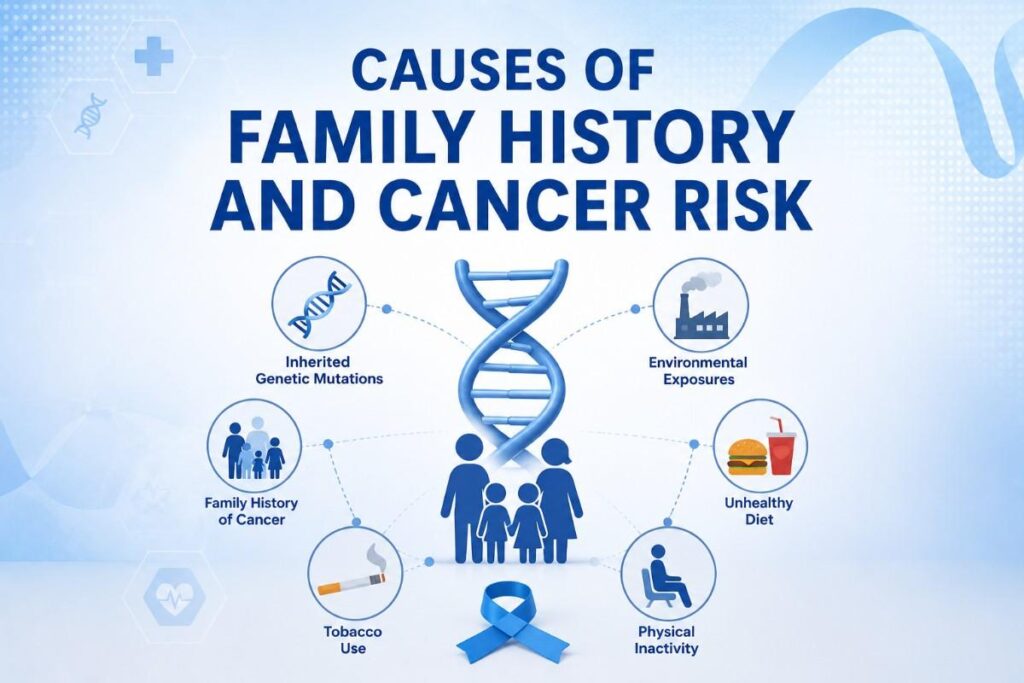
Several factors contribute to Family History and Cancer Risk.
Inherited Gene Mutations
Some cancer-related genes can be passed from parents to children.
Examples include:
- BRCA1
- BRCA2
- TP53
- APC
- MLH1
- MSH2
These genetic mutations may increase susceptibility to specific cancers.
Shared Environmental Factors
Families often live in similar environments and may experience the same exposures.
Examples include:
- Tobacco smoke
- Air pollution
- Occupational hazards
- Radiation exposure
- Household chemicals
Lifestyle Habits
Shared family behaviors may also affect cancer risk.
Examples include:
- Poor dietary habits
- Physical inactivity
- Obesity
- Excessive alcohol consumption
- Smoking
Warning Signs in Family History That May Increase Cancer Risk
Certain family patterns may indicate an inherited cancer predisposition.
Multiple Relatives With the Same Cancer
Several close relatives diagnosed with the same cancer may suggest a hereditary factor.
Cancer Diagnosed at a Young Age
Cancer occurring before age 50 is often considered a warning sign for inherited risk.
Multiple Cancer Diagnoses in One Individual
A person who develops more than one type of cancer may have an inherited cancer syndrome.
Cancer Across Several Generations
Cancer affecting grandparents, parents, and children may indicate a hereditary pattern.
Rare Cancers in the Family
Rare cancers sometimes occur due to inherited genetic mutations.
Types of Hereditary Cancer Syndromes
Several hereditary syndromes are linked to Family History and Cancer Risk.
Hereditary Breast and Ovarian Cancer Syndrome
This syndrome is commonly associated with BRCA1 and BRCA2 mutations.
Possible associated cancers include:
- Breast cancer
- Ovarian cancer
- Pancreatic cancer
- Prostate cancer
Lynch Syndrome
Lynch syndrome increases the risk of:
- Colorectal cancer
- Endometrial cancer
- Ovarian cancer
- Stomach cancer
Familial Adenomatous Polyposis
This inherited condition causes numerous colon polyps and significantly increases colorectal cancer risk.
Li-Fraumeni Syndrome
Li-Fraumeni syndrome is associated with several cancer types, including:
- Breast cancer
- Brain tumors
- Bone cancers
- Soft tissue sarcomas
Symptoms That Should Not Be Ignored
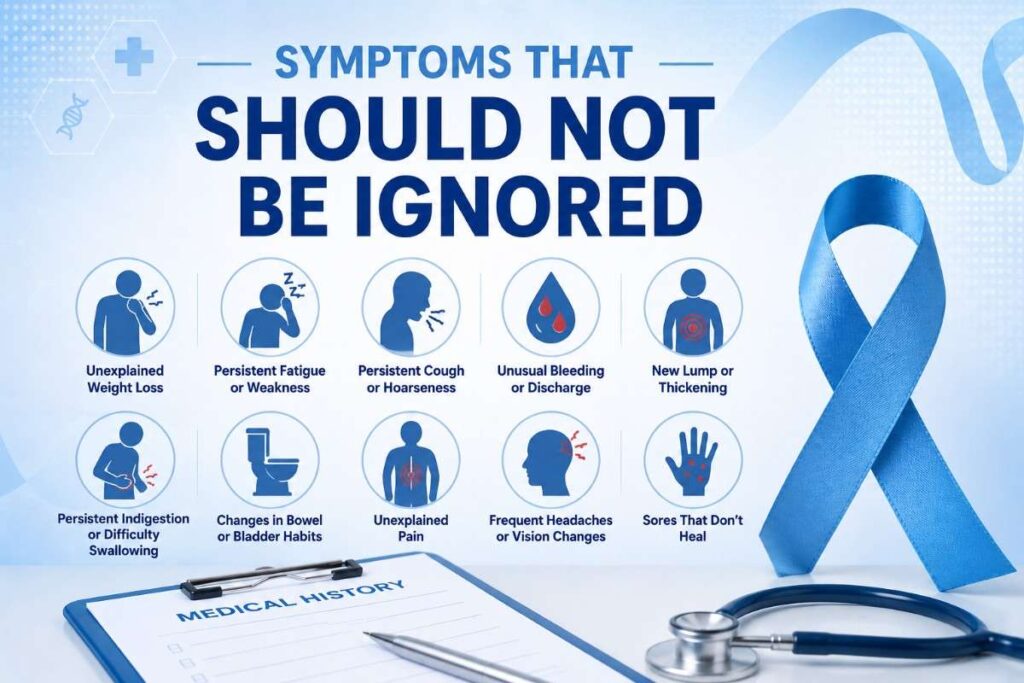
Family History and Cancer Risk itself does not cause symptoms, but individuals with increased risk should pay attention to possible warning signs.
Common symptoms include:
- Unexplained weight loss
- Persistent fatigue
- Changes in bowel habits
- Blood in stool or urine
- Persistent lumps
- Chronic pain
- Difficulty swallowing
- Unusual bleeding
- Changes in moles or skin lesions
Any persistent symptom should be evaluated by a healthcare professional.
Benefits of Understanding Family History and Cancer Risk
Being aware of Family History and Cancer Risk offers several advantages.
Earlier Screening
People at higher risk may begin screening earlier than the general population.
Better Prevention
Preventive measures can be tailored according to risk levels.
Improved Treatment Decisions
Genetic information may influence treatment choices if cancer develops.
Increased Family Awareness
Knowledge of hereditary risk can help relatives make informed healthcare decisions.
Reduced Uncertainty
Understanding risk factors can help individuals feel more prepared and proactive.
Screening Options for Individuals With Increased Risk
Screening is one of the most effective ways to detect cancer early.
Breast Cancer Screening
- Mammography
- Breast MRI
- Clinical breast examinations
Colorectal Cancer Screening
- Colonoscopy
- Stool-based tests
- Genetic evaluation
Prostate Cancer Screening
- PSA blood testing
- Clinical examination
Skin Cancer Screening
- Dermatology evaluations
- Routine skin checks
Additional Screening
Depending on Family History and Cancer Risk, healthcare providers may recommend specialized testing.
Prevention and Risk Reduction Strategies
Although inherited genes cannot be changed, many preventive measures can help reduce overall cancer risk.
Genetic Counseling
Genetic counseling helps individuals understand:
- Personal risk factors
- Family history patterns
- Testing options
- Preventive recommendations
Genetic Testing
Testing can identify inherited mutations associated with cancer risk.
Healthy Lifestyle Choices
Important recommendations include:
- Maintaining a healthy weight
- Exercising regularly
- Eating a balanced diet
- Avoiding tobacco
- Limiting alcohol consumption
- Getting adequate sleep
Regular Medical Checkups
Routine healthcare visits support early detection and timely intervention.
Tips for Managing Family History and Cancer Risk
Consider the following practical steps:
- Gather information about family health history.
- Update family records regularly.
- Discuss concerns with healthcare providers.
- Follow recommended screening schedules.
- Consider genetic counseling if appropriate.
- Maintain a healthy lifestyle.
- Encourage family members to share medical information.
- Stay informed about current screening guidelines.
Conclusion
Family History and Cancer Risk plays a significant role in understanding inherited susceptibility to cancer. Although genetics can influence cancer development, knowledge of Family History and Cancer Risk provides opportunities for prevention, early detection, and personalized healthcare planning. By understanding hereditary risk factors and following recommended screening and prevention strategies, individuals can take meaningful steps toward protecting their long-term health and supporting informed decisions for future generations. A family history of cancer can provide important clues about inherited cancer risk, making it valuable to understand how genetics may influence your health through resources such as National Cancer Institute .
Frequently Asked Questions
What does Family History and Cancer Risk mean
It refers to how inherited genetic factors and family medical history may influence an individual’s likelihood of developing cancer.
Does a family history of cancer guarantee cancer
No. Family history increases risk but does not guarantee cancer development.
Which cancers are most commonly hereditary
Breast, ovarian, colorectal, prostate, pancreatic, and melanoma cancers are commonly associated with inherited risk.
What is a hereditary cancer syndrome
A hereditary cancer syndrome is a genetic condition that increases the likelihood of developing specific cancers.
When should someone consider genetic testing
Genetic testing may be considered when there is a strong family history of cancer or early-onset cancer diagnoses.
Can lifestyle changes reduce inherited cancer risk
Healthy lifestyle habits may help lower overall cancer risk even when genetic factors are present.
What information is needed for a family history assessment
Cancer types, ages at diagnosis, affected relatives, and genetic testing results are useful.
Why is early cancer screening important
Early detection often improves treatment options and health outcomes.
Can cancer skip generations in families
Yes. Inherited genetic mutations may be passed through generations without causing cancer in every family member.
Should family members share cancer history information
Yes. Sharing family medical history helps relatives understand potential risks and screening needs.

Dr. Bibin Francis
Dr. Bibin Francis is a dedicated medical oncologist with expertise in chemotherapy, immunotherapy, targeted therapy, and personalized cancer treatment planning for a wide range of malignancies.
Jubilee Mission Medical College & Research Institute, Thrissur, Kerala