
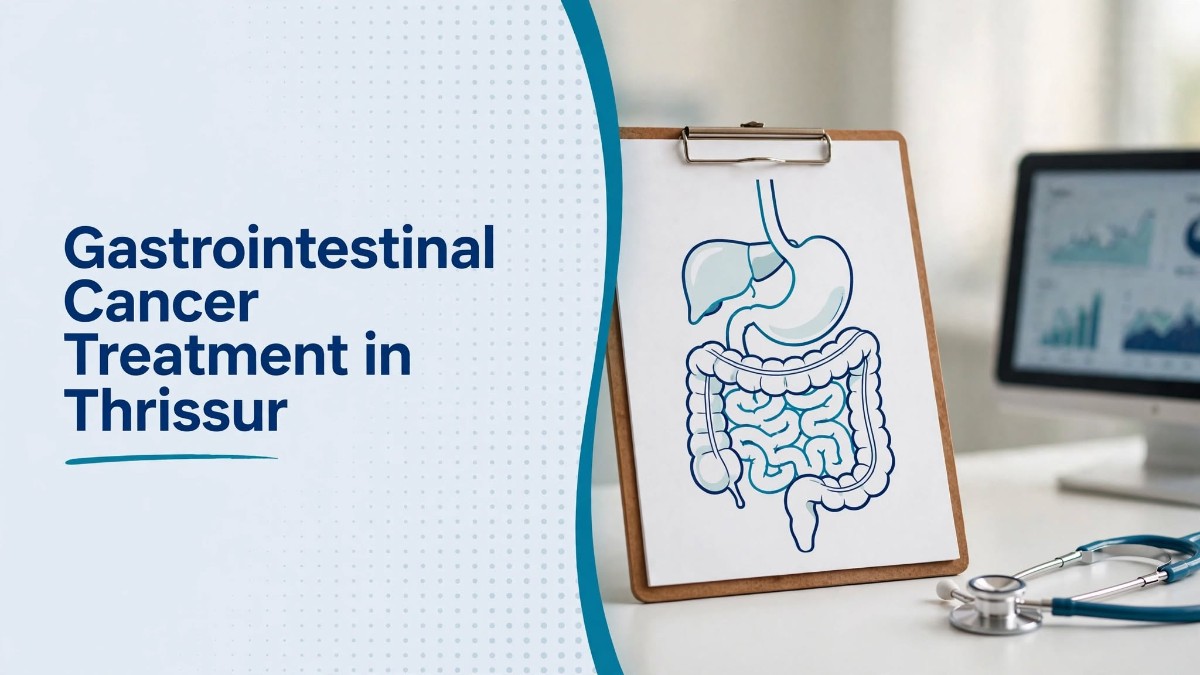
Gastrointestinal Cancer Treatment in Thrissur
Gastrointestinal cancer treatment in Thrissur involves evaluating cancers that affect the digestive system and selecting treatment according to the type of cancer, its location, stage, and the patient’s overall health. Gastrointestinal (GI) cancers can develop in the oesophagus, stomach, small intestine, colon, rectum, pancreas, liver, gallbladder, and other parts of the digestive system. Early assessment and an individualised treatment plan help patients understand their options and make informed decisions about their care.
Dr. Bibin Francis is a medical oncologist based in Thrissur, Kerala, with experience in medical oncology, including chemotherapy, immunotherapy, and targeted therapy. He works with a multidisciplinary oncology team at Jubilee Mission Medical College & Research Institute. The appropriate treatment for a gastrointestinal cancer depends on the confirmed diagnosis and the clinical findings of each patient.
What Is Gastrointestinal Cancer?
Gastrointestinal cancer refers to cancer that begins in an organ or tissue of the digestive system. These cancers are not all the same. They differ in their location, cell type, patterns of growth, and response to treatment.
The digestive system processes food, absorbs nutrients, and removes waste. When abnormal cells grow uncontrollably in one of its organs, they may form a tumour. Some tumours remain localised, while others can invade nearby tissues or spread to distant parts of the body.
Common types of gastrointestinal cancer include:
Oesophageal cancer: Begins in the food pipe, which carries food from the mouth to the stomach.
Stomach cancer: Develops in the stomach lining and may affect digestion or appetite.
Colorectal cancer: Begins in the colon or rectum and may cause changes in bowel habits or rectal bleeding.
Liver cancer: Develops in the liver and requires assessment of both the tumour and liver function.
Pancreatic cancer: Begins in the pancreas, an organ involved in digestion and blood sugar regulation.
Gallbladder and bile duct cancers: Affect organs or ducts that store and transport bile.
Small intestine cancer: Develops in the small bowel and may have symptoms similar to other digestive conditions.
Each cancer requires a different assessment and treatment approach. The location alone does not determine which treatment is suitable.
What Are the Symptoms of Gastrointestinal Cancer?
Symptoms depend on the organ affected, the size of the tumour, and whether the disease has spread. Some early gastrointestinal cancers cause few noticeable symptoms, while others produce changes that persist or gradually become more severe.
Possible warning signs include:
Persistent abdominal pain or discomfort
Unexplained weight loss
Ongoing indigestion or difficulty swallowing
Changes in bowel habits, such as persistent diarrhoea or constipation
Blood in the stool or black, tar-like stools
Repeated vomiting or difficulty keeping food down
Loss of appetite or feeling full unusually quickly
Persistent bloating or abdominal swelling
Unexplained tiredness that may be associated with anaemia
Yellowing of the skin or eyes, which may indicate a liver or bile duct problem
These symptoms can also occur with non-cancerous conditions. Having one or more of them does not automatically mean a person has cancer. However, persistent, unexplained, or worsening symptoms should be assessed by a healthcare professional rather than ignored.
How Is Gastrointestinal Cancer Diagnosed?
Accurate diagnosis is essential before a treatment plan can be developed. The investigations recommended depend on the suspected cancer, the patient’s symptoms, and the findings from the initial assessment.
Medical History and Physical Examination
The doctor reviews symptoms, when they started, how they have changed, previous medical conditions, medicines, and relevant family history. A physical examination may help identify tenderness, swelling, or other findings that require further investigation.
Blood Tests
Blood tests can provide information about blood cell counts, liver function, kidney function, and general health. Certain tumour markers may be useful in specific situations, but they cannot confirm or exclude every gastrointestinal cancer on their own.
Endoscopy and Colonoscopy
An upper gastrointestinal endoscopy allows a specialist to examine the oesophagus, stomach, and the first part of the small intestine. A colonoscopy examines the colon and rectum. If an abnormal area is identified, a tissue sample may be collected for analysis.
Imaging Tests
Depending on the suspected cancer, the medical team may recommend ultrasound, CT, MRI, or PET-CT imaging. These tests can help assess the tumour’s location, its relationship to nearby structures, and possible spread to other parts of the body.
Biopsy and Pathology
A biopsy involves collecting tissue for examination under a microscope. Pathology helps establish the cancer type and may provide information about features that influence treatment selection. Additional molecular or biomarker testing may be recommended for certain cancers.
Cancer Staging
Staging describes the extent of the cancer, including the size and local spread of the tumour, involvement of lymph nodes, and distant spread. Staging helps the oncology team determine which treatments may be appropriate and discuss the goals of care.
What Are the Treatment Options for Gastrointestinal Cancer?
There is no single treatment suitable for every gastrointestinal cancer. The plan depends on the organ involved, the cancer’s stage and biological characteristics, the patient’s general health, and the goals of treatment.
Surgery
Surgery may be recommended when a tumour can be removed safely and completely. Depending on the cancer, an operation may remove the tumour along with nearby tissue or lymph nodes. Some patients need treatment before or after surgery to improve disease control.
Surgical decisions are generally made with input from the relevant surgical specialist and the wider oncology team. Surgery is not appropriate for every patient, particularly when the cancer has spread extensively or an operation would carry unacceptable risks.
Chemotherapy
Chemotherapy uses medicines that destroy cancer cells or prevent them from growing and dividing. It may be used before surgery to shrink a tumour, after surgery to reduce the risk of recurrence, or as a main treatment when surgery is not suitable.
The medicines, schedule, and number of cycles depend on the cancer type and the patient’s condition. The oncology team monitors the response and manages possible side effects, which may include nausea, fatigue, appetite changes, changes in blood cell counts, or an increased risk of infection.
Targeted Therapy
Targeted therapy uses medicines that act on specific proteins, genes, or other features involved in cancer growth. It may be suitable when testing identifies a target that can be treated with an available medicine.
Not every gastrointestinal cancer has a target for which an effective treatment is available. Biomarker testing and specialist interpretation help determine whether targeted therapy is appropriate.
Immunotherapy
Immunotherapy helps the body’s immune system recognise and attack cancer cells. It can be useful for certain gastrointestinal cancers, depending on the cancer’s type, stage, and biomarker results.
Some patients may benefit from immunotherapy alone, while others may receive it in combination with other treatments. It can also cause immune-related side effects, so careful monitoring is important.
Radiation Therapy
Radiation therapy uses high-energy radiation to damage cancer cells. It may be used for selected gastrointestinal cancers, including certain rectal and oesophageal cancers. Its role varies according to the tumour’s location and stage and whether it is combined with chemotherapy or surgery.
Combination Treatment
Some patients benefit from a combination of treatments rather than a single approach. For example, chemotherapy may be used with radiation therapy, targeted therapy, immunotherapy, or surgery, depending on the diagnosis.
The oncology team considers the likely benefits, risks, timing, and impact on quality of life before recommending a treatment sequence.
How Is the Right Treatment Plan Selected?
Choosing gastrointestinal cancer treatment involves more than identifying the organ where the cancer began. The medical team considers several factors to develop a plan that fits the patient’s needs.
Important considerations include:
Cancer type: Different cancers respond differently to medicines and other treatments.
Stage of disease: Localised and advanced cancers may require different strategies.
Biomarker results: Certain molecular findings can help identify targeted treatments or immunotherapy options.
General health: Kidney and liver function, other medical conditions, nutrition, and physical strength may influence treatment choices.
Previous treatment: Earlier surgery, chemotherapy, or radiation therapy can affect the available options.
Patient preferences: Treatment goals, likely side effects, practical considerations, and quality of life should be discussed.
A second opinion may also be helpful when a diagnosis is complex or a patient wants to understand alternative treatment options.
Managing Side Effects During Treatment
Cancer treatment can affect normal cells as well as cancer cells. Side effects vary depending on the medicines, treatment combination, dose, and individual response.
Patients may experience nausea, diarrhoea, constipation, fatigue, appetite changes, mouth sores, or changes in blood cell counts. Some treatments can cause more specific side effects that require additional monitoring.
Patients should inform their oncology team about new symptoms rather than waiting for the next appointment. Fever during chemotherapy can be a sign of infection and may require urgent medical assessment. Follow the care team’s instructions about when to contact the hospital and where to seek emergency care.
Supportive care may include medicines for nausea or pain, nutritional advice, hydration support, help with sleep, and emotional support. These measures are part of cancer care and can help patients manage treatment more comfortably.
Nutrition and Daily Care During Gastrointestinal Cancer Treatment
Maintaining nutrition can be challenging when cancer or its treatment affects appetite, digestion, swallowing, or bowel function. Nutritional needs vary according to the cancer and the treatment being given.
A healthcare professional or oncology dietitian may recommend smaller, more frequent meals, protein-rich foods, suitable fluids, or changes in food texture when needed. Patients with specific digestive problems may require an individual nutrition plan.
Do not begin supplements, herbal products, or restrictive diets without discussing them with the oncology team. Some products can interact with cancer medicines or affect treatment safety.
Rest, gentle activity when medically appropriate, and support from family or caregivers can also help patients cope with treatment. The medical team can advise on activity levels and precautions based on blood counts, symptoms, and overall health.
Gastrointestinal Cancer Treatment in Thrissur with Dr. Bibin Francis
Patients seeking gastrointestinal cancer treatment in Thrissur need a clear understanding of their diagnosis, the available treatment options, and the reasons for each recommendation. Dr. Bibin Francis is a medical oncologist at Jubilee Mission Medical College & Research Institute in Thrissur, with expertise in medical oncology and systemic cancer treatments, including chemotherapy, immunotherapy, and targeted therapy.
Cancer care may involve coordination between medical oncologists, surgeons, radiologists, pathologists, nurses, and supportive-care professionals. This multidisciplinary approach helps ensure that the diagnosis, treatment sequence, symptom management, and follow-up are considered together.
During a consultation, patients can discuss their pathology reports, imaging results, stage of disease, previous treatments, and any molecular testing that has been performed. If additional tests are needed, the oncology team can explain their purpose and how the results may affect treatment decisions.
The aim is to provide evidence-based guidance that reflects the patient’s clinical situation and treatment goals. No treatment can guarantee a particular outcome, and the expected benefits and risks should be discussed with the treating team.
When Should You Seek Medical Advice?
Arrange a medical assessment for persistent digestive symptoms, unexplained weight loss, ongoing difficulty swallowing, blood in the stool, or other unexplained changes. Seek urgent medical care for severe abdominal pain, significant bleeding, repeated vomiting with inability to keep fluids down, fainting, or signs of severe dehydration.
If gastrointestinal cancer has already been diagnosed, timely follow-up with the oncology team helps clarify the next steps. Bring available pathology reports, scan results, blood test reports, and a list of current medicines to the appointment.