
WHICH LIFESTYLE CHANGES HELP REDUCE CANCER RISK?
WHICH LIFESTYLE CHANGES HELP REDUCE CANCER RISK? This is an important question because many everyday habits can influence overall health and may affect the likelihood of developing certain cancers. While no lifestyle plan can guarantee that cancer will never occur, making healthier choices can reduce exposure to several known risk factors and support long-term well-being.Cancer can develop for many different reasons. Age, genetics, family history, environmental exposures, infections, and other factors can all contribute to cancer risk. Some of these factors cannot be changed, but lifestyle-related factors may be modified.Understanding WHICH LIFESTYLE CHANGES HELP REDUCE CANCER RISK? can help people focus on practical steps rather than worrying about factors they cannot control. Avoiding tobacco, maintaining a healthy weight, being physically active, following a balanced diet, limiting alcohol, protecting the skin from excessive ultraviolet exposure, and following recommended screening can all form part of a healthy approach.The goal is not to make every habit perfect. Small, consistent improvements can contribute to better overall health and may help lower the risk of several diseases.
WHICH LIFESTYLE CHANGES HELP REDUCE CANCER RISK?
There is no single lifestyle change that prevents every type of cancer. Instead, cancer risk reduction usually involves several healthy habits working together.
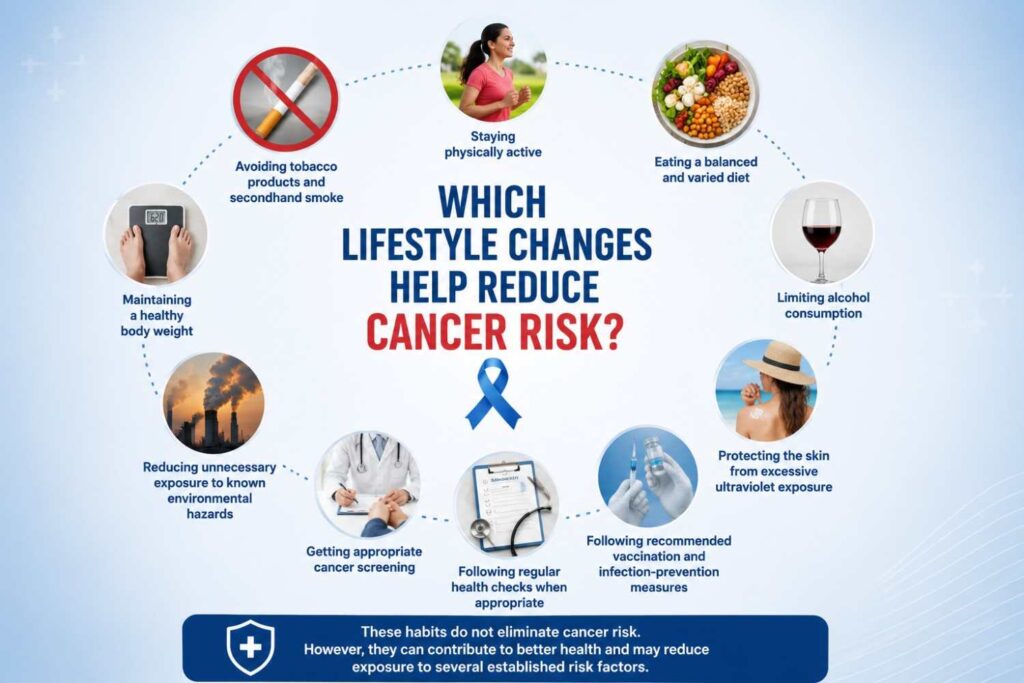
Important lifestyle changes include:
- Avoiding tobacco products and secondhand smoke
- Maintaining a healthy body weight
- Staying physically active
- Eating a balanced and varied diet
- Limiting alcohol consumption
- Protecting the skin from excessive ultraviolet exposure
- Following recommended vaccination and infection-prevention measures
- Getting appropriate cancer screening
- Reducing unnecessary exposure to known environmental hazards
- Following regular health checks when appropriate
These habits do not eliminate cancer risk. However, they can contribute to better health and may reduce exposure to several established risk factors.
1. Avoid Tobacco and Tobacco Smoke
One of the most important answers to WHICH LIFESTYLE CHANGES HELP REDUCE CANCER RISK? is avoiding tobacco.Smoking and other forms of tobacco exposure are strongly associated with several cancers. Tobacco smoke contains many substances that can damage cells and contribute to cancer development.
Tobacco exposure can be associated with cancers affecting areas such as:
- Lungs
- Mouth
- Throat
- Esophagus
- Bladder
- Pancreas
- Kidney
- Stomach
- Liver
- Colon and rectum
Avoiding tobacco is beneficial at any age. For people who currently use tobacco, stopping can be an important step toward improving health.Secondhand smoke exposure should also be minimized. Even people who do not smoke themselves can be exposed to harmful substances when they regularly breathe tobacco smoke from others.
Tips for reducing tobacco exposure
Consider these practical steps:
- Avoid starting tobacco use.
- If you use tobacco, seek professional help to quit.
- Avoid smoking indoors.
- Keep living and working spaces smoke-free.
- Avoid exposure to secondhand smoke whenever possible.
- Discuss evidence-based tobacco cessation options with a healthcare professional.
2. Maintain a Healthy Body Weight
Another important answer to WHICH LIFESTYLE CHANGES HELP REDUCE CANCER RISK? involves maintaining a healthy weight.Excess body weight is associated with an increased risk of several types of cancer. The relationship between body weight and cancer is complex and can involve inflammation, hormonal changes, insulin-related pathways, and other biological processes.Maintaining a healthy weight should not mean following extreme diets or pursuing rapid weight loss.
Instead, focus on sustainable habits such as:
- Eating balanced meals
- Choosing nutritious foods more often
- Staying physically active
- Limiting highly processed foods
- Managing portion sizes
- Getting adequate sleep
- Making gradual changes
If someone is significantly overweight or has difficulty managing weight, a healthcare professional or qualified dietitian can provide individualized guidance.
3. Stay Physically Active
Regular physical activity is another practical response to WHICH LIFESTYLE CHANGES HELP REDUCE CANCER RISK?Physical activity supports cardiovascular health, muscle strength, metabolic health, and healthy weight management. Regular movement has also been associated with a lower risk of certain cancers.
Exercise does not have to mean spending hours in a gym.
Activities can include:
- Walking
- Cycling
- Swimming
- Dancing
- Gardening
- Household activities
- Strength exercises
- Recreational sports
The most useful activity is often one that a person can perform consistently.
How can you become more active?
If you currently have a sedentary lifestyle, begin gradually. Taking short walks, using stairs when appropriate, reducing prolonged sitting, and adding simple strengthening exercises can help increase daily movement.People with existing health conditions or significant physical limitations should discuss suitable activity levels with their healthcare professional.
4. Follow a Balanced Diet
Diet is frequently discussed when considering WHICH LIFESTYLE CHANGES HELP REDUCE CANCER RISK?No individual food can guarantee protection against cancer. Instead, the overall dietary pattern matters.
A balanced eating pattern can include a variety of:
- Vegetables
- Fruits
- Whole grains
- Beans and pulses
- Nuts and seeds
- Other nutrient-rich foods
- Appropriate sources of protein
Eating a wide variety of foods provides nutrients and dietary components that support general health.
Limit highly processed foods
It can also be useful to reduce frequent consumption of foods that are high in added sugars, unhealthy fats, salt, or calories.Processed and red meat intake may also be relevant to cancer risk. Following a varied diet that includes more plant-based foods can support overall health.This does not mean every meal has to be perfect. A sustainable dietary pattern is generally more practical than strict short-term restrictions.
5. Limit Alcohol Consumption
Another important consideration when asking WHICH LIFESTYLE CHANGES HELP REDUCE CANCER RISK? is alcohol consumption.Alcohol is associated with an increased risk of several cancers. The risk can vary depending on the amount consumed and other individual factors.For cancer prevention, avoiding alcohol eliminates alcohol-related cancer risk. For people who drink, reducing consumption can be a meaningful health decision.Alcohol use can also interact with other risk factors. For example, tobacco and alcohol together can increase the risk of certain cancers more than either exposure alone.
Practical ways to reduce alcohol intake
- Choose alcohol-free days.
- Reduce the amount consumed on drinking occasions.
- Avoid keeping large quantities at home.
- Choose non-alcoholic alternatives.
- Seek professional support if reducing or stopping alcohol is difficult.
6. Protect Your Skin From Excessive UV Exposure
Sun protection is another useful answer to WHICH LIFESTYLE CHANGES HELP REDUCE CANCER RISK?Excessive exposure to ultraviolet radiation can damage skin cells and increase the risk of skin cancer.
Practical sun-protection measures include:
- Seeking shade during strong sunlight
- Wearing protective clothing
- Using suitable sunscreen
- Wearing a hat when appropriate
- Protecting the eyes with suitable eyewear
- Avoiding unnecessary artificial tanning exposure
It is also important to pay attention to changes in the skin.A new or changing mole, unusual skin growth, or sore that does not heal should be assessed by an appropriate healthcare professional.
7. Follow Recommended Cancer Screening
When discussing WHICH LIFESTYLE CHANGES HELP REDUCE CANCER RISK?, screening deserves special attention.Screening is different from lifestyle modification, but it is an important part of cancer prevention and early detection for eligible people.
Screening recommendations depend on factors such as:
- Age
- Sex
- Personal medical history
- Family history
- Genetic risk
- Previous test results
- Individual cancer risk
Depending on eligibility, screening may involve approaches related to:
- Breast cancer
- Cervical cancer
- Colorectal cancer
- Lung cancer in selected high-risk individuals
- Prostate-related concerns in appropriate circumstances
Not every screening test is suitable for everyone. Screening should follow evidence-based recommendations and individual risk assessment.
Other Factors That May Influence Cancer Risk
Although lifestyle habits are important, WHICH LIFESTYLE CHANGES HELP REDUCE CANCER RISK? cannot be answered by lifestyle alone.Some cancer risk factors cannot be changed.
Age
The risk of many cancers increases with age. This is one reason age-appropriate screening and regular medical care become increasingly important.
Family history
A strong family history of certain cancers may indicate an increased risk. In some circumstances, genetic counseling or individualized screening may be appropriate.
Inherited genetic changes
Certain inherited genetic changes can increase the likelihood of specific cancers. Genetic testing may be considered when personal or family history suggests a significant inherited risk.
Environmental and occupational exposure
Some people may encounter substances or conditions at work or in the environment that can contribute to cancer risk. Appropriate workplace safety practices and protective measures can help reduce unnecessary exposure.
Certain infections
Some infections are associated with increased risk for particular cancers. Vaccination, appropriate infection prevention, and medical management can help reduce certain infection-related risks.
The Benefits of Healthy Lifestyle Changes
Understanding WHICH LIFESTYLE CHANGES HELP REDUCE CANCER RISK? is useful not only for cancer prevention but also for general health.
Healthy lifestyle habits may support:
- Cardiovascular health
- Healthy weight management
- Better physical fitness
- Metabolic health
- Improved overall well-being
- Reduced exposure to certain cancer risk factors
- Better long-term health habits
A healthy lifestyle may also reduce the risk of other chronic diseases.However, it is important not to view lifestyle changes as a guarantee against cancer. Cancer can occur even in people who maintain healthy habits.
When Should You Talk to a Doctor?
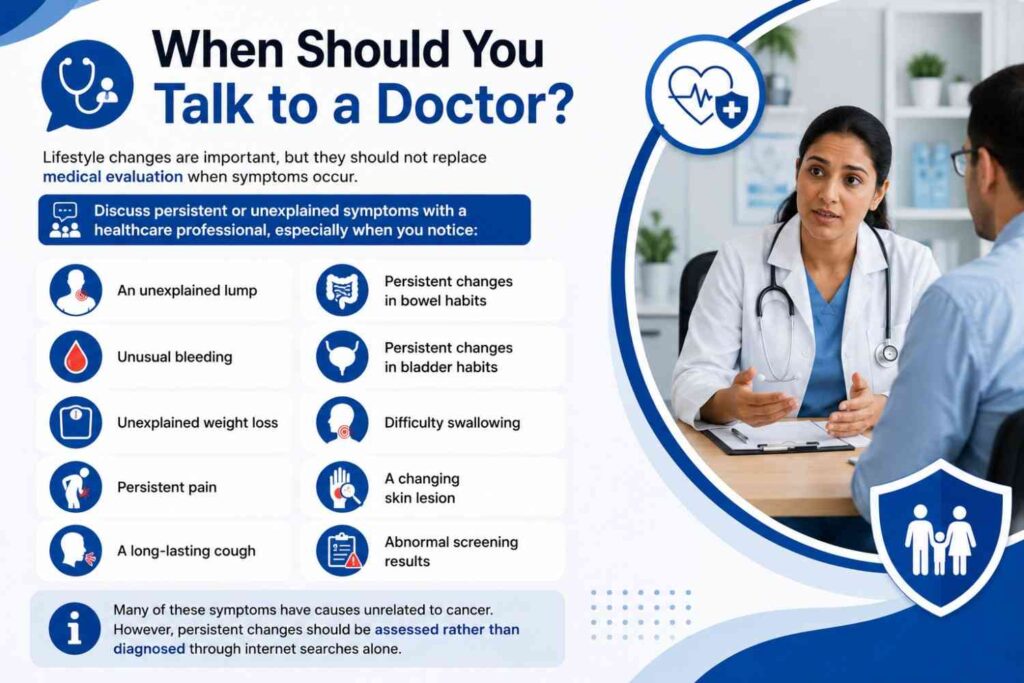
Lifestyle changes are important, but they should not replace medical evaluation when symptoms occur.Discuss persistent or unexplained symptoms with a healthcare professional, especially when you notice:
- An unexplained lump
- Unusual bleeding
- Unexplained weight loss
- Persistent pain
- A long-lasting cough
- Persistent changes in bowel habits
- Persistent changes in bladder habits
- Difficulty swallowing
- A changing skin lesion
- Abnormal screening results
Many of these symptoms have causes unrelated to cancer. However, persistent changes should be assessed rather than diagnosed through internet searches alone.
Conclusion
WHICH LIFESTYLE CHANGES HELP REDUCE CANCER RISK? The answer involves several practical habits rather than one single action. Avoiding tobacco, maintaining a healthy weight, staying physically active, eating a balanced diet, limiting alcohol, protecting the skin from excessive UV exposure, and following appropriate screening recommendations can all contribute to reducing certain preventable risks.At the same time, lifestyle choices are only one part of cancer risk. Age, genetics, family history, infections, environmental exposures, and other factors can also influence whether cancer develops. Therefore, healthy living should be combined with appropriate medical care and recommended screening.The most useful approach is to make realistic, sustainable changes rather than trying to achieve perfection. If you have persistent symptoms, an abnormal screening result, or concerns about your personal cancer risk, speak with a qualified healthcare professional for individualized guidance. For reliable and evidence-based information about lung cancer, visit the American Cancer Society‘s guide on lung cancer.
FREQUENTLY ASKED QUESTIONS

Dr. Bibin Francis
Dr. Bibin Francis is a dedicated medical oncologist with expertise in chemotherapy, immunotherapy, targeted therapy, and personalized cancer treatment planning for a wide range of malignancies.
Jubilee Mission Medical College & Research Institute, Thrissur, Kerala