
7 Powerful Insights: What Does a Cancer Doctor Do Every Day
If you are wondering what does a cancer doctor do, the answer involves much more than simply treating cancer. A cancer doctor, also known as an oncologist, helps patients understand their diagnosis, evaluates treatment options, coordinates cancer care, and monitors progress throughout treatment and recovery. For patients seeking cancer care in Thrissur, understanding the role of an oncology specialist can make the treatment journey easier to understand.
Cancer care often involves several medical professionals, diagnostic tests, treatment methods, and follow-up appointments. A cancer doctor helps bring these parts together and develops a treatment approach based on the patient’s cancer type, stage, overall health, and individual needs.
What Does a Cancer Doctor Do
A cancer doctor specializes in diagnosing, treating, and managing cancer. Their responsibilities can begin when cancer is suspected and continue through treatment, follow-up care, and long-term monitoring.
A cancer doctor may:
- Review medical history and symptoms
- Evaluate diagnostic test results
- Confirm and classify cancer
- Determine the cancer stage
- Discuss available treatment options
- Develop an individualized treatment plan
- Monitor how cancer responds to treatment
- Manage treatment-related side effects
- Coordinate care with other specialists
- Provide follow-up and surveillance care
- Help patients understand their condition
The exact responsibilities depend on the type of oncologist and the patient’s medical situation.
What Does a Cancer Doctor Do During Cancer Diagnosis
One of the important roles of a cancer doctor is helping establish an accurate diagnosis. Cancer diagnosis usually involves more than identifying the presence of abnormal cells.
The doctor may review:
- Blood test results
- Imaging scans
- Biopsy reports
- Pathology findings
- Physical examination findings
- Medical and family history
- Previous treatment records
A biopsy may be particularly important because laboratory examination of tissue can help identify the type and characteristics of cancer.
After reviewing available information, the cancer doctor explains the diagnosis and discusses what the findings mean for treatment.
Understanding Cancer Stage
Cancer staging describes how extensive the cancer is and whether it has spread to other parts of the body. Staging information can influence treatment decisions and help doctors estimate how the disease may behave.
The stage may be determined using imaging, biopsy findings, physical examination, and other diagnostic information.
What Does a Cancer Doctor Do to Create a Treatment Plan
Treatment planning is another major responsibility of an oncology specialist. Cancer does not have one universal treatment approach. Different cancers require different strategies.
A cancer doctor considers factors such as:
- Cancer type
- Cancer stage
- Tumor location
- Tumor characteristics
- Overall health
- Age and general fitness
- Previous treatments
- Potential treatment benefits
- Possible side effects
- Patient preferences
The doctor then discusses suitable treatment options with the patient.
Depending on the cancer, treatment may involve one method or a combination of therapies.
What Does a Cancer Doctor Do During Chemotherapy
Chemotherapy uses medicines to destroy cancer cells or slow their growth. A medical oncologist may prescribe chemotherapy when it is appropriate for a particular cancer.
The cancer doctor determines factors such as:
- Which medicines may be suitable
- The treatment schedule
- The number of treatment cycles
- How the treatment should be administered
- How the patient is responding
- Whether treatment needs adjustment
Chemotherapy may be used before surgery, after surgery, alongside other treatments, or as the primary treatment depending on the cancer.
The doctor also monitors potential side effects and provides guidance for managing them.
What Does a Cancer Doctor Do With Other Cancer Treatments
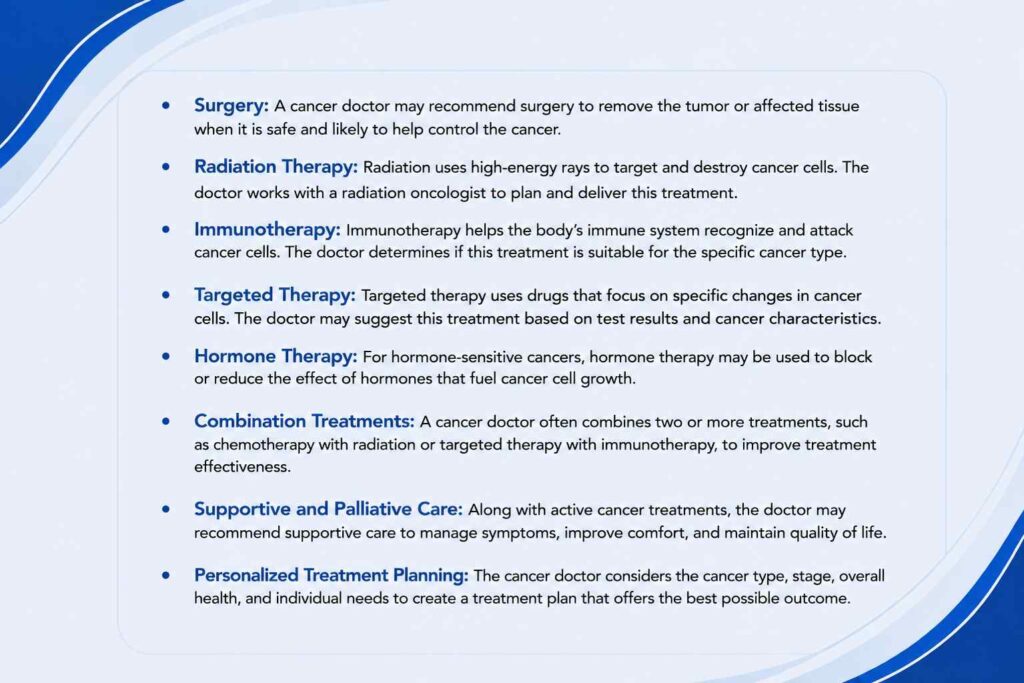
Cancer treatment can involve several different approaches. A cancer doctor helps determine whether one treatment or a combination of treatments may be appropriate.
Surgery
Surgery may be used to remove a cancerous tumor or affected tissue. A surgical oncologist generally performs cancer-related operations, while the medical oncologist may coordinate systemic treatment before or after surgery.
Radiation Therapy
Radiation therapy uses high-energy radiation to damage cancer cells. Radiation oncologists specialize in planning and delivering this type of treatment.
Immunotherapy
Immunotherapy helps the immune system recognize or respond to cancer cells. It may be appropriate for certain cancer types and specific patient profiles.
Targeted Therapy
Targeted therapy focuses on specific characteristics or molecular changes associated with cancer cells. Testing may be required to determine whether a patient is likely to benefit.
Hormone Therapy
Some cancers depend on hormones for growth. Hormone therapy may be used to block or reduce the effect of those hormones in appropriate cases.
What Does a Cancer Doctor Do to Monitor Treatment
Cancer treatment is not always a fixed process. A cancer doctor regularly evaluates how the patient is responding.
Monitoring may involve:
- Physical examinations
- Blood tests
- Imaging studies
- Tumor-related tests
- Review of symptoms
- Assessment of treatment side effects
If the cancer responds well, the planned treatment may continue. If there is inadequate response or significant toxicity, the doctor may consider modifying the treatment strategy.
Regular monitoring helps the oncology team make informed decisions throughout treatment.
What Does a Cancer Doctor Do to Manage Side Effects?
Cancer treatments can cause side effects, although their type and severity vary between individuals.
Possible treatment-related effects can include:
- Fatigue
- Nausea
- Changes in appetite
- Hair loss
- Skin changes
- Changes in blood counts
- Pain
- Digestive symptoms
A cancer doctor monitors these concerns and may recommend medicines, treatment adjustments, supportive care, or referrals to other healthcare professionals.
Patients should tell their cancer care team about new or worsening symptoms rather than attempting to manage significant problems without medical advice.
What Does a Cancer Doctor Do After Treatment
Cancer care does not necessarily end when the main treatment is completed. Follow-up care is an important part of oncology.
During follow-up appointments, the doctor may evaluate:
- General health
- Recovery from treatment
- New symptoms
- Possible signs of recurrence
- Long-term treatment effects
- Need for additional tests
Follow-up schedules depend on the cancer type, stage, treatment history, and individual circumstances.
Some patients may also need rehabilitation, nutritional guidance, psychological support, or management of long-term effects.
What Are the Different Types of Cancer Doctors
The term cancer doctor can refer to different oncology specialists. Each type has a specific role in cancer care.
Medical Oncologist
A medical oncologist treats cancer using systemic therapies such as chemotherapy, immunotherapy, targeted therapy, and hormone therapy when appropriate.
Surgical Oncologist
A surgical oncologist specializes in operations used to diagnose, remove, or manage cancer.
Radiation Oncologist
A radiation oncologist specializes in radiation therapy and develops treatment plans using radiation to target cancer cells.
Pediatric Oncologist
A pediatric oncologist specializes in cancers affecting children and adolescents.
Patients may receive care from more than one type of cancer specialist depending on their diagnosis.
What Symptoms May Lead Someone to a Cancer Doctor
Cancer can cause different symptoms depending on its location and type. Some symptoms may also result from conditions that are not cancer.
Potential warning signs can include:
- An unexplained lump or swelling
- Persistent unexplained pain
- Unusual bleeding
- Unexplained weight loss
- Long-lasting fatigue
- Persistent cough or voice changes
- Changes in bowel or bladder habits
- A changing skin lesion
- Persistent difficulty swallowing
- Recurrent or unexplained fever
Having one of these symptoms does not automatically mean that a person has cancer. However, persistent or concerning symptoms should be evaluated by a qualified healthcare professional.
What Are the Benefits of Seeing a Cancer Doctor
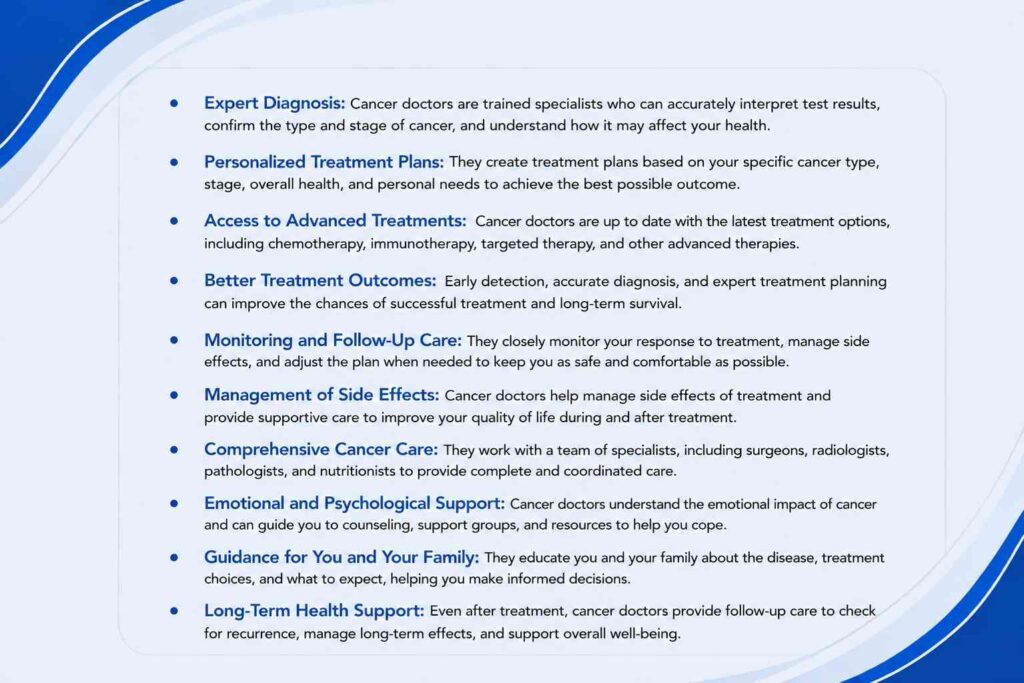
Understanding what does a cancer doctor do also means recognizing the value of specialist cancer care.
A cancer doctor can help provide:
- Specialist assessment
- Accurate interpretation of cancer-related test results
- Individualized treatment planning
- Coordination between cancer specialists
- Treatment monitoring
- Side-effect management
- Follow-up care
- Education about treatment choices
- Support during different stages of cancer care
Cancer treatment can involve complex decisions. Having an oncology specialist involved can help patients understand their options and make informed decisions together with their healthcare team.
When Should You Consult a Cancer Doctor
A referral to an oncology specialist may be appropriate when cancer has been diagnosed or when test results require specialist evaluation.
A doctor may recommend oncology consultation when:
- A biopsy confirms cancer
- Imaging suggests a possible malignancy
- Cancer has already been diagnosed
- Treatment planning is required
- Additional specialist assessment is needed
- Cancer has returned after previous treatment
- The disease has spread to another part of the body
The appropriate specialist depends on the cancer type and individual circumstances.
How Can Patients Prepare for a Cancer Consultation
Preparing for an oncology appointment can help make the discussion more productive.
Patients may consider bringing:
- Previous medical reports
- Scan and imaging reports
- Pathology or biopsy results
- Current medication details
- A list of symptoms
- Relevant medical history
- Questions about diagnosis and treatment
Useful questions may include:
- What type of cancer do I have?
- What is the stage of the cancer?
- What treatment options are available?
- What is the purpose of the recommended treatment?
- What side effects should I expect?
- How will treatment response be monitored?
- How often will I need follow-up appointments?
Writing questions down before the appointment can help patients remember important concerns.
How Does a Cancer Doctor Support Informed Treatment Decisions
Cancer treatment often involves choices. A cancer doctor explains the potential benefits, risks, side effects, and practical considerations associated with available options.
The doctor may also explain why a particular treatment is recommended based on the cancer’s characteristics.
Informed decision-making allows patients to understand their care plan and participate actively in discussions about treatment.
It is also reasonable for patients to ask questions or seek another medical opinion when they want additional clarity about a diagnosis or treatment plan.
Key Tips for Patients Receiving Cancer Care
Patients can take several practical steps to stay organized during treatment.
- Keep medical records in one place.
- Maintain a list of current medicines.
- Attend scheduled appointments.
- Report significant or unexpected symptoms promptly.
- Ask questions whenever medical information is unclear.
- Follow treatment instructions carefully.
- Keep track of upcoming tests and treatments.
- Discuss nutritional or lifestyle concerns with the healthcare team.
- Seek appropriate emotional and practical support.
- Avoid relying on unverified cancer treatments or online claims.
Good communication between patients and their healthcare team can make cancer care easier to navigate.
Conclusion
Understanding what does a cancer doctor do can help patients feel more prepared for cancer diagnosis and treatment. A cancer doctor plays an important role in evaluating cancer, explaining treatment choices, coordinating specialist care, monitoring treatment response, managing side effects, and providing follow-up support.
Cancer care is highly individualized, so treatment decisions should always be based on professional medical evaluation rather than general information alone. Patients should discuss their diagnosis, treatment options, and concerns directly with their healthcare team. For people seeking specialist cancer care in Thrissur, a qualified oncology team can help explain the diagnosis and develop an appropriate care plan based on individual needs. For reliable information about cancer diagnosis and treatment, you can refer to the National Cancer Institute (NCI) for evidence-based cancer resources and guidance.
Frequently Asked Questions

Dr. Bibin Francis
Dr. Bibin Francis is a dedicated medical oncologist with expertise in chemotherapy, immunotherapy, targeted therapy, and personalized cancer treatment planning for a wide range of malignancies.
Jubilee Mission Medical College & Research Institute, Thrissur, Kerala