
7 Powerful Facts About Who Needs Chemotherapy Treatment Now
Understanding who needs chemotherapy can help patients and families make sense of cancer treatment decisions. Chemotherapy is a cancer treatment that uses medicines to destroy cancer cells, slow their growth, or prevent them from spreading. In Thrissur, as elsewhere, the decision to recommend chemotherapy depends on the type and stage of cancer, overall health, treatment goals, and how the disease is expected to respond.
Not every person diagnosed with cancer needs chemotherapy. Some cancers can be treated successfully with surgery, radiation therapy, targeted therapy, immunotherapy, hormone therapy, or a combination of treatments. For others, chemotherapy may be an important part of treatment.
Knowing who needs chemotherapy is therefore not simply about having a cancer diagnosis. Doctors consider several clinical factors before recommending it.
Who Needs Chemotherapy
Who needs chemotherapy depends primarily on the characteristics of the cancer and the patient’s individual situation. Chemotherapy may be recommended when cancer cells are likely to respond to anticancer medicines or when treatment needs to reach cancer cells throughout the body.
People who may need chemotherapy include:
- Certain types of blood cancers
- Cancers that have spread to other parts of the body
- Cancers with a significant risk of recurrence
- Tumours that may shrink before surgery
- Cancer remaining after surgery
- Certain cancers that respond particularly well to chemotherapy
- Cancer requiring systemic treatment alongside another therapy
The answer to who needs chemotherapy is different for every cancer type. Treatment is usually planned after diagnostic tests, imaging, pathology reports, and other clinical assessments.
Why Is Chemotherapy Recommended
There are several reasons who needs chemotherapy may be advised to receive this treatment. The purpose can vary depending on when chemotherapy is given.
Chemotherapy Before Surgery
Chemotherapy given before surgery is often called neoadjuvant chemotherapy. It may help shrink a tumour, making surgery easier or potentially allowing a less extensive operation.
Chemotherapy After Surgery
Chemotherapy given after surgery is known as adjuvant chemotherapy. It may be recommended when there is a possibility that microscopic cancer cells remain in the body.
Chemotherapy for Advanced Cancer
When cancer has spread to distant organs, chemotherapy may be used to control the disease, reduce symptoms, slow progression, or improve quality of life.
Chemotherapy With Other Treatments
Some patients receive chemotherapy alongside radiation therapy or another cancer treatment. The combination may improve the effectiveness of treatment for particular cancers.
Which Cancer Patients May Need Chemotherapy
The question of who needs chemotherapy often arises after a person receives a cancer diagnosis. Chemotherapy can be used for many different cancer types, but its role varies considerably.
It may be considered for some patients with:
- Breast cancer
- Lung cancer
- Colorectal cancer
- Ovarian cancer
- Pancreatic cancer
- Stomach cancer
- Certain brain tumours
- Lymphoma
- Leukemia
- Multiple myeloma
- Testicular cancer
- Certain sarcomas
- Other cancers that are sensitive to chemotherapy
Not everyone with these cancers automatically requires chemotherapy. Cancer subtype, molecular characteristics, stage, grade, tumour size, lymph-node involvement, previous treatments, and general health can all influence the recommendation.
Therefore, who needs chemotherapy must be assessed individually rather than determined only by the cancer’s name.
Does Cancer Stage Determine Who Needs Chemotherapy
Cancer stage is an important factor in deciding who needs chemotherapy, but it is not the only consideration.
Early-Stage Cancer
Some people with early-stage cancer may receive chemotherapy after surgery because there is a risk that cancer cells could return. In selected cases, chemotherapy may reduce this risk.
Locally Advanced Cancer
When cancer has grown into nearby tissues or lymph nodes, chemotherapy may be used before or after another treatment. The goal may be to shrink the tumour or eliminate microscopic disease.
Advanced or Metastatic Cancer
People with metastatic cancer may receive chemotherapy to control cancer growth, reduce symptoms, and maintain quality of life. The treatment approach depends on the cancer type and the medicines available.
As a result, who needs chemotherapy cannot be determined by stage alone.
What Factors Help Determine Who Needs Chemotherapy
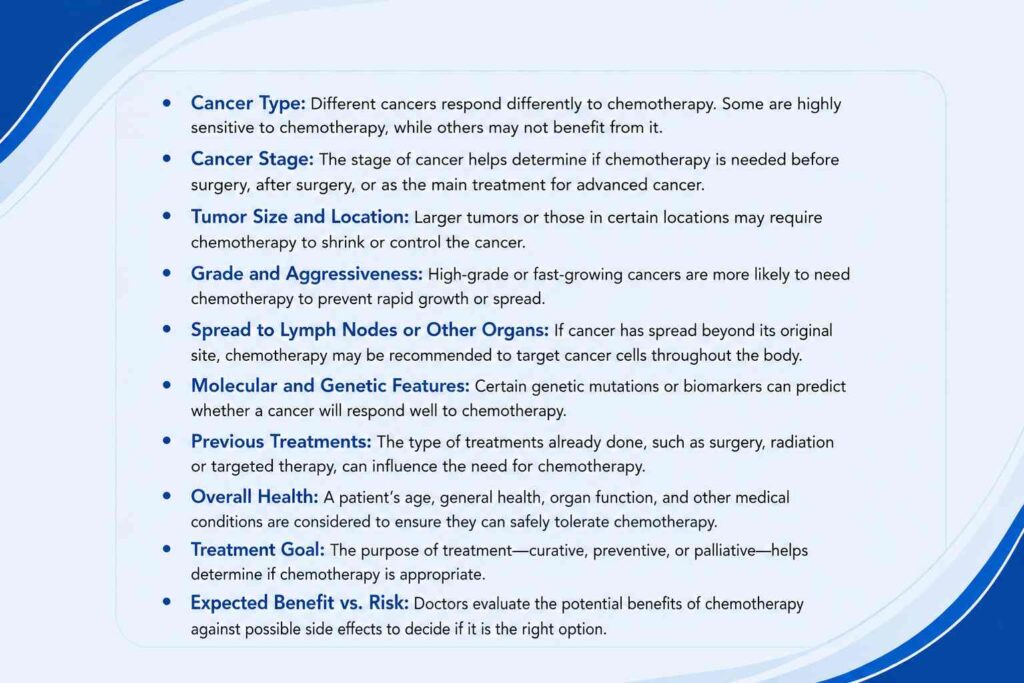
Several factors help healthcare professionals determine who needs chemotherapy and whether the expected benefits outweigh the possible risks.
Important considerations include:
- Cancer type
- Cancer stage
- Tumour size
- Cancer grade
- Lymph-node involvement
- Whether cancer has spread
- Tumour biology
- Molecular or genetic characteristics
- Previous treatments
- Age and general health
- Kidney and liver function
- Blood-cell counts
- Other medical conditions
- Treatment goals
- Expected response to treatment
Doctors may also use pathology and biomarker information to understand how a cancer behaves. These findings can help determine whether chemotherapy is likely to be useful.
Can Surgery Replace Chemotherapy
Surgery and chemotherapy have different roles. Surgery generally removes a visible tumour from a particular area, while chemotherapy can circulate through the bloodstream and affect cancer cells in different parts of the body.
For some patients, surgery alone may be enough. For others, chemotherapy may be necessary before or after surgery.
For example, if a cancer has a high risk of returning after surgery, chemotherapy may be recommended to address possible microscopic disease. In another situation, chemotherapy may shrink a tumour before an operation.
This is why who needs chemotherapy cannot be answered simply by asking whether surgery is possible.
What Are the Main Types of Chemotherapy
Chemotherapy is not one single medicine. There are many chemotherapy drugs, and treatment plans differ according to the cancer.
Combination Chemotherapy
Several chemotherapy medicines may be used together because they work in different ways. Combination treatment can sometimes improve cancer control.
Single-Drug Chemotherapy
In certain situations, one chemotherapy medicine may be appropriate. This may depend on the cancer, treatment goal, and previous therapies.
Oral Chemotherapy
Some chemotherapy medicines are available as tablets or capsules. They must be taken exactly according to the prescribed schedule.
Intravenous Chemotherapy
Many chemotherapy medicines are administered through a vein. Treatment may take place in an outpatient infusion unit or hospital setting.
The appropriate treatment depends on who needs chemotherapy, the cancer being treated, and the overall treatment plan.
What Are the Benefits of Chemotherapy
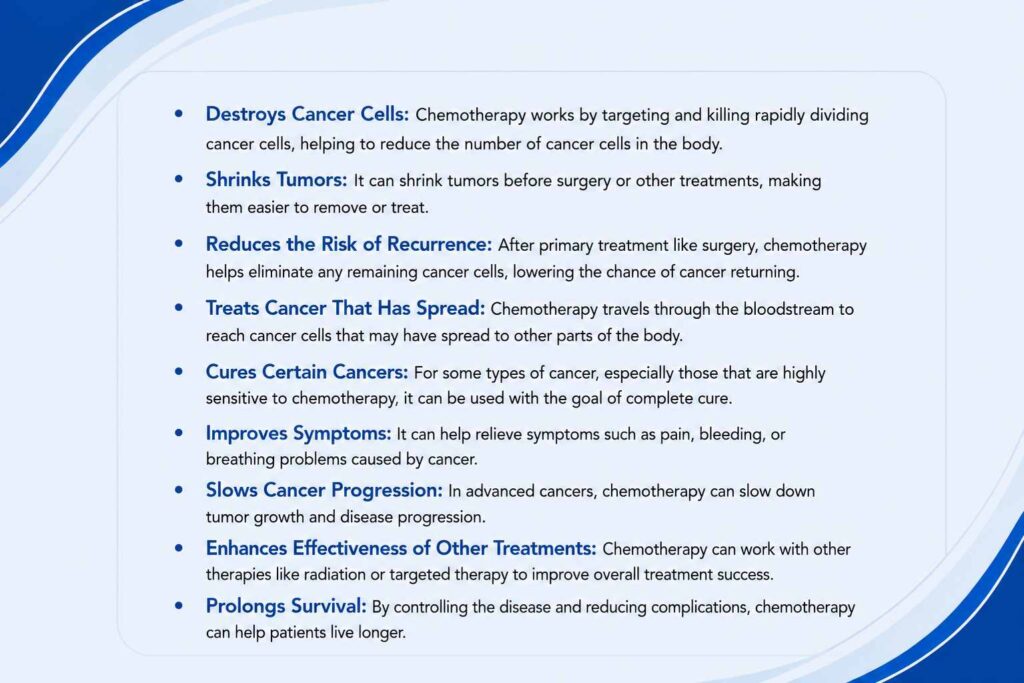
The potential benefits are another important part of understanding who needs chemotherapy. Chemotherapy may:
- Destroy cancer cells
- Slow cancer growth
- Reduce tumour size
- Lower the risk of cancer recurrence
- Treat cancer cells that may have spread
- Make surgery more effective in selected cases
- Improve symptoms caused by cancer
- Help control advanced cancer
- Extend survival for some patients
The expected benefit varies significantly. Chemotherapy may be intended to cure cancer in some patients, while in others it may focus on controlling the disease.
Patients should ask their healthcare team what the specific treatment goal is before starting therapy.
What Side Effects Can Chemotherapy Cause
Understanding who needs chemotherapy also means understanding possible side effects. Chemotherapy affects rapidly dividing cells, and this can sometimes affect healthy cells as well as cancer cells.
Possible side effects include:
- Fatigue
- Nausea
- Vomiting
- Reduced appetite
- Hair loss
- Mouth sores
- Changes in taste
- Constipation or diarrhea
- Lower blood-cell counts
- Increased risk of infection
- Skin changes
- Nerve-related symptoms
- Changes in menstrual cycles or fertility
Not everyone experiences the same side effects. Some people have relatively mild symptoms, while others experience more significant effects.
Modern supportive treatments can help manage many chemotherapy side effects. Patients should report new or severe symptoms to their healthcare team rather than trying to manage them alone.
How Is Chemotherapy Given
The treatment method depends on the chemotherapy medicine and the cancer being treated. Understanding the delivery method can help patients know what to expect.
Chemotherapy may be given through:
- An intravenous infusion
- A tablet or capsule
- An injection
- A central venous catheter
- A port
- Other specialised delivery methods in selected situations
Treatment is usually given in cycles. A cycle includes a treatment period followed by a recovery period. The number and timing of cycles depend on the specific cancer and treatment goal.
For who needs chemotherapy, the schedule may range from several weeks to several months, depending on the treatment goal and response.
What Happens Before Chemotherapy Starts
Before chemotherapy begins, patients usually undergo an assessment to confirm that treatment is appropriate and safe.
This may include:
- Reviewing the pathology report
- Confirming the cancer type and stage
- Blood tests
- Kidney and liver function tests
- Imaging studies when needed
- Reviewing current medications
- Assessing overall health
- Discussing fertility where relevant
- Explaining expected side effects
- Creating an individual treatment plan
The healthcare team may also discuss nutrition, infection precautions, medications, and when to seek urgent medical attention.
These steps help ensure that the treatment is tailored to the patient’s needs.
How Do Doctors Know Whether Chemotherapy Is Working
Another common question related to who needs chemotherapy is how treatment response is measured.
Doctors may evaluate treatment response using:
- Physical examinations
- Blood tests
- Imaging scans
- Tumour markers in selected cancers
- Pathology after surgery
- Changes in cancer-related symptoms
The assessment method depends on the type of cancer. Sometimes the cancer may become smaller, while in other situations the goal is to prevent further growth.
A lack of visible tumour shrinkage does not always mean treatment has failed. The healthcare team considers the overall clinical picture.
What Should Patients Do During Chemotherapy
Patients receiving chemotherapy can take several practical steps to support their general well-being.
Follow the Treatment Schedule
Take prescribed medicines and attend treatment appointments as instructed.
Maintain Good Nutrition
Try to eat balanced meals and drink enough fluids unless the healthcare team has advised otherwise.
Prevent Infections
Good hand hygiene and avoiding close contact with people who have contagious infections may be particularly important when blood counts are low.
Rest When Needed
Fatigue is common, so balancing activity with adequate rest can help.
Report Side Effects
Inform the healthcare team about fever, severe vomiting, persistent diarrhea, unusual bleeding, breathing problems, or other concerning symptoms.
Keep a Medication List
Maintain an updated list of medicines, supplements, and other treatments and share it with the healthcare team.
When May Chemotherapy Not Be Recommended
Understanding who needs chemotherapy also requires knowing that it is not automatically appropriate for every cancer patient.
Chemotherapy may not be recommended when:
- The cancer is unlikely to respond to the available medicines
- Another treatment is more effective
- The expected benefits are very small
- The risks outweigh the potential benefits
- The patient’s health makes treatment unsafe
- A different treatment approach better matches the patient’s goals
In some cancers, targeted therapy, immunotherapy, hormone therapy, radiation therapy, or surgery may provide a more appropriate approach.
Treatment decisions should therefore be based on individual medical assessment rather than general assumptions.
Questions to Ask Before Starting Chemotherapy
If you are trying to understand who needs chemotherapy in your own situation, asking clear questions can make treatment decisions easier.
Consider asking:
- Why is chemotherapy being recommended?
- What is the goal of treatment?
- Is the treatment intended to cure, control, or reduce symptoms?
- What chemotherapy medicines will be used?
- How often will treatment be given?
- How many cycles are expected?
- What side effects are most likely?
- How will side effects be managed?
- How will treatment response be measured?
- Are there alternative treatments?
- What happens if the treatment does not work?
- Will treatment affect fertility?
- Are there medicines or foods I should avoid?
- When should I contact the healthcare team urgently?
Good communication can help patients understand the reasoning behind their treatment plan.
Key Points to Remember
The most important point about who needs chemotherapy is that there is no universal answer. A cancer diagnosis does not automatically mean chemotherapy is necessary.
The decision usually considers:
- The cancer type
- Stage and extent of disease
- Tumour characteristics
- Risk of recurrence
- Previous treatment
- Overall health
- Expected treatment benefits
- Potential side effects
- Patient preferences and treatment goals
Chemotherapy can be an effective part of cancer care when used for the right patient and the right clinical situation. Treatment plans are increasingly individualised, allowing healthcare teams to select therapies based on the characteristics of each cancer.
Conclusion
Knowing who needs chemotherapy can reduce confusion and help patients participate more confidently in treatment discussions. Chemotherapy may be used before surgery, after surgery, alongside other treatments, or as a treatment for advanced cancer. However, not every cancer patient needs it.
The final decision depends on cancer type, stage, tumour biology, overall health, expected benefits, possible risks, and individual treatment goals. Patients should discuss these factors carefully with their oncology team before starting or declining treatment.
For patients seeking cancer care in Thrissur, understanding who needs chemotherapy and why it has been recommended can be an important first step toward informed treatment decisions. According to the National Cancer Institute, chemotherapy uses drugs to stop or slow the growth of cancer cells.
Frequently Asked Questions

Dr. Bibin Francis
Dr. Bibin Francis is a dedicated medical oncologist with expertise in chemotherapy, immunotherapy, targeted therapy, and personalized cancer treatment planning for a wide range of malignancies.
Jubilee Mission Medical College & Research Institute, Thrissur, Kerala