
7 Powerful Types of Lung Cancer Explained for Better Health
Lung cancer is one of the most common cancers worldwide, and understanding the Types of Lung Cancer is essential for early diagnosis and timely treatment. Different forms of lung cancer behave differently, grow at different speeds, and require specific treatment approaches. People in Thrissur and elsewhere can benefit from learning about these differences, recognizing warning signs, and seeking medical advice without delay. This guide explains the major types, causes, symptoms, diagnosis, treatment options, and practical tips in simple language to help patients and families better understand this condition.
Although a diagnosis of lung cancer can feel overwhelming, medical advances have significantly improved detection methods and treatment outcomes. Knowing the characteristics of each type allows doctors to develop personalized treatment plans that improve the chances of successful management.
What Are Types of Lung Cancer
The Types of Lung Cancer refer to the different categories of cancer that develop in lung tissue. These classifications are based on how cancer cells appear under a microscope and how they behave.
Doctors generally classify lung cancer into two major groups:
- Non-Small Cell Lung Cancer (NSCLC)
- Small Cell Lung Cancer (SCLC)
These two groups account for nearly all lung cancer cases, but each contains different subtypes with unique characteristics.
Understanding the Types of Lung Cancer helps healthcare professionals determine:
- Appropriate treatment
- Expected disease progression
- Prognosis
- Likelihood of spread
- Response to medications
1. Non-Small Cell Lung Cancer (NSCLC)
Non-Small Cell Lung Cancer is the most common among the Types of Lung Cancer, accounting for approximately 85% of all cases.
It generally grows more slowly than Small Cell Lung Cancer, making early diagnosis particularly beneficial.
Main Characteristics
- Slow-growing compared to SCLC
- More treatment options available
- Better survival rates when detected early
- Often diagnosed in early or intermediate stages
Common Symptoms
- Persistent cough
- Chest discomfort
- Coughing up blood
- Shortness of breath
- Weight loss
- Fatigue
Types of Non-Small Cell Lung Cancer
Adenocarcinoma
Adenocarcinoma is the most common subtype among the Types of Lung Cancer.
It develops in mucus-producing glands located in the outer regions of the lungs.
Common Features
- Frequently affects non-smokers
- More common in women
- Usually develops slowly
- May remain unnoticed for long periods
Risk Factors
- Smoking
- Passive smoking
- Air pollution
- Genetic mutations
- Exposure to radon gas
Squamous Cell Carcinoma
This cancer begins in the flat cells lining the airways.
It has a strong association with cigarette smoking.
Characteristics
- Usually found near central airways
- Can block air passages
- Often produces coughing symptoms early
Possible Symptoms
- Persistent cough
- Wheezing
- Chest pain
- Recurrent chest infections
Large Cell Carcinoma
Large Cell Carcinoma is a less common but more aggressive subtype among the Types of Lung Cancer.
It may occur anywhere in the lungs.
Features
- Rapid growth
- Early spread
- Difficult to classify
- Requires prompt treatment
2. Small Cell Lung Cancer (SCLC)
Small Cell Lung Cancer accounts for approximately 15% of lung cancers.
Among the Types of Lung Cancer, this is considered one of the fastest-growing forms.
Characteristics
- Rapid cell division
- Early spread
- Strongly linked to smoking
- Often diagnosed after spreading
Common Symptoms
- Persistent cough
- Shortness of breath
- Fatigue
- Chest pain
- Weight loss
- Bone pain after spread
Stages of Small Cell Lung Cancer
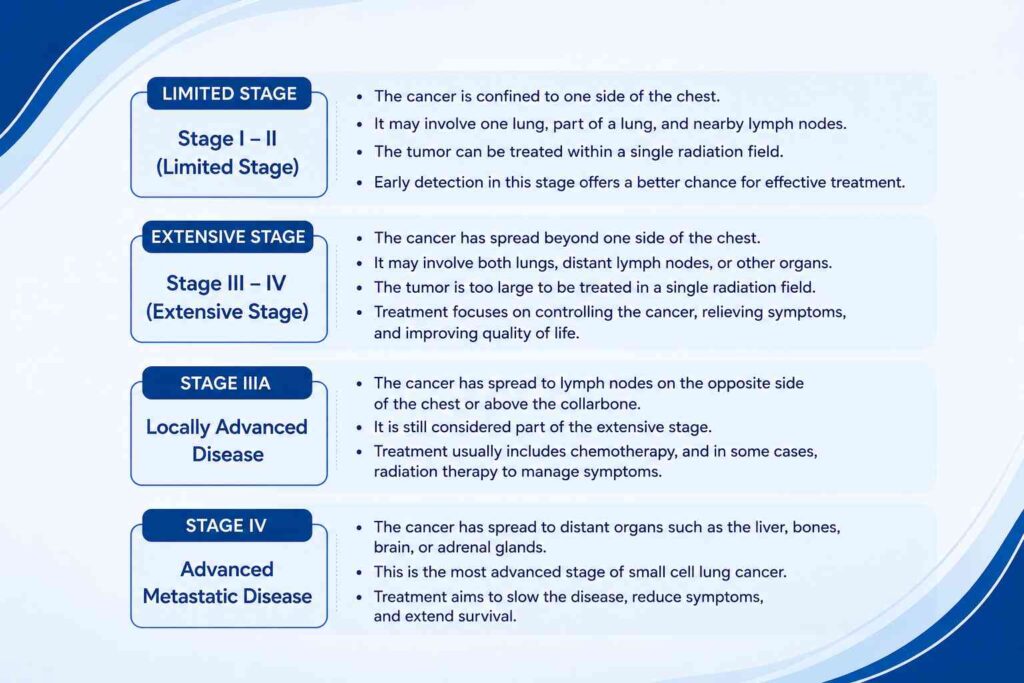
Doctors usually classify Small Cell Lung Cancer into:
Limited Stage
Cancer remains confined to one side of the chest and nearby lymph nodes.
Treatment often includes:
- Chemotherapy
- Radiation therapy
- Immunotherapy in selected cases
Extensive Stage
Cancer has spread beyond the chest.
Treatment focuses on:
- Slowing progression
- Improving quality of life
- Managing symptoms
- Increasing survival
Rare Types of Lung Cancer
Besides the major Types of Lung Cancer, several rare forms exist.
These include:
Carcinoid Tumors
Characteristics include:
- Slow-growing
- Less likely to spread
- Better long-term outcomes
- Often diagnosed at younger ages
Sarcomatoid Carcinoma
A rare and aggressive cancer with mixed cell types.
Features include:
- Rapid progression
- Difficult diagnosis
- Specialized treatment requirements
Salivary Gland-Type Tumors
These uncommon tumors develop in airway glands.
Examples include:
- Mucoepidermoid carcinoma
- Adenoid cystic carcinoma
They generally grow slowly and may respond well to surgery.
Causes of Lung Cancer
Understanding the causes behind the Types of Lung Cancer helps reduce risk.
Smoking
Smoking remains the leading cause.
Risk increases with:
- Duration of smoking
- Number of cigarettes
- Passive smoke exposure
Radon Gas
Radon is a naturally occurring radioactive gas.
Long-term exposure increases lung cancer risk.
Air Pollution
Exposure to polluted air contributes to cancer development.
Common sources include:
- Vehicle emissions
- Industrial pollution
- Fine particulate matter
Occupational Exposure
Workers exposed to harmful substances may face increased risk.
Examples include:
- Asbestos
- Silica
- Diesel exhaust
- Heavy metals
Family History
Genetics can influence susceptibility.
People with close relatives diagnosed with lung cancer may have a higher risk.
Previous Radiation Therapy
Radiation to the chest for other medical conditions may slightly increase future risk.
Risk Factors
Several factors increase the likelihood of developing the Types of Lung Cancer.
These include:
- Cigarette smoking
- Secondhand smoke
- Older age
- Family history
- Air pollution
- Radon exposure
- Occupational hazards
- Chronic lung disease
- Weakened immune system
- Previous cancer treatment
Symptoms of Types of Lung Cancer
Symptoms often depend on the type, location, and stage.
Common warning signs include:
- Persistent cough lasting weeks
- Coughing up blood
- Chest pain
- Wheezing
- Shortness of breath
- Hoarseness
- Recurrent pneumonia
- Weight loss
- Fatigue
- Loss of appetite
- Shoulder pain
- Bone pain
- Headaches if spread occurs
Early-stage lung cancer may produce no symptoms, making routine evaluation important for high-risk individuals.
When Should You See a Doctor
Consult a healthcare professional if you experience:
- A cough lasting more than three weeks
- Blood in sputum
- Unexplained weight loss
- Persistent chest discomfort
- Difficulty breathing
- Continuous fatigue
Early diagnosis significantly improves treatment options and outcomes.
How Are Types of Lung Cancer Diagnosed
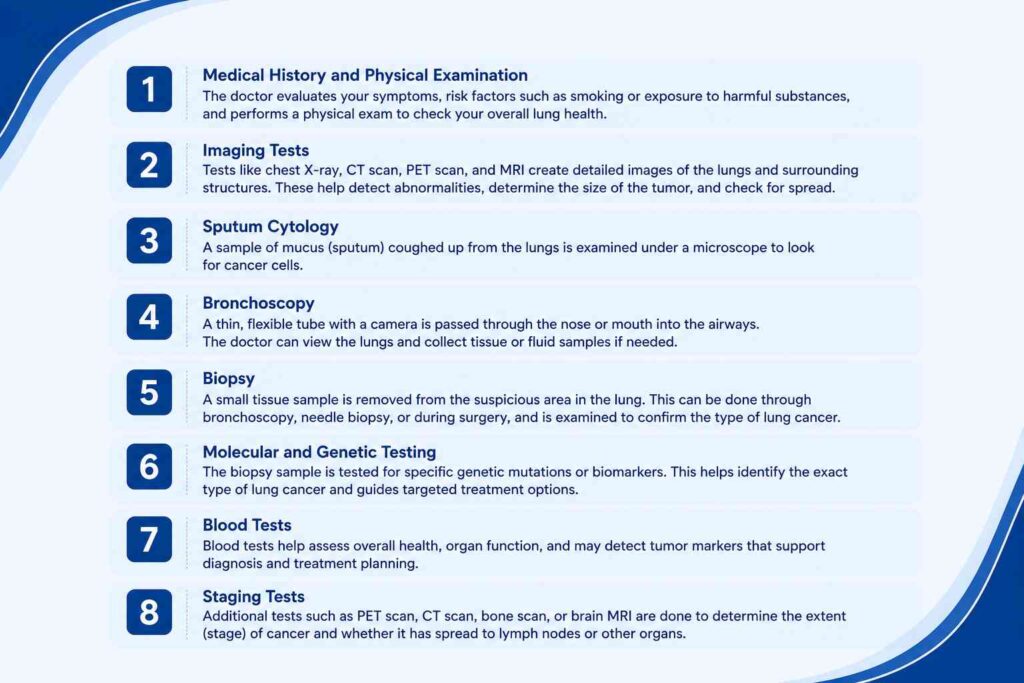
Accurate diagnosis involves several tests.
Doctors may recommend:
- Physical examination
- Medical history review
- Chest X-ray
- CT scan
- PET scan
- MRI scan
- Bronchoscopy
- Needle biopsy
- Surgical biopsy
- Sputum cytology
Pathologists examine tissue samples to determine the exact Types of Lung Cancer, which guides treatment decisions.
Treatment Options for Types of Lung Cancer
Treatment for the Types of Lung Cancer depends on several factors, including:
- The specific type of lung cancer
- Stage of the disease
- Tumor size and location
- Whether the cancer has spread
- The patient’s overall health
- Genetic mutations found in the cancer cells
A multidisciplinary team of specialists usually develops an individualized treatment plan.
Surgery
Surgery is often recommended for early-stage Types of Lung Cancer, particularly Non-Small Cell Lung Cancer.
Types of Surgery
Wedge Resection
A small section of the lung containing the tumor is removed while preserving as much healthy lung tissue as possible.
Segmentectomy
A larger portion of the lung is removed than in a wedge resection, but less than an entire lobe.
Lobectomy
One complete lobe of the lung is removed. This is one of the most common surgeries for localized lung cancer.
Pneumonectomy
In some cases, an entire lung must be removed if the cancer is extensive but still operable.
Benefits of Surgery
- Removes localized tumors
- Improves long-term survival in early-stage disease
- May eliminate cancer completely
- Can reduce the need for additional treatments in selected patients
Chemotherapy
Chemotherapy uses medications to destroy cancer cells throughout the body.
It may be recommended:
- Before surgery to shrink tumors
- After surgery to reduce recurrence risk
- Along with radiation therapy
- For advanced stages of lung cancer
Possible Side Effects
- Fatigue
- Hair loss
- Nausea
- Vomiting
- Reduced appetite
- Increased infection risk
- Low blood cell counts
Modern supportive medications can help manage many of these side effects.
Radiation Therapy
Radiation therapy uses high-energy beams to destroy cancer cells.
It may be used:
- Before surgery
- After surgery
- Alongside chemotherapy
- To relieve symptoms in advanced cancer
Advantages
- Targets cancer precisely
- Helps control tumor growth
- Reduces pain caused by cancer spread
- Improves quality of life in advanced stages
Targeted Therapy
Targeted therapy is one of the biggest advances in treating certain Types of Lung Cancer.
Instead of attacking all rapidly dividing cells, these medications target specific genetic changes found in cancer cells.
Examples of genetic alterations include:
- EGFR mutations
- ALK rearrangements
- ROS1 mutations
- BRAF mutations
- MET alterations
- RET fusions
Benefits
- More precise treatment
- Often fewer side effects than chemotherapy
- Improved outcomes in eligible patients
Genetic testing is usually performed before prescribing targeted therapy.
Immunotherapy
Immunotherapy helps the body’s immune system recognize and attack cancer cells.
It has become an important treatment option for many advanced Types of Lung Cancer.
Benefits
- Can provide long-lasting responses
- Helps control advanced disease
- May be combined with chemotherapy
- Suitable for selected patients based on specific biomarkers
Combination Therapy
Many patients receive more than one treatment.
Common combinations include:
- Surgery + Chemotherapy
- Chemotherapy + Radiation
- Chemotherapy + Immunotherapy
- Targeted Therapy + Supportive Care
Combination therapy often improves treatment effectiveness depending on the stage and type of cancer.
Managing Symptoms During Treatment
Supportive care is an important part of treating the Types of Lung Cancer.
Healthcare providers may recommend:
- Pain management
- Nutritional counseling
- Breathing exercises
- Pulmonary rehabilitation
- Psychological support
- Physical therapy
- Palliative care when appropriate
Managing symptoms helps improve comfort and quality of life throughout treatment.
Can Types of Lung Cancer Be Prevented
Although not every case can be prevented, several lifestyle changes may reduce the risk.
Avoid Smoking
The single most effective way to reduce lung cancer risk is to avoid tobacco products.
Avoid Secondhand Smoke
Limiting exposure to cigarette smoke from others also lowers risk.
Test Your Home for Radon
Radon testing is especially important in areas where elevated radon levels are common.
Use Protective Equipment
Workers exposed to hazardous chemicals should always use recommended safety equipment.
Eat a Healthy Diet
Include:
- Fruits
- Vegetables
- Whole grains
- Lean protein
- Healthy fats
A balanced diet supports overall health.
Exercise Regularly
Regular physical activity supports lung function and overall well-being.
Attend Regular Health Checkups
High-risk individuals may benefit from lung cancer screening based on their healthcare provider’s recommendations.
Living with Lung Cancer
A diagnosis of one of the Types of Lung Cancer can be emotionally challenging.
Helpful strategies include:
- Following the treatment plan
- Attending follow-up appointments
- Asking questions about treatment options
- Maintaining physical activity as tolerated
- Eating nutritious meals
- Seeking emotional support from family or support groups
- Managing stress through relaxation techniques
Prognosis
The outlook for the Types of Lung Cancer varies depending on:
- Cancer type
- Stage at diagnosis
- Overall health
- Treatment response
- Genetic characteristics
Early diagnosis generally offers the best chance for successful treatment.
Ongoing advances in surgery, targeted therapy, immunotherapy, and personalized medicine continue to improve survival rates and quality of life for many patients.
Conclusion
Understanding the Types of Lung Cancer empowers patients and families to recognize symptoms early, understand available treatment options, and make informed healthcare decisions.
The two major categories—Non-Small Cell Lung Cancer and Small Cell Lung Cancer—differ significantly in their behavior and treatment approaches. Rare lung cancers also require specialized care.
Early diagnosis, prompt treatment, healthy lifestyle choices, and regular medical follow-up remain essential for achieving the best possible outcomes. Whether you are learning for yourself or supporting a loved one, awareness is the first step toward timely intervention. If you notice persistent respiratory symptoms, consult a qualified healthcare professional without delay. Staying informed about the Types of Lung Cancer can make a meaningful difference for individuals and families in Thrissur and beyond. For reliable and evidence-based information about lung cancer, visit the American Cancer Society‘s guide on lung cancer
Frequently Asked Questions

Dr. Bibin Francis
Dr. Bibin Francis is a dedicated medical oncologist with expertise in chemotherapy, immunotherapy, targeted therapy, and personalized cancer treatment planning for a wide range of malignancies.
Jubilee Mission Medical College & Research Institute, Thrissur, Kerala