
7 Powerful Signs of Hereditary Cancer Syndromes Revealed 101
Understanding the Signs of Hereditary Cancer Syndromes can help individuals and families recognize patterns that may indicate an inherited risk of cancer. While most cancers occur randomly, some develop because of genetic changes passed from one generation to another. Awareness of these signs may support earlier evaluation, appropriate screening, and informed healthcare decisions. Many families in Thrissur seek information about inherited cancer risks to better understand their family health history and future preventive options.
Hereditary cancer syndromes are linked to specific gene mutations that increase the likelihood of developing certain types of cancer. Recognizing the signs does not mean a person will definitely develop cancer, but it may indicate the need for further assessment and genetic counseling.
1. What Are Hereditary Cancer Syndromes
Hereditary cancer syndromes are inherited conditions caused by genetic mutations that can be passed from parents to children. These mutations may increase the risk of developing one or more types of cancer.
Unlike sporadic cancers, hereditary cancers often:
- Occur in multiple family members
- Appear at younger ages
- Affect several generations
- Involve multiple cancers in the same individual
- Follow recognizable inheritance patterns
Understanding the Signs of Hereditary Cancer Syndromes helps identify families who may benefit from specialized screening and genetic testing.
2. Why Recognizing the Signs of Hereditary Cancer Syndromes Matters
Early recognition can help with:
- Risk assessment
- Timely screening
- Preventive healthcare planning
- Family awareness
- Better monitoring for cancer development
Not everyone with a hereditary cancer syndrome develops cancer, but identifying risk factors allows healthcare providers to recommend appropriate surveillance strategies.
3. Common Causes of Hereditary Cancer Syndromes
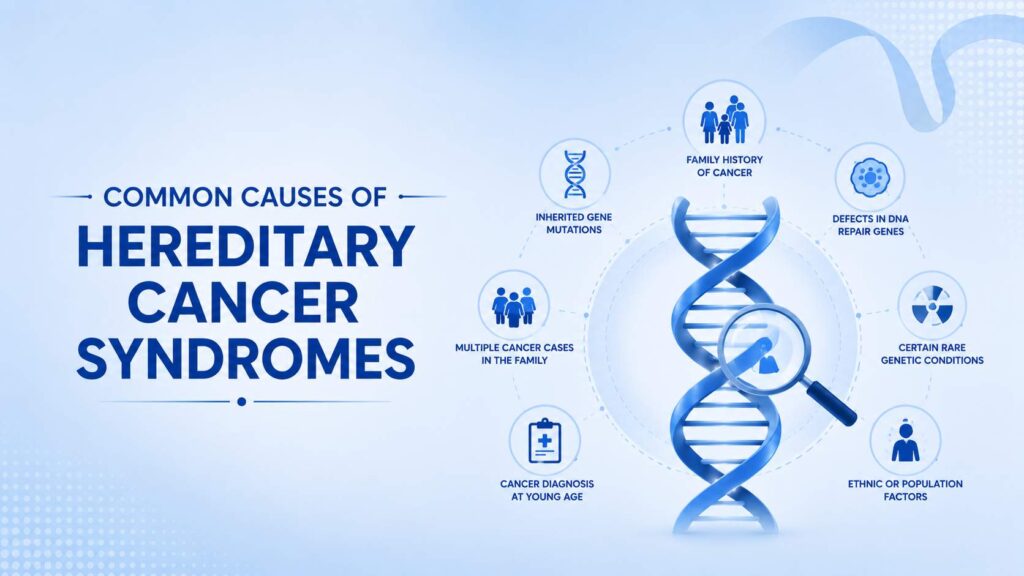
The primary cause is an inherited mutation in specific genes responsible for controlling cell growth and repairing DNA damage.
Common genetic factors include mutations in:
- BRCA1
- BRCA2
- TP53
- APC
- MLH1
- MSH2
- MSH6
- PMS2
When these genes do not function properly, abnormal cells may grow and multiply more easily, increasing cancer risk.
4. Major Signs of Hereditary Cancer Syndromes
Family History of Multiple Cancer Cases
One of the strongest Signs of Hereditary Cancer Syndromes is having several relatives diagnosed with the same or related cancers.
Examples include:
- Multiple cases of breast cancer
- Colon cancer affecting several family members
- Repeated occurrences of ovarian cancer
- Clusters of pancreatic cancer
Cancer at a Young Age
Cancer diagnosed significantly earlier than expected may indicate an inherited risk.
Examples include:
- Breast cancer before age 50
- Colon cancer before age 50
- Ovarian cancer at a younger age
- Prostate cancer occurring early in life
Multiple Cancers in One Individual
Some people develop more than one unrelated cancer during their lifetime.
Examples:
- Breast and ovarian cancer
- Colon and endometrial cancer
- Multiple primary tumors
This pattern can be among the important Signs of Hereditary Cancer Syndromes.
Rare Types of Cancer
Certain uncommon cancers may suggest a hereditary condition.
These include:
- Male breast cancer
- Medullary thyroid cancer
- Adrenal gland tumors
- Retinoblastoma
Cancer Across Several Generations
If grandparents, parents, and children have experienced similar cancers, inherited genetic factors may be involved.
Bilateral or Multiple Tumors
Cancer affecting both paired organs or multiple tumors developing simultaneously can be a warning sign.
Examples include:
- Cancer in both breasts
- Multiple colon polyps
- Multiple endocrine tumors
Certain Ethnic or Population Backgrounds
Some genetic mutations are more common in specific populations due to inherited genetic patterns.
Known Genetic Mutation in the Family
A confirmed mutation in a close relative significantly increases the possibility of hereditary cancer risk within the family.
5. Types of Hereditary Cancer Syndromes
Hereditary Breast and Ovarian Cancer Syndrome
Often associated with BRCA1 and BRCA2 mutations.
Possible risks include:
- Breast cancer
- Ovarian cancer
- Pancreatic cancer
- Prostate cancer
Lynch Syndrome
A common inherited colorectal cancer syndrome.
Associated cancers include:
- Colon cancer
- Endometrial cancer
- Ovarian cancer
- Stomach cancer
Familial Adenomatous Polyposis
Characterized by numerous colon polyps that may increase cancer risk if untreated.
Li-Fraumeni Syndrome
A rare condition linked to various cancers occurring at younger ages.
Multiple Endocrine Neoplasia
This syndrome affects endocrine glands and may increase the likelihood of specific tumors.
6. Symptoms Associated With Hereditary Cancer Syndromes
Many hereditary cancer syndromes do not produce symptoms until cancer develops. However, some individuals may notice warning signs related to associated conditions.
Possible symptoms include:
- Persistent unexplained lumps
- Changes in bowel habits
- Unusual bleeding
- Persistent fatigue
- Unexplained weight loss
- Frequent development of polyps
- Recurrent tumors
These symptoms alone do not confirm hereditary cancer syndromes but may warrant medical evaluation.
7. Who Is at Higher Risk
Risk may be higher in people who have:
- Multiple relatives with cancer
- Family members diagnosed at young ages
- Known genetic mutations in the family
- Rare cancer diagnoses
- Multiple cancers in a single individual
- Strong family history across generations
Recognizing these risk factors can help identify potential Signs of Hereditary Cancer Syndromes.
8. How Hereditary Cancer Syndromes Are Diagnosed
Medical History Review
Healthcare providers assess:
- Personal cancer history
- Family cancer history
- Age at diagnosis
- Cancer patterns within the family
Genetic Counseling
Genetic counseling helps individuals understand:
- Inherited risks
- Testing options
- Potential outcomes
- Family implications
Genetic Testing
Genetic testing may identify mutations associated with hereditary cancer syndromes.
Testing can help determine:
- Whether an inherited mutation exists
- Which family members may be at risk
- Appropriate screening recommendations
9. Benefits of Identifying Hereditary Cancer Syndromes
Understanding hereditary risk offers several advantages.
Earlier Screening
People at increased risk may start cancer screening earlier than the general population.
Better Risk Assessment
Genetic information provides a clearer understanding of personal and family risk.
Preventive Planning
Preventive healthcare measures can be discussed based on individual risk profiles.
Family Awareness
Relatives may benefit from learning about potential inherited risks.
Personalized Monitoring
Screening schedules can be tailored according to identified genetic factors.
10. Treatment and Management Approaches
Treatment depends on whether cancer is present and which hereditary syndrome is involved.
Regular Screening
Monitoring may include:
- Mammograms
- Colonoscopies
- MRI scans
- Blood tests
- Specialized examinations
Risk-Reducing Strategies
Healthcare providers may discuss preventive measures based on individual circumstances.
Lifestyle Support
Healthy habits may support overall well-being.
Recommendations often include:
- Balanced nutrition
- Physical activity
- Avoiding tobacco
- Limiting alcohol consumption
- Maintaining a healthy weight
Ongoing Medical Follow-Up
Regular follow-up helps ensure timely monitoring and management.
11. Practical Tips for Families
If hereditary cancer risk is suspected:
- Document family medical history
- Record ages of cancer diagnosis
- Share relevant information with relatives
- Discuss concerns with healthcare professionals
- Consider genetic counseling when recommended
- Follow appropriate screening schedules
These steps can help families better understand potential Signs of Hereditary Cancer Syndromes.
12. Understanding Family History Patterns
A detailed family history remains one of the most valuable tools for identifying inherited cancer risk.
Important information includes:
- Type of cancer
- Age at diagnosis
- Number of affected relatives
- Maternal and paternal family history
- Presence of multiple cancers
Patterns often provide important clues regarding hereditary conditions.
Conclusion
Recognizing the Signs of Hereditary Cancer Syndromes can help individuals and families become more aware of inherited cancer risks. Multiple cancer cases within a family, early-age diagnoses, rare cancers, and cancers affecting several generations are among the most significant indicators. Understanding these patterns supports informed healthcare decisions, appropriate screening, and timely genetic evaluation when necessary. Increased awareness of the Signs of Hereditary Cancer Syndromes can contribute to proactive health management for families in Thrissur and elsewhere. For more information about hereditary cancer syndromes and genetic testing, readers can review resources provided by National Cancer Institute (NCI) .
Frequently Asked Questions
What are hereditary cancer syndromes
They are inherited genetic conditions that increase the risk of developing certain cancers.
Are all cancers hereditary
No. Most cancers are not inherited and occur due to a combination of environmental and genetic factors.
What are the main Signs of Hereditary Cancer Syndromes
Common signs include multiple affected relatives, early cancer diagnosis, rare cancers, and cancers across generations.
Can hereditary cancer syndromes skip generations
The genetic mutation may be passed through generations, even if not everyone develops cancer.
What is genetic testing
Genetic testing analyzes DNA to identify inherited mutations associated with increased cancer risk.
Who should consider genetic counseling
Individuals with a strong family history of cancer or known familial mutations may benefit from counseling.
Does having a mutation mean cancer is certain
No. A mutation increases risk but does not guarantee cancer development.
8. What cancers are commonly linked to hereditary syndromes
Breast, ovarian, colorectal, endometrial, pancreatic, and prostate cancers are commonly associated.
Can hereditary cancer syndromes be prevented
The genetic mutation cannot be prevented, but screening and risk-reduction strategies may help manage risk.
Why is family history important
Family history can reveal patterns that suggest inherited cancer risk and guide further evaluation.

Dr. Bibin Francis
Dr. Bibin Francis is a dedicated medical oncologist with expertise in chemotherapy, immunotherapy, targeted therapy, and personalized cancer treatment planning for a wide range of malignancies.
Jubilee Mission Medical College & Research Institute, Thrissur, Kerala