
Hereditary Cancer Risk Factors: What Increases the Likelihood of Inherited Cancer?
Cancer can develop due to a combination of genetic, environmental, and lifestyle factors. However, some individuals have a higher risk of developing cancer because of inherited genetic changes passed down through families. Understanding hereditary cancer risk factors is important for identifying individuals who may benefit from earlier screening, genetic counseling, and preventive healthcare strategies.
Before exploring hereditary cancer risk factors in detail, it is helpful to gain a broader understanding of hereditary cancer and inherited cancer risk, including how genetic mutations are transmitted across generations and contribute to cancer development. While hereditary cancers account for a smaller percentage of all cancer cases, recognizing inherited risk factors can play a crucial role in early detection and personalized medical care.
Awareness of hereditary cancer risk factors allows individuals and families to make informed healthcare decisions, seek appropriate genetic evaluation, and take proactive steps toward cancer prevention and monitoring.
What Are Hereditary Cancer Risk Factors?
Hereditary cancer risk factors are inherited characteristics or genetic changes that increase an individual’s likelihood of developing certain types of cancer.
These risk factors are usually linked to inherited mutations in specific genes responsible for regulating cell growth, DNA repair, and tumor suppression. When these genes do not function properly, abnormal cells may grow and multiply, increasing cancer risk.
Unlike lifestyle-related risk factors, hereditary cancer risk factors are present from birth and can be passed from parents to children.
Why Understanding Hereditary Cancer Risk Factors Is Important
Recognizing hereditary cancer risk factors helps healthcare providers identify individuals who may require specialized screening or preventive measures.
Understanding inherited cancer risk can:
- Support earlier cancer detection
- Improve treatment planning
- Guide genetic testing decisions
- Help family members assess their own risk
- Enable personalized healthcare strategies
Early awareness often leads to better monitoring and improved health outcomes.
Family History as a Major Risk Factor
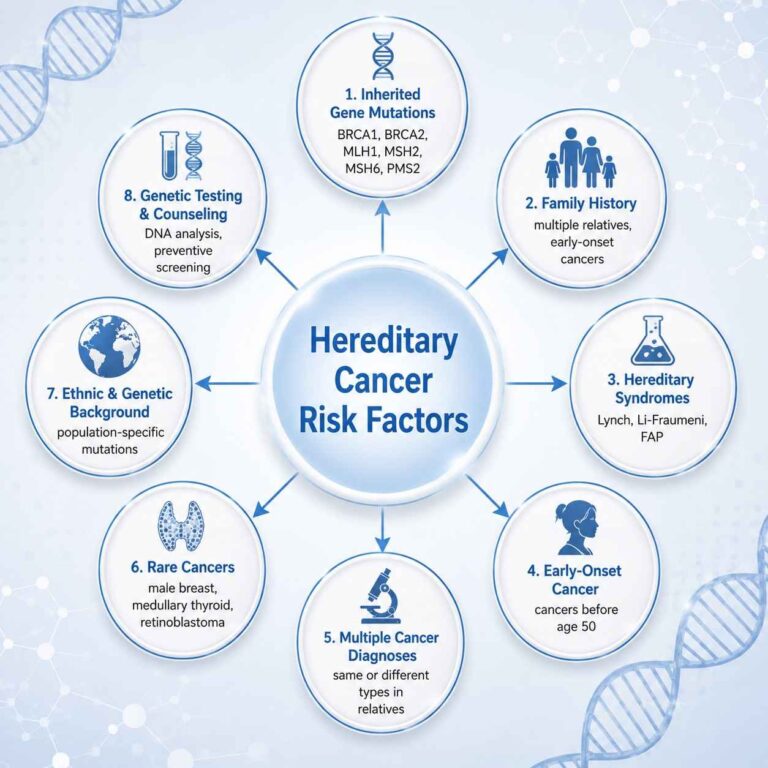
One of the strongest hereditary cancer risk factors is a family history of cancer.
When multiple relatives are diagnosed with similar cancers, particularly across several generations, inherited genetic mutations may be involved.
Family history patterns that may suggest hereditary cancer include:
- Multiple relatives with the same cancer type
- Cancer diagnosed at a young age
- Rare cancers occurring within the family
- Several generations affected by cancer
- Individuals with multiple cancer diagnoses
A detailed family medical history can provide valuable clues regarding inherited cancer risk.
Inherited Gene Mutations and Cancer Risk
Inherited genetic mutations are among the most significant hereditary cancer risk factors.
Genes help regulate essential cellular functions such as:
- Cell growth
- DNA repair
- Cell division
- Tumor suppression
When mutations occur in these genes and are inherited from a parent, cancer risk may increase significantly.
Inherited mutations are present in every cell of the body and may be passed to future generations.
BRCA1 and BRCA2 Mutations
BRCA1 and BRCA2 are among the most well-known genes associated with hereditary cancer risk.
Mutations in these genes may increase the likelihood of developing:
- Breast cancer
- Ovarian cancer
- Prostate cancer
- Pancreatic cancer
Not everyone with a BRCA mutation will develop cancer, but these mutations are considered important hereditary cancer risk factors.
Individuals with strong family histories of breast or ovarian cancer are often evaluated for BRCA-related risk.
Lynch Syndrome and Other Genetic Conditions
Lynch syndrome is one of the most common inherited cancer syndromes.
It results from mutations in DNA mismatch repair genes, including:
- MLH1
- MSH2
- MSH6
- PMS2
People with Lynch syndrome may have increased risks of:
- Colorectal cancer
- Endometrial cancer
- Ovarian cancer
- Stomach cancer
- Urinary tract cancers
Because of its strong genetic component, Lynch syndrome is considered a significant hereditary cancer risk factor.
Early-Onset Cancer in Families
Cancer occurring at unusually young ages may indicate inherited genetic susceptibility.
For example:
- Breast cancer diagnosed before age 50
- Colorectal cancer diagnosed before age 50
- Multiple cancers in younger family members
When cancer develops earlier than expected, hereditary cancer risk factors should be carefully evaluated.
Healthcare providers often recommend genetic counseling in these situations.
Multiple Cancer Diagnoses in Relatives
Families with several cancer diagnoses may have an inherited predisposition to cancer.
Patterns that may raise concern include:
- Several close relatives affected by cancer
- Similar cancers appearing repeatedly
- Multiple generations diagnosed with cancer
- Relatives with more than one cancer type
These patterns often prompt further genetic evaluation to determine whether hereditary cancer risk factors are present.
Rare Cancers and Hereditary Risk
Certain uncommon cancers may be associated with inherited mutations.
Examples include:
- Male breast cancer
- Medullary thyroid cancer
- Retinoblastoma
- Certain sarcomas
When rare cancers occur within families, healthcare providers may investigate possible hereditary cancer syndromes.
Although uncommon, these cancers can provide important clues regarding inherited risk.
Ethnic and Genetic Background Factors
Some hereditary cancer risk factors occur more frequently in specific populations.
Certain ethnic groups may have higher rates of particular inherited mutations due to genetic inheritance patterns over generations.
Understanding ethnic background can help healthcare providers assess cancer risk more accurately and recommend appropriate testing when needed.
However, hereditary cancer risk can affect individuals from any population.
Common Hereditary Cancer Syndromes
Several inherited syndromes are linked to increased cancer risk.
Hereditary Breast and Ovarian Cancer Syndrome
Often associated with BRCA1 and BRCA2 mutations.
Lynch Syndrome
Primarily linked to colorectal and endometrial cancers.
Li-Fraumeni Syndrome
Associated with:
- Breast cancer
- Brain tumors
- Leukemia
- Sarcomas
Familial Adenomatous Polyposis (FAP)
Increases the risk of colorectal cancer.
These syndromes represent important hereditary cancer risk factors requiring specialized monitoring.
How Genetic Testing Helps Assess Risk
Genetic testing can identify inherited mutations associated with cancer risk.
Testing typically involves:
- Blood samples
- Saliva samples
- DNA analysis
Genetic testing may help:
- Confirm inherited cancer risk
- Guide screening recommendations
- Assist treatment planning
- Inform family members of potential risk
Testing decisions are usually made after consultation with qualified healthcare professionals.
When to Consider Genetic Counseling
Genetic counseling may be beneficial for individuals with:
- Strong family history of cancer
- Early-onset cancers in relatives
- Multiple affected family members
- Known hereditary cancer syndromes
- Positive genetic test results within the family
Genetic counselors help individuals understand hereditary cancer risk factors and available testing options.
They also explain potential implications for family members.
Screening Recommendations for High-Risk Individuals
Individuals with hereditary cancer risk factors may benefit from earlier or more frequent screening.
Depending on the inherited risk, recommendations may include:
Breast Cancer Screening
- Mammography
- Breast MRI
Colorectal Cancer Screening
- Colonoscopy
Additional Surveillance
- Specialized imaging
- Blood tests
- Risk-specific monitoring
Personalized screening plans can improve early detection opportunities.
Can Hereditary Cancer Risk Be Reduced?
Inherited genetic mutations cannot be eliminated.
However, several strategies may help manage hereditary cancer risk factors:
- Maintaining a healthy lifestyle
- Avoiding tobacco products
- Participating in recommended screening programs
- Following medical advice
- Attending regular health checkups
For some individuals, preventive interventions may also be considered based on risk level.
The goal is to detect cancer early or reduce the likelihood of advanced disease.
The Importance of Early Detection
Early detection remains one of the most effective tools for managing hereditary cancer risk factors.
Individuals with known inherited risk may benefit from:
- Increased awareness of symptoms
- Regular screening
- Routine medical evaluations
- Genetic counseling follow-up
Detecting cancer at an earlier stage often improves treatment options and outcomes.
Awareness and proactive healthcare remain key components of cancer risk management.
Conclusion
Understanding hereditary cancer risk factors is essential for recognizing how inherited genetic mutations and family history can influence cancer development. Factors such as inherited gene mutations, hereditary cancer syndromes, early-onset cancers, and multiple affected relatives may indicate an increased risk of developing certain cancers.
Although inherited genetic risk cannot be completely prevented, genetic counseling, appropriate testing, and regular screening can help individuals manage hereditary cancer risk factors more effectively. Early identification of inherited risk provides opportunities for personalized healthcare planning and timely intervention. For reliable information on inherited cancer syndromes and genetic risk assessment, visit the National Cancer Institute Hereditary Cancer Information.

Dr. Bibin Francis
Dr. Bibin Francis is a dedicated medical oncologist with expertise in chemotherapy, immunotherapy, targeted therapy, and personalized cancer treatment planning for a wide range of malignancies.
Jubilee Mission Medical College & Research Institute, Thrissur, Kerala