
Cancer develops when changes occur in the genes that control how cells grow, divide, and repair themselves. While many cancers develop due to lifestyle, environmental exposures, or aging, some cancers are linked to inherited genetic mutations passed from parents to children. Understanding the causes of hereditary cancers is important for identifying individuals who may have an increased risk of developing certain types of cancer.
Before exploring the causes of hereditary cancers, it is helpful to gain a deeper insight into understanding hereditary cancer, including how inherited genetic changes influence cancer risk across generations. Hereditary cancers often occur within families and may affect multiple relatives over time.
Although hereditary cancers account for a smaller percentage of overall cancer cases, recognizing inherited risk factors can support early detection, appropriate screening, and personalized healthcare decisions.
Table of Contents
- What Are Hereditary Cancers?
- Why Do Hereditary Cancers Occur?
- Inherited Gene Mutations as a Primary Cause
- The Role of DNA Repair Genes
- Tumor Suppressor Gene Mutations
- Gene Mutations Passed Through Families
- Family History and Hereditary Cancer Risk
- Common Genetic Syndromes Linked to Hereditary Cancers
- Causes of Hereditary Breast and Ovarian Cancer
- Causes of Hereditary Colorectal Cancer
- Rare Genetic Conditions Associated With Cancer
- Factors That Increase Inherited Cancer Risk
- How Genetic Testing Identifies Cancer Risk
- Can Hereditary Cancers Be Prevented?
- Importance of Early Detection and Screening
- Conclusion
1. What Is Hereditary Cancer?
Hereditary cancer refers to cancers that develop due to inherited genetic mutations passed from parents to children.
These inherited mutations are present in nearly every cell of the body from birth. Certain gene mutations can increase the likelihood of developing specific cancers during a person’s lifetime.
When discussing what is hereditary cancer, it is important to understand that inherited genetic changes do not directly cause cancer but increase susceptibility to cancer development.
Individuals who inherit these mutations may have:
- Increased cancer risk
- Earlier age of cancer diagnosis
- Multiple cancers during their lifetime
- Strong family history of cancer
2. How Does Hereditary Cancer Occur?
Every person inherits genes from both parents.
Genes contain instructions that help regulate:
- Cell growth
- Cell repair
- Cell division
- DNA maintenance
When inherited mutations affect genes responsible for controlling cell growth or repairing damaged DNA, abnormal cells may develop more easily.
Over time, additional genetic changes may accumulate and increase the risk of cancer formation.
3. Inherited Gene Mutations as a Primary Cause
One of the most important causes of hereditary cancers is inherited gene mutations.
A mutation is a change in a gene’s DNA sequence. When a harmful mutation is inherited from a parent, the risk of developing certain cancers may increase significantly.
These inherited mutations are present in nearly every cell of the body and can be passed to future generations.
Examples include mutations in:
- BRCA1
- BRCA2
- TP53
- APC
- MLH1
- MSH2
These genes play essential roles in preventing cancer development.
4. The Role of DNA Repair Genes
DNA repair genes help identify and correct damage that occurs within cells.
When these genes function properly, they help prevent genetic mistakes from accumulating.
Inherited mutations affecting DNA repair genes are among the leading causes of hereditary cancers because damaged DNA may remain unrepaired, increasing cancer risk.
Common DNA repair genes include:
- MLH1
- MSH2
- MSH6
- PMS2
Defects in these genes are associated with several hereditary cancer syndromes.
5. Tumor Suppressor Gene Mutations
Tumor suppressor genes act as natural protective mechanisms within the body.
Their role includes:
- Slowing cell division
- Repairing damaged DNA
- Triggering the death of abnormal cells
When inherited mutations affect tumor suppressor genes, cells may grow uncontrollably.
Examples include:
BRCA1 and BRCA2
Associated with increased risks of:
- Breast cancer
- Ovarian cancer
- Pancreatic cancer
- Prostate cancer
TP53
Associated with multiple hereditary cancer syndromes.
6. Gene Mutations Passed Through Families
Another major cause of hereditary cancers is the transmission of gene mutations from parents to children.
Each child inherits genetic material from both parents.
If one parent carries a hereditary cancer-related mutation, there may be a possibility of passing that mutation to future generations.
This inherited pattern explains why some families experience multiple cancer diagnoses across generations.
7. Family History and Hereditary Cancer Risk
Family history is one of the strongest indicators of hereditary cancer risk.
Certain patterns may suggest inherited genetic mutations, including:
- Multiple relatives with cancer
- Cancer occurring at younger ages
- Rare cancers within a family
- Multiple cancers affecting the same individual
- Similar cancers across generations
A detailed family history often provides important clues regarding inherited cancer susceptibility.
8. Common Genetic Syndromes Linked to Hereditary Cancers
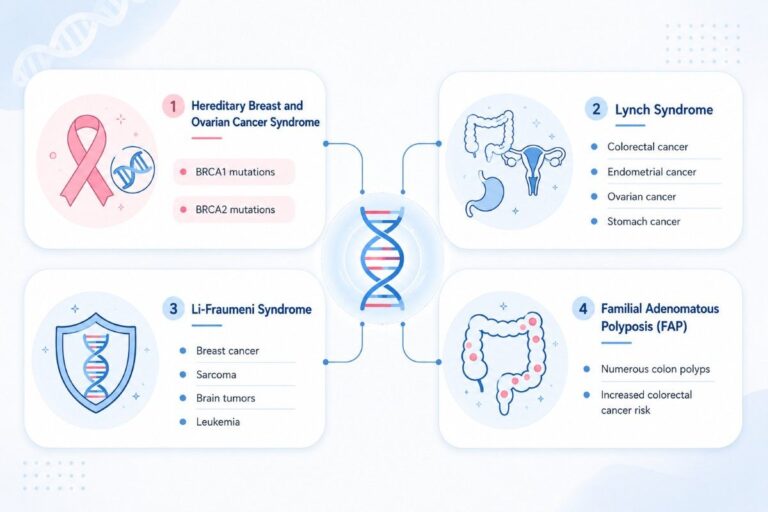
Several hereditary cancer syndromes have been identified through genetic research.
Hereditary Breast and Ovarian Cancer Syndrome
Usually linked to:
- BRCA1 mutations
- BRCA2 mutations
Lynch Syndrome
Associated with increased risks of:
- Colorectal cancer
- Endometrial cancer
- Ovarian cancer
- Stomach cancer
Li-Fraumeni Syndrome
Associated with:
- Breast cancer
- Sarcomas
- Brain tumors
- Leukemia
Familial Adenomatous Polyposis (FAP)
Significantly increases colorectal cancer risk.
9. Causes of Hereditary Breast and Ovarian Cancer
One of the most widely recognized hereditary cancer syndromes involves mutations in BRCA genes.
Individuals with BRCA1 or BRCA2 mutations may have increased risks of:
- Breast cancer
- Ovarian cancer
- Pancreatic cancer
- Prostate cancer
These mutations interfere with the body’s ability to repair damaged DNA effectively.
10. Causes of Hereditary Colorectal Cancer
Inherited mutations affecting DNA mismatch repair genes can lead to hereditary colorectal cancer.
The most common hereditary colorectal cancer syndrome is Lynch syndrome.
Affected genes include:
- MLH1
- MSH2
- MSH6
- PMS2
These mutations increase the likelihood of developing colorectal and several other cancers.
11. Rare Genetic Conditions Associated With Cancer
Some hereditary cancer syndromes are relatively uncommon but carry substantial cancer risks.
Examples include:
Cowden Syndrome
May increase risks of:
- Breast cancer
- Thyroid cancer
- Endometrial cancer
Peutz-Jeghers Syndrome
Associated with:
- Gastrointestinal cancers
- Pancreatic cancer
- Breast cancer
Multiple Endocrine Neoplasia
Can affect hormone-producing glands and increase cancer risk.
12. Factors That Increase Inherited Cancer Risk
Several factors may indicate a higher likelihood of hereditary cancer.
These include:
- Strong family history
- Early-onset cancers
- Multiple cancer diagnoses
- Bilateral cancers
- Known genetic mutations within the family
These factors may warrant genetic counseling and further evaluation.
13. How Genetic Testing Identifies Cancer Risk
Genetic testing helps determine whether inherited mutations are present.
Testing may involve:
- Blood samples
- Saliva samples
- Laboratory DNA analysis
Results may:
- Confirm inherited mutations
- Guide screening recommendations
- Help identify risks for family members
- Support personalized healthcare planning
Genetic testing has become an important tool for assessing hereditary cancer risk.
14. Can Hereditary Cancers Be Prevented?
Inherited genetic mutations cannot be changed or removed.
However, individuals can take proactive steps to manage risk.
Strategies may include:
- Regular screening
- Healthy lifestyle choices
- Risk assessment programs
- Genetic counseling
- Preventive medical interventions in selected situations
The goal is early detection and effective risk management.
15. Importance of Early Detection and Screening
Early detection remains one of the most effective approaches for individuals with hereditary cancer risk.
Screening programs may include:
Breast Cancer Screening
- Mammography
- Breast MRI
Colorectal Cancer Screening
- Colonoscopy
Other Surveillance Programs
Depending on the hereditary syndrome identified.
Earlier screening often helps detect abnormalities before symptoms develop.
16. Conclusion
Understanding the causes of hereditary cancers helps individuals recognize how inherited genetic mutations can influence cancer risk across generations. The most common causes include inherited mutations affecting tumor suppressor genes, DNA repair genes, and other genetic pathways responsible for maintaining healthy cell growth.
A strong family history, early-onset cancers, and known hereditary cancer syndromes may indicate increased inherited risk. While hereditary cancers cannot always be prevented, genetic testing, risk assessment, regular screening, and proactive healthcare planning can help individuals make informed decisions about their health.
As research continues to improve our understanding of cancer genetics, individuals with hereditary cancer risk have greater access to personalized screening strategies and preventive care. Early identification remains a valuable tool for improving long-term outcomes and supporting effective cancer management. Knowing hereditary cancer risk empowers individuals and families to make informed decisions about screening, lifestyle choices, and preventive care. Early identification can lead to more effective monitoring and improved health outcomes over time. For additional information about hereditary cancer and genetic testing, visit the National Cancer Institute Hereditary Cancer Syndromes Resource.

Dr. Bibin Francis
Dr. Bibin Francis is a dedicated medical oncologist with expertise in chemotherapy, immunotherapy, targeted therapy, and personalized cancer treatment planning for a wide range of malignancies.
Jubilee Mission Medical College & Research Institute, Thrissur, Kerala