
10 Powerful LUNG CANCER SYMPTOMS IN MEN AND WOMEN Guide Today
LUNG CANCER SYMPTOMS IN MEN AND WOMEN can sometimes develop slowly, making them easy to overlook during the early stages. Understanding these symptoms helps individuals seek medical attention sooner, improving the chances of timely diagnosis and treatment. Whether symptoms appear suddenly or gradually, recognizing the warning signs can make a significant difference. People in Thrissur and elsewhere should pay attention to persistent respiratory changes, unexplained weight loss, or ongoing fatigue instead of assuming they are minor health issues.
Lung cancer develops when abnormal cells in the lungs grow uncontrollably. While smoking remains the leading cause, people who have never smoked can also develop lung cancer due to environmental exposure, genetic factors, or occupational hazards. Because symptoms often resemble common respiratory illnesses, many cases remain undiagnosed until they become more advanced.
This guide explains LUNG CANCER SYMPTOMS IN MEN AND WOMEN, common causes, risk factors, different types of lung cancer, and early warning signs to help improve awareness and encourage timely medical evaluation.
Why Understanding LUNG CANCER SYMPTOMS IN MEN AND WOMEN Matters
Many people ignore early respiratory symptoms because they resemble allergies, seasonal infections, or common colds. Unfortunately, lung cancer may continue to progress while symptoms remain mild.
Understanding LUNG CANCER SYMPTOMS IN MEN AND WOMEN helps individuals:
- Recognize early warning signs
- Seek medical evaluation sooner
- Differentiate persistent symptoms from temporary illnesses
- Improve awareness of personal risk factors
- Support earlier diagnosis and treatment planning
Early detection often provides more treatment options and may improve long-term outcomes.
What Is Lung Cancer
Lung cancer occurs when cells inside the lungs begin growing abnormally and continue multiplying without normal control. Over time, these abnormal cells can form tumors that interfere with breathing and normal lung function.
The lungs play an essential role in supplying oxygen to the body and removing carbon dioxide. Cancer affecting these organs can reduce breathing efficiency and eventually spread to other organs if left untreated.
Lung cancer can affect adults of various ages, although it is more commonly diagnosed in older individuals and those with certain risk factors.
Common Causes of Lung Cancer
Several factors contribute to the development of lung cancer.
Smoking
Smoking remains the leading cause of lung cancer worldwide. Cigarette smoke contains numerous harmful chemicals that damage lung tissue over time.
Secondhand Smoke
People exposed to smoke from others may also have an increased risk despite never smoking themselves.
Radon Exposure
Radon is a naturally occurring radioactive gas that can accumulate inside buildings and homes.
Air Pollution
Long-term exposure to polluted air may contribute to lung damage and increase cancer risk.
Occupational Exposure
Certain industries expose workers to harmful substances such as:
- Asbestos
- Diesel exhaust
- Silica dust
- Arsenic
- Chromium
- Nickel compounds
Family History
A family history of lung cancer may increase an individual’s risk.
Previous Radiation Therapy
Radiation treatment to the chest for other medical conditions may slightly increase future risk.
Risk Factors Associated with LUNG CANCER SYMPTOMS IN MEN AND WOMEN
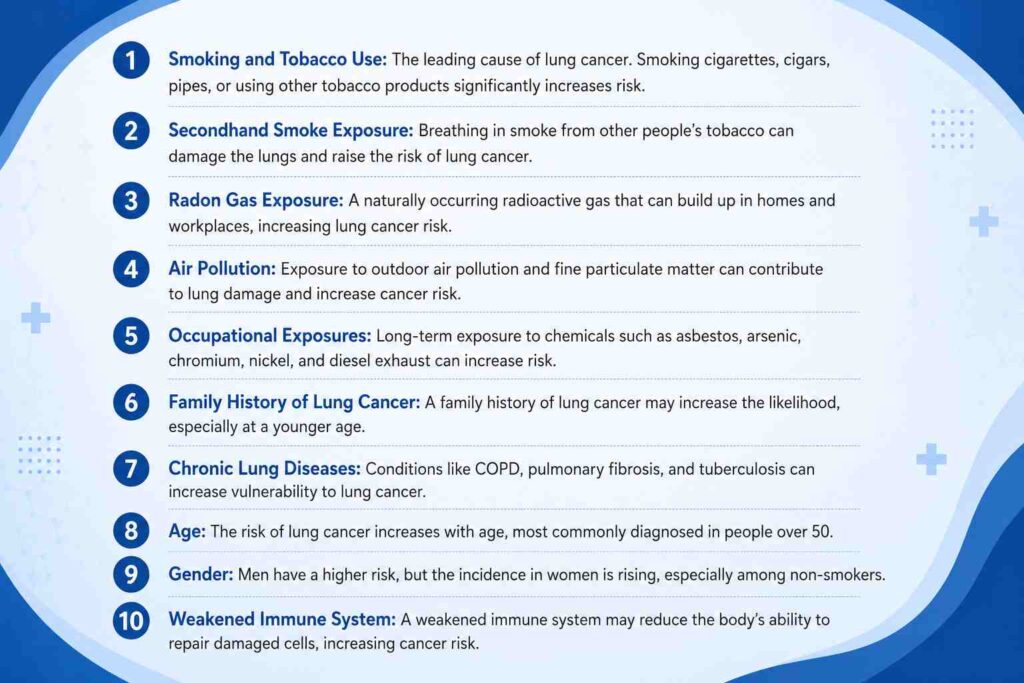
Several factors increase the likelihood of developing lung cancer.
These include:
- Active smoking
- Long smoking history
- Passive smoking
- Increasing age
- Air pollution exposure
- Occupational chemical exposure
- Chronic lung diseases
- Family history
- Previous chest radiation
- Radon exposure
Having one or more risk factors does not necessarily mean someone will develop lung cancer, but awareness encourages regular health checkups.
Types of Lung Cancer
Understanding the major types helps explain why symptoms and treatments may vary.
Non-Small Cell Lung Cancer (NSCLC)
This is the most common type of lung cancer.
Common subtypes include:
- Adenocarcinoma
- Squamous cell carcinoma
- Large cell carcinoma
NSCLC generally grows more slowly than small cell lung cancer.
Small Cell Lung Cancer (SCLC)
Small cell lung cancer tends to grow and spread more quickly.
It is strongly associated with smoking and often requires prompt treatment.
Early LUNG CANCER SYMPTOMS IN MEN AND WOMEN
Early-stage lung cancer may produce few noticeable symptoms. Some people experience only mild changes that persist over several weeks.
Common early LUNG CANCER SYMPTOMS IN MEN AND WOMEN include:
Persistent Cough
A cough lasting several weeks without improvement is one of the most common warning signs.
The cough may:
- Become more frequent
- Become deeper
- Produce mucus
- Produce blood in some cases
Shortness of Breath
Difficulty breathing during routine activities can occur when tumors interfere with normal lung function.
People may notice:
- Breathlessness while climbing stairs
- Difficulty walking long distances
- Feeling unable to take a deep breath
Chest Pain
Persistent chest discomfort should never be ignored.
Pain may:
- Worsen during coughing
- Increase while laughing
- Become noticeable during deep breathing
Hoarseness
Changes in the voice lasting several weeks can sometimes occur if cancer affects nearby nerves.
Wheezing
Narrowed airways may produce a whistling sound while breathing.
Although wheezing commonly occurs with asthma, persistent unexplained wheezing deserves medical evaluation.
Frequent Chest Infections
Repeated episodes of:
- Pneumonia
- Bronchitis
- Lung infections
may indicate an underlying problem requiring further investigation.
Fatigue
Persistent tiredness that does not improve with adequate rest can develop gradually.
Many people initially attribute fatigue to work stress or aging.
Unexplained Weight Loss
Unexpected weight loss without changes in diet or exercise may be associated with many medical conditions, including lung cancer.
Losing several kilograms unintentionally should be evaluated by a healthcare professional.
When Symptoms Become More Noticeable
As lung cancer progresses, symptoms often become more pronounced.
These may include:
- Persistent coughing
- Increasing breathlessness
- Ongoing fatigue
- Chest discomfort
- Loss of appetite
- Recurrent infections
- Reduced exercise tolerance
- General weakness
Because these symptoms overlap with many other conditions, medical evaluation is essential for an accurate diagnosis.
How Lung Cancer Affects the Body
Lung cancer can influence several body systems beyond the lungs.
Possible effects include:
- Reduced oxygen supply
- Difficulty performing daily activities
- Decreased energy levels
- Persistent inflammation
- Weakened immune response
- Changes in appetite
- Weight loss
- Sleep disturbances
The severity varies depending on the type, size, and stage of the cancer.
LUNG CANCER SYMPTOMS IN MEN AND WOMEN: Symptoms in Men
Although many symptoms are similar regardless of gender, certain risk factors and lifestyle patterns may influence how LUNG CANCER SYMPTOMS IN MEN AND WOMEN present. Men who have a long history of smoking or occupational exposure to harmful chemicals may be at a higher risk of developing lung cancer.
Persistent Cough
A cough that lasts for more than three weeks should not be ignored. It may remain dry or produce mucus and can gradually become more severe.
Coughing Up Blood
Even a small amount of blood in sputum requires immediate medical attention. While other conditions can also cause this symptom, it is considered one of the important warning signs of lung cancer.
Chest Tightness
Some men experience a feeling of pressure, heaviness, or discomfort in the chest that does not improve with rest.
Difficulty Breathing
Breathlessness during everyday activities such as climbing stairs, walking, or carrying light objects may indicate reduced lung function.
Unexplained Fatigue
Constant tiredness despite getting enough sleep can occur because the body is working harder to meet its oxygen needs.
Shoulder or Back Pain
Pain that spreads to the shoulders or upper back without a clear injury may sometimes be associated with lung tumors pressing on nearby tissues.
LUNG CANCER SYMPTOMS IN MEN AND WOMEN: Symptoms in Women
Women may experience many of the same warning signs as men. In people who have never smoked, lung cancer is often diagnosed as adenocarcinoma, which may develop in the outer parts of the lungs and produce subtle symptoms initially.
Mild but Persistent Cough
Instead of a severe cough, some women notice a lingering cough that simply never seems to disappear.
Shortness of Breath During Routine Activities
Breathlessness while walking, doing household work, or exercising may gradually worsen over time.
Chest Pain
Pain may be dull, sharp, or intermittent and can become worse during deep breathing or coughing.
Recurrent Respiratory Infections
Frequent episodes of bronchitis or pneumonia that continue to return may require further investigation.
Fatigue
Extreme tiredness without an obvious reason is a common symptom that should not be overlooked.
Unintentional Weight Loss
Unexpected weight loss can occur even when eating habits remain unchanged.
Symptoms That Require Immediate Medical Attention
Some LUNG CANCER SYMPTOMS IN MEN AND WOMEN require urgent medical evaluation.
Seek prompt medical care if you experience:
- Coughing up blood
- Severe chest pain
- Sudden worsening shortness of breath
- Persistent wheezing
- Unexplained rapid weight loss
- Difficulty swallowing
- Severe fatigue affecting daily activities
- Swelling of the face or neck
- Repeated lung infections
- Persistent hoarseness lasting several weeks
Early medical evaluation helps identify the underlying cause and allows appropriate treatment to begin sooner if needed.
How Lung Cancer Is Diagnosed
Diagnosing lung cancer involves a combination of medical history, physical examination, imaging studies, and laboratory tests.
Medical History
A healthcare provider may ask about:
- Smoking history
- Family history
- Occupational exposure
- Current symptoms
- Duration of symptoms
- Previous lung diseases
Physical Examination
The doctor listens to the lungs, evaluates breathing, and checks for any visible signs of illness.
Chest X-ray
A chest X-ray is often the first imaging test used to detect abnormal lung changes.
CT Scan
A computed tomography (CT) scan provides more detailed images of the lungs and can identify smaller abnormalities that may not appear on standard X-rays.
PET Scan
A PET scan helps determine whether suspicious areas are active and whether cancer has spread to other parts of the body.
Bronchoscopy
A thin flexible tube with a camera is inserted through the airways to examine the lungs and collect tissue samples if necessary.
Lung Biopsy
A biopsy confirms the diagnosis by examining lung tissue under a microscope.
Molecular Testing
Some lung cancers are tested for genetic mutations to help determine the most suitable treatment approach.
Treatment Options for Lung Cancer
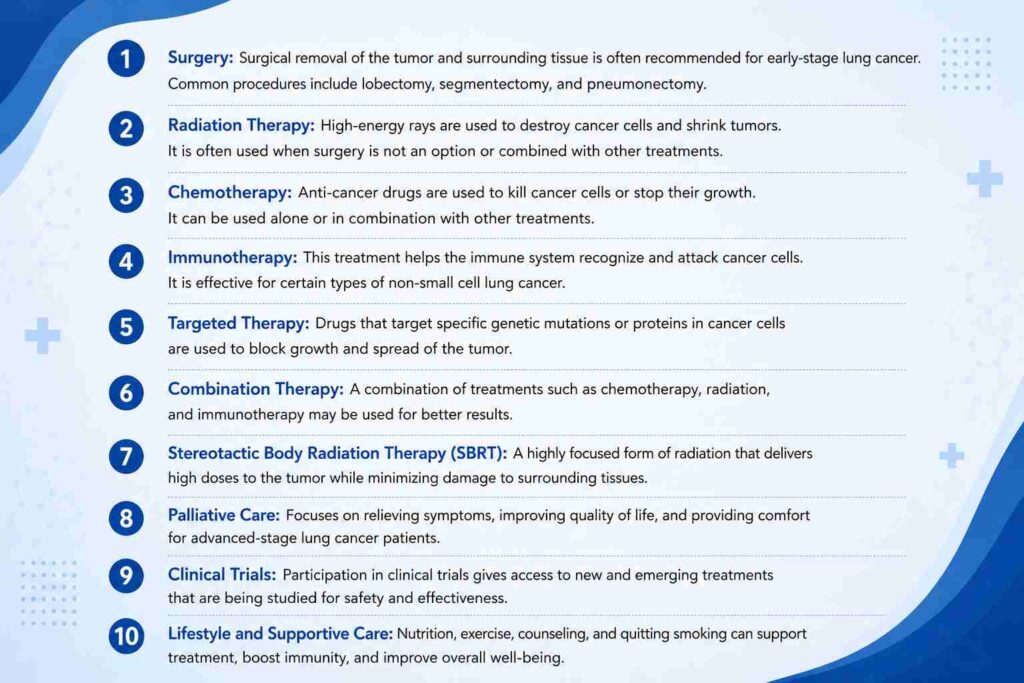
Treatment depends on several factors, including:
- Type of lung cancer
- Stage of the disease
- Overall health
- Age
- Tumor location
- Genetic characteristics of the cancer
Common treatment options include the following.
Surgery
Surgery may be recommended when the cancer is localized and has not spread extensively.
Different surgical procedures include:
- Wedge resection
- Segmentectomy
- Lobectomy
- Pneumonectomy
Radiation Therapy
High-energy radiation is used to destroy cancer cells or shrink tumors.
Chemotherapy
Chemotherapy uses medications to kill rapidly dividing cancer cells and may be given before or after surgery.
Targeted Therapy
Some lung cancers contain specific genetic mutations that respond well to targeted medications.
Immunotherapy
Immunotherapy helps the body’s immune system recognize and attack cancer cells more effectively.
Combination Therapy
Many patients receive a combination of surgery, chemotherapy, radiation therapy, targeted therapy, or immunotherapy depending on their individual treatment plan.
Benefits of Early Detection
Recognizing LUNG CANCER SYMPTOMS IN MEN AND WOMEN at an early stage provides several advantages.
These include:
- Earlier diagnosis
- More treatment choices
- Better symptom control
- Increased likelihood of successful surgery
- Improved quality of life
- Reduced complications
- Better long-term outlook for many patients
Although outcomes vary between individuals, early medical attention remains one of the most important factors in lung cancer management.
Lifestyle Tips During and After Treatment
Healthy lifestyle habits can support overall well-being during recovery and ongoing care.
Stop Smoking
Quitting smoking remains one of the most important steps for protecting lung health.
Eat a Balanced Diet
Choose meals that include:
- Fruits
- Vegetables
- Whole grains
- Lean protein
- Healthy fats
Stay Physically Active
Gentle physical activity, when approved by a healthcare provider, may help improve strength and reduce fatigue.
Stay Hydrated
Adequate fluid intake supports overall body function and recovery.
Get Enough Sleep
Quality sleep helps the body repair tissues and supports immune function.
Attend Follow-up Appointments
Regular medical reviews help monitor recovery, evaluate treatment effectiveness, and detect any recurrence as early as possible.
Manage Stress
Relaxation techniques, breathing exercises, meditation, and emotional support from family or support groups may improve overall well-being.
Can Lung Cancer Be Prevented
While not every case can be prevented, several healthy habits may lower the risk.
Consider the following preventive measures:
- Avoid smoking.
- Stay away from secondhand smoke.
- Test homes for radon where appropriate.
- Wear protective equipment in high-risk workplaces.
- Reduce exposure to air pollution whenever possible.
- Exercise regularly.
- Eat a nutritious diet.
- Attend regular health checkups if you have significant risk factors.
- Discuss lung cancer screening with your healthcare provider if you meet screening criteria.
Preventive measures cannot eliminate every risk, but they contribute to better long-term lung health.
Conclusion
Recognizing LUNG CANCER SYMPTOMS IN MEN AND WOMEN is an important step toward protecting your health. Symptoms such as a persistent cough, chest pain, shortness of breath, coughing up blood, unexplained weight loss, and ongoing fatigue should never be ignored, especially if they continue for several weeks. While these symptoms may also be caused by other respiratory conditions, only a proper medical evaluation can determine the underlying cause.
Early diagnosis allows for a wider range of treatment options and may improve overall outcomes. Maintaining a healthy lifestyle, avoiding smoking, attending regular health checkups, and seeking prompt medical attention for persistent respiratory symptoms are all important measures for supporting lung health. If you or someone you know experiences LUNG CANCER SYMPTOMS IN MEN AND WOMEN, consulting a qualified healthcare professional without delay is the best course of action. Individuals in Thrissur should also remain aware of persistent respiratory changes and seek timely medical advice when needed. For reliable, evidence-based information about lung cancer symptoms, diagnosis, and treatment, visit the American Cancer Society .
Frequently Asked Questions

Dr. Bibin Francis
Dr. Bibin Francis is a dedicated medical oncologist with expertise in chemotherapy, immunotherapy, targeted therapy, and personalized cancer treatment planning for a wide range of malignancies.
Jubilee Mission Medical College & Research Institute, Thrissur, Kerala